







Split Systems VA
A white wall-mounted mini-split indoor unit on a gray interior wall above a beige sofa, with a framed picture, a floor lamp, wood slat wall trim, and a window showing green foliage.

A pro who works on mini splits

Why your mini split smells when heating in Virginia

A smell when your mini split kicks on for heat usually points to one of a few things: dust burning off the coil, something dead or growing inside the unit, or a wiring issue that needs a closer look. This page walks through what each smell means. If it points to a repair, you can get matched with a local contractor who works on mini splits all year and knows what tends to go wrong with them.

Match me with a pro

A burning or musty smell when your mini split switches to heat usually comes down to what has been sitting inside the indoor unit since the last time it ran. Mini splits spend most of the warm months here pulling moisture out of sticky Virginia air, and that leaves the coil and the drain pan damp for long stretches. When the unit switches over to heat, mold or mildew that built up on the coil gets warmed and the smell comes through the vents. A sharper, dusty smell the first time it heats after months of sitting idle is usually just dust burning off the heating element, and that clears up after it runs a few minutes. A smell that is more electrical, like something hot or burning plastic, points to a wiring or motor problem instead. That kind of smell is the one to stop and have looked at, since it is not something that clears up on its own.

  1. Heating mode starts and shuts the reversing valve to switch refrigerant flow.

  2. The indoor fan stays off for a few seconds before it spins up.

  3. Dust and lint settled on the coil since summer start to warm up.

  4. Any moisture or growth left on the coil or drain pan heats as well.

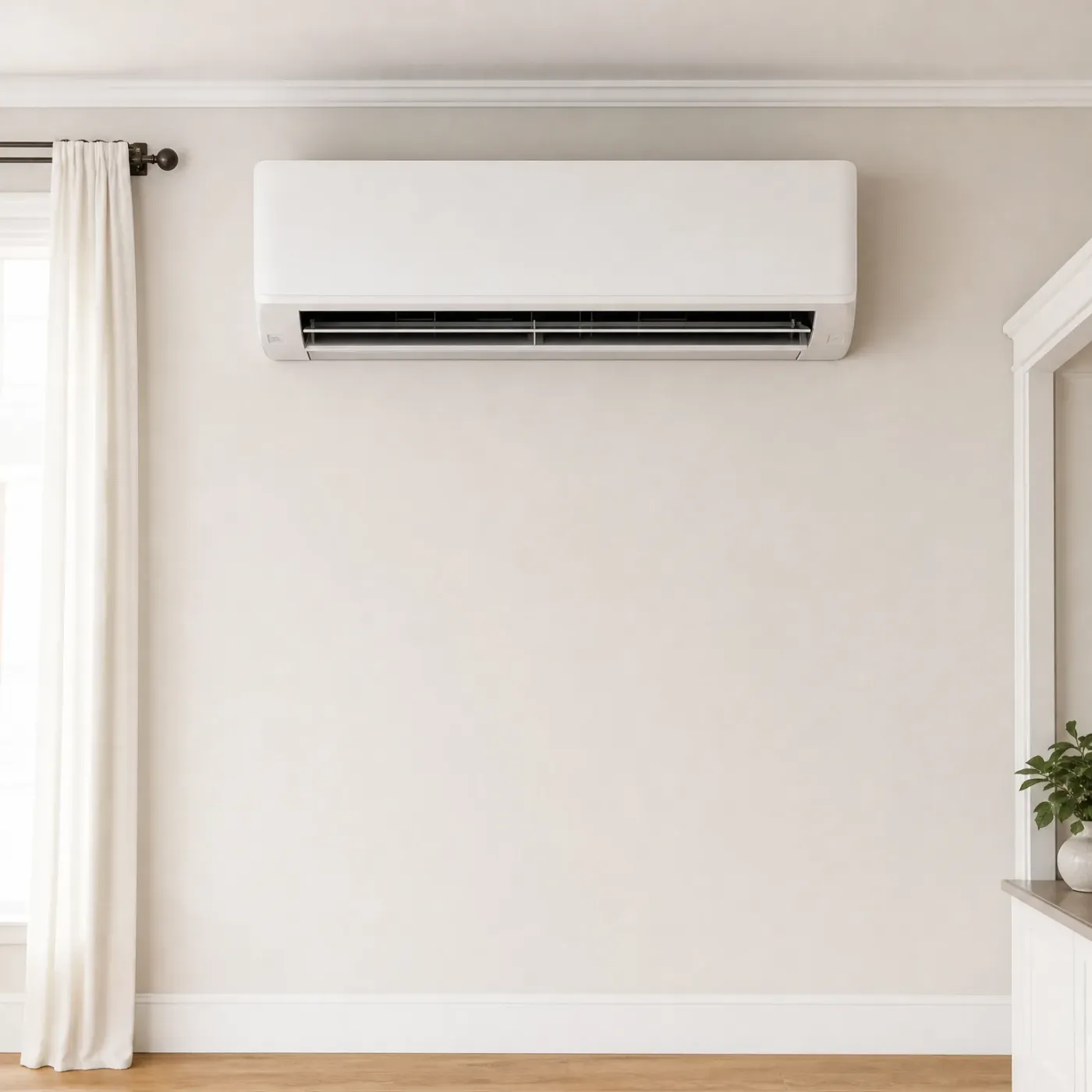
A white wall-mounted mini-split air conditioner on a beige interior wall, with a cream curtain and window at left, a potted plant on a ledge at right, and a wood floor below.
A clean unit like this one usually just smells like warm dust for the first minute or two, then nothing.
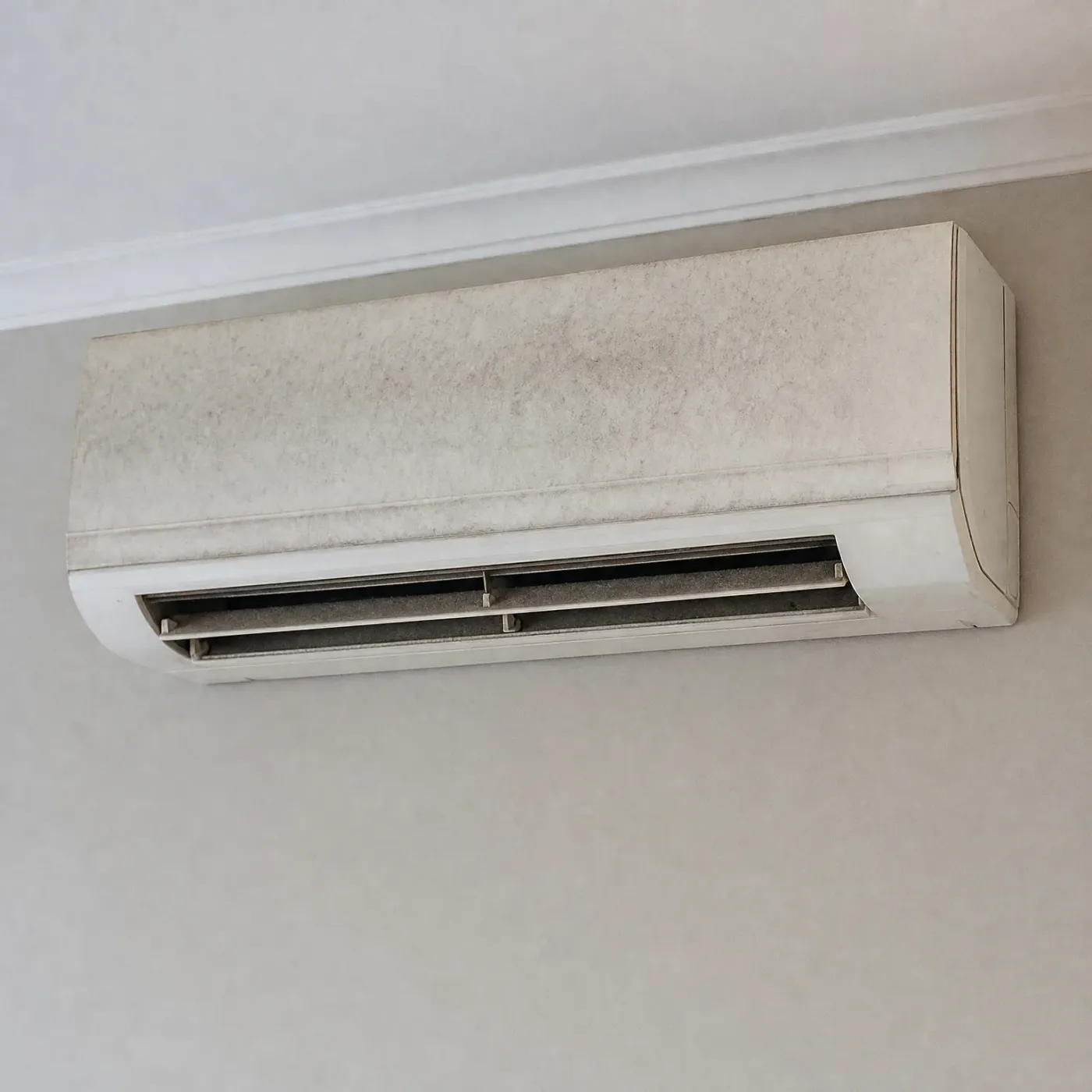
A dusty, discolored white wall-mounted mini-split air conditioner unit installed high on a plain interior wall below a white ceiling molding.
A unit left dusty like this can keep smelling every time the heat kicks on, not just the first run.
A dim room with a wall-mounted mini-split air conditioner above a water stain running down the gray wall to a towel on the wood floor, with a black shelving unit, a desk with a lamp and potted plant by a window, and an office chair at right.

You're in the home office on a June afternoon, heat pulled on early because the morning came in cool. You catch the smell first, something musty under the usual warm-dust smell. Then you see it: a wet streak down the wall under the indoor unit, already a few inches long, the paint starting to bubble at the edge. You grab a towel off the hall closet shelf and lay it on the floor under the drip. The unit keeps running, air coming out fine, no strange sound. You stand there a second, towel in hand, trying to decide if this is something that waits until tomorrow or something that doesn't.

Is this smell going to keep coming back every time the heat runs?

If it's just the first run after a stretch of cold mornings, you'll probably notice it fades after a minute or two and the room goes back to normal. If it's still there every time the unit kicks on, that's the sign something inside isn't drying out or isn't clean, and it won't fix itself. A smell that keeps returning, especially one that's musty rather than dusty, often means moisture has settled somewhere in the indoor unit and isn't draining the way it should. Left alone through a Virginia winter, that moisture can turn into mold inside the unit or damage to the wall and floor around it, and the air blowing into the room where your family spends time carries whatever is growing in there.

A woman with long wavy brown hair in a grey ribbed sweater sits on a couch indoors, looking toward a window, with a potted palm-like plant and fireplace behind her.
A woman with long brown hair wearing a green V-neck top and beige cardigan sits on a light sofa, looking off to the side, with a dining table, lamp and framed picture in the background.
A woman with long dark hair in a cream knit sweater sits on a beige sofa indoors, looking toward a bright window with a houseplant and framed picture in the background.
A woman with long dark hair in a green knit sweater sits on a couch indoors, smiling and looking toward a window with a blurred room behind her.

Get your mini split to the right pro

Only one pro gets your request, so you hear from one company.

Asking costs nothing, and the choice to hire stays yours.

Why the smell fades fast

Dust on the coil burns off in the time it takes the coil to get hot, usually under a minute. That's why a clean unit smells like warm dust right when it kicks on and nothing after. The indoor fan waits a few seconds before it spins, so whatever is on the coil heats up before any air moves past it. Once that thin layer of dust is gone, there's nothing left to burn, and the next cycle won't smell at all unless more dust has settled since.
Why some smells don't

A musty or sour smell doesn't burn off because nothing is burning. It's mold or mildew growing in standing water the coil never fully drained after the last run, and heat just pushes that air into the room instead of clearing it out. That smell comes back every time the unit heats, not just the first run of the season, because the moisture causing it is still sitting in the unit. It won't go away on its own the way dust does, since the heat isn't touching the source of it.

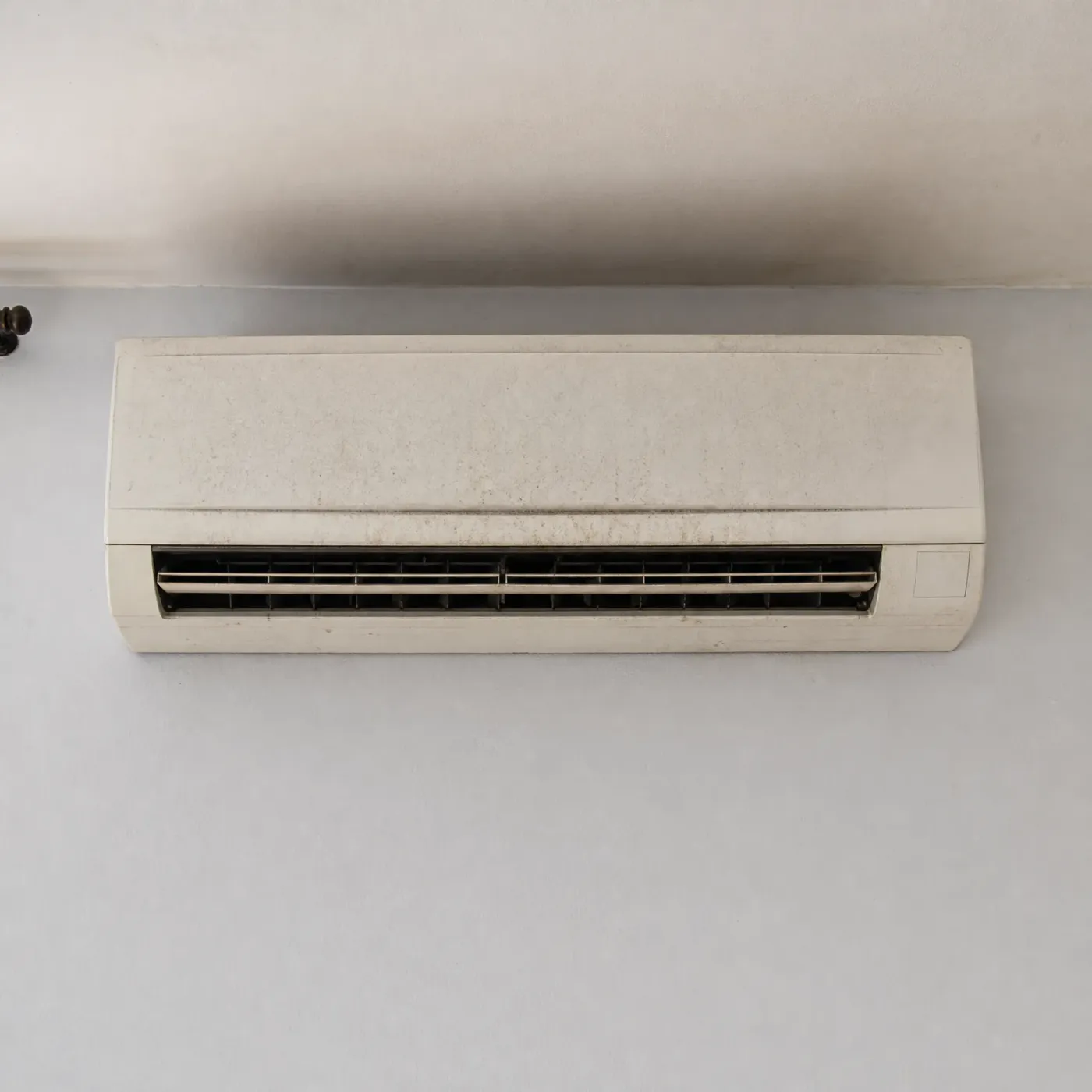
A dusty beige wall-mounted mini-split air conditioner indoor unit installed high on a plain light-colored wall below the ceiling.
Before you get your mini split repair
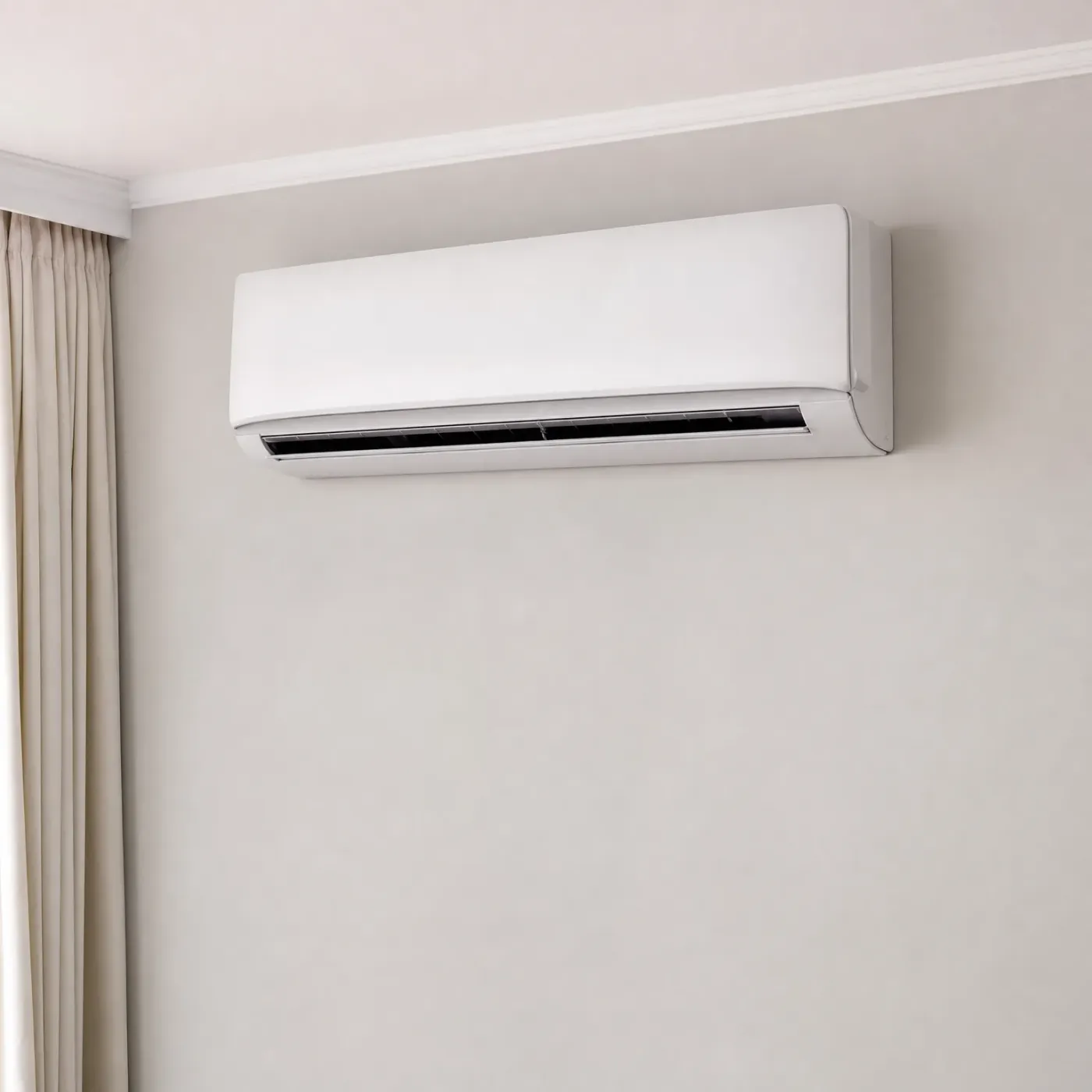
A white wall-mounted mini-split air conditioner near the ceiling of a room with light gray walls, white crown molding, and a beige curtain at the left edge.
After you get your mini split repair

Smell clears in a minute or two

That's dust burning off a clean coil. Normal for the first heat cycle after a stretch of warm days, and nothing to call anyone about.

Find a local pro

Smell comes back every time

That points to something sitting inside the unit that isn't burning off, mold, a clogged drain, or a wiring problem worth having looked at.

Find a local pro

Power costs 15.28 cents per kilowatt-hour statewide

Most homes in Virginia heat with electricity, so your mini split is doing that work at 15.28 cents per kilowatt-hour. A unit running clean and shutting off the smell fast costs you nothing extra. One that keeps cycling because something inside needs attention just adds to what you're already paying to run it.

EIA-861 2025 statewide residential average

What the smell is telling you

  • A smell that fades inside a minute or two is dust burning off the coil, and it needs no repair.
  • A smell that comes back every single heat cycle points to mold, a dead pest, or a wiring problem inside the unit.
  • A wet streak on the wall under the indoor unit means condensate is backing up somewhere it shouldn't.
  • Mold and mildew smells build up from the moisture mini splits pull out of the air all summer.
  • A sharp or electrical smell is different from a musty one and points toward the wiring rather than the coil.
  • Virginia homes running mini splits on electric heat pay for every extra cycle the unit runs while something inside needs attention.

A mini split that smells when it switches to heat is telling you something about what's been sitting inside it. Most of the time that's dust, warming up on the coil for the first minute the unit runs, and it's gone before you've thought much about it. That's the normal case, and it doesn't need a repair or a call to anyone.

What's different is a smell that doesn't quit. If it shows up every time the heat kicks on, something is sitting inside the unit that a minute of coil heat won't burn off. That's usually moisture that never fully drained, built up from a summer of pulling humidity out of the air, now sitting somewhere it can grow mold or mildew. It can also be something that got into the unit and didn't get out. A wet streak on the wall under the indoor unit is a separate sign pointing the same direction, condensate backing up instead of draining where it should.

A sharp or electrical smell isn't the same problem. That one points away from the coil and toward the wiring, and it's worth getting someone to look at sooner rather than later.

None of this is free to ignore. Your mini split is running on electric heat, like most homes here, and every extra cycle it runs while something's wrong inside is a cycle you're paying for. A unit that clears its own smell in a minute costs you nothing extra. One that keeps working around a clogged drain or a wiring issue keeps costing you until someone fixes what's actually wrong.

A gray-haired woman in a cream knit sweater stands in a dimly lit kitchen at night, looking to her right, with a round loaf of bread in the foreground and a dark window and potted plant behind her.
A woman and a sleeping child wrapped together in a cream knitted blanket on a couch, with a potted plant, framed photo and lit lamp in the background.

Mini Split Repair

Matched to your mini split job

Your request goes to one pro, not a list of companies.

A black-framed smartphone standing upright against a plain white background, its screen filled with solid green.
Step 1 of 3: Equipment