Split Systems VA

Why your mini split leaks water in a Virginia winter

Step 1 of 3: Equipment

A mini split leaking water in winter usually means the condensate drain line is frozen or clogged, not that the unit is broken. Indoor units pull moisture out of the air even in heating mode, and that water has to run downhill through a drain line to the outside. In a Virginia winter, when temperatures drop into the 20s and 30s overnight, water sitting in that line or in the drain pan can freeze and back up, pushing water out of the unit and onto your wall or floor. It can also mean the line was never pitched correctly, or that algae and dust built up in the pan over the summer when the system ran constantly against the humidity. Either way, the fix is mechanical, not electrical, and it is worth having someone look at the line and the pan before the leak stains a wall or drips into insulation below the unit.

A gray-haired man in a dark sweater sits on a light gray sofa in a living room, looking toward a sunlit window with trees outside.
A gray-haired man in a dark blue sweater sits on a light gray sofa in a sunlit living room, looking off to the side, with a potted plant, shelving unit, and large glass doors behind him.
A bearded man with graying hair in a dark green sweater sits on a sofa in a living room, looking off to the side, with a sliding glass door and a dim kitchen doorway behind him.
A gray-haired man in a dark knit sweater sits on a light gray sofa in a living room, looking toward a sunlit window, with houseplants, a lamp, and framed art in the background.

Clear It Yourself or Call for Help

Clearing it yourself

  • A wet-dry vacuum at the outdoor end of the drain line can pull out a short clog if you can reach the line.
  • Pouring warm water into the indoor unit's drain pan can thaw a surface freeze near the opening, but it won't reach ice further down the line.
  • Clearing the line yourself does nothing about why it froze, so the same leak can show up again the next cold night.
  • If the clog is inside the wall or under the slab, there's no safe way to reach it without opening something up.
  • A missed cause, like a line pitched wrong or insulation that's worn through, keeps the water coming back no matter how often you clear it.

Calling a contractor

  • A local tech who services mini splits all winter can tell from where the water shows up whether it's the drain line, the pump, or the line set insulation.
  • They carry the tools to clear a line that runs through a wall or under a slab without you having to open anything up.
  • They can check the line's pitch and the condensate pump, if the unit has one, since either can cause the same leak as a clog.
  • One contractor means one visit and one explanation, not calling around and repeating the same problem to company after company.
  • Fixing the actual cause stops the drip for good instead of buying you a few more cold nights before it starts again.
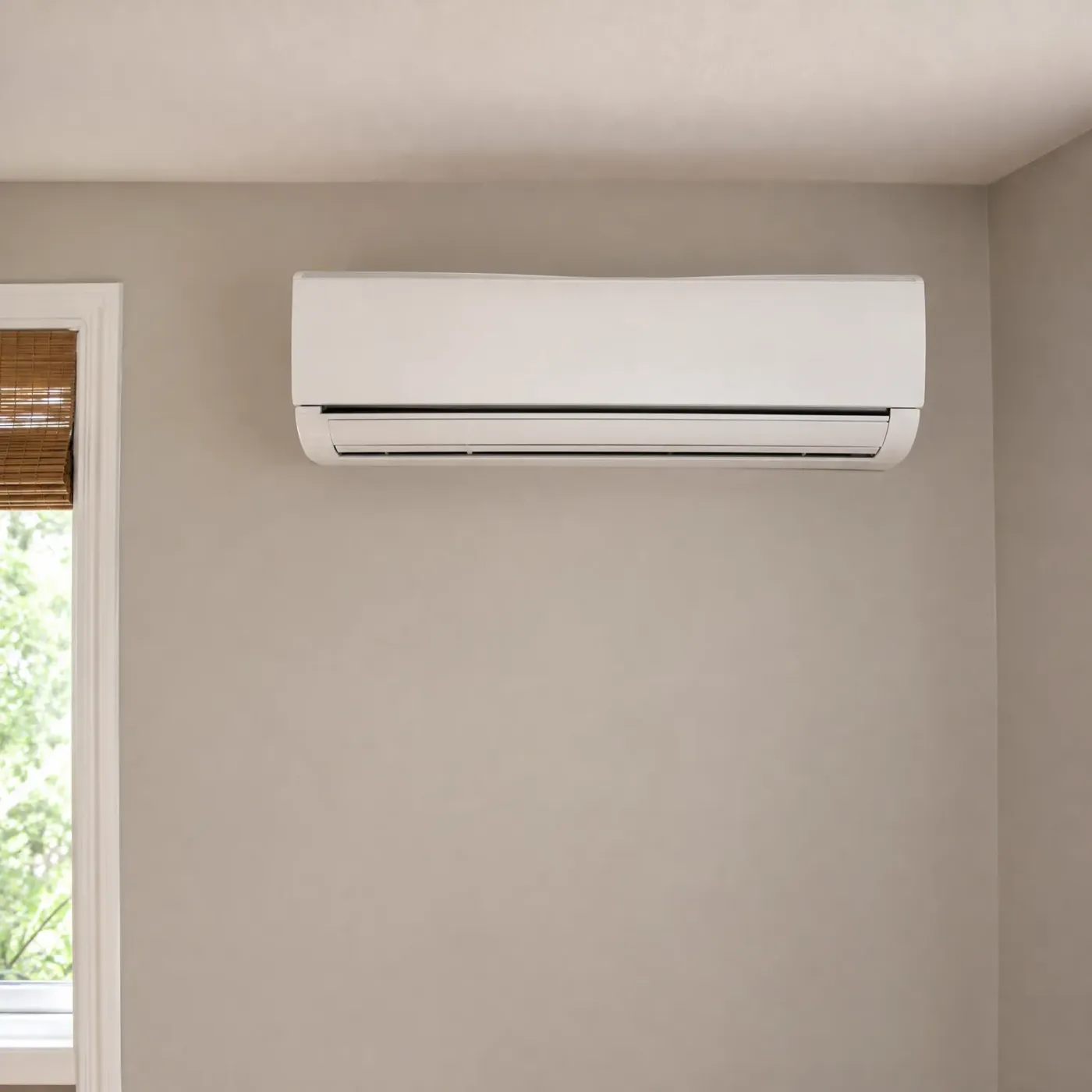
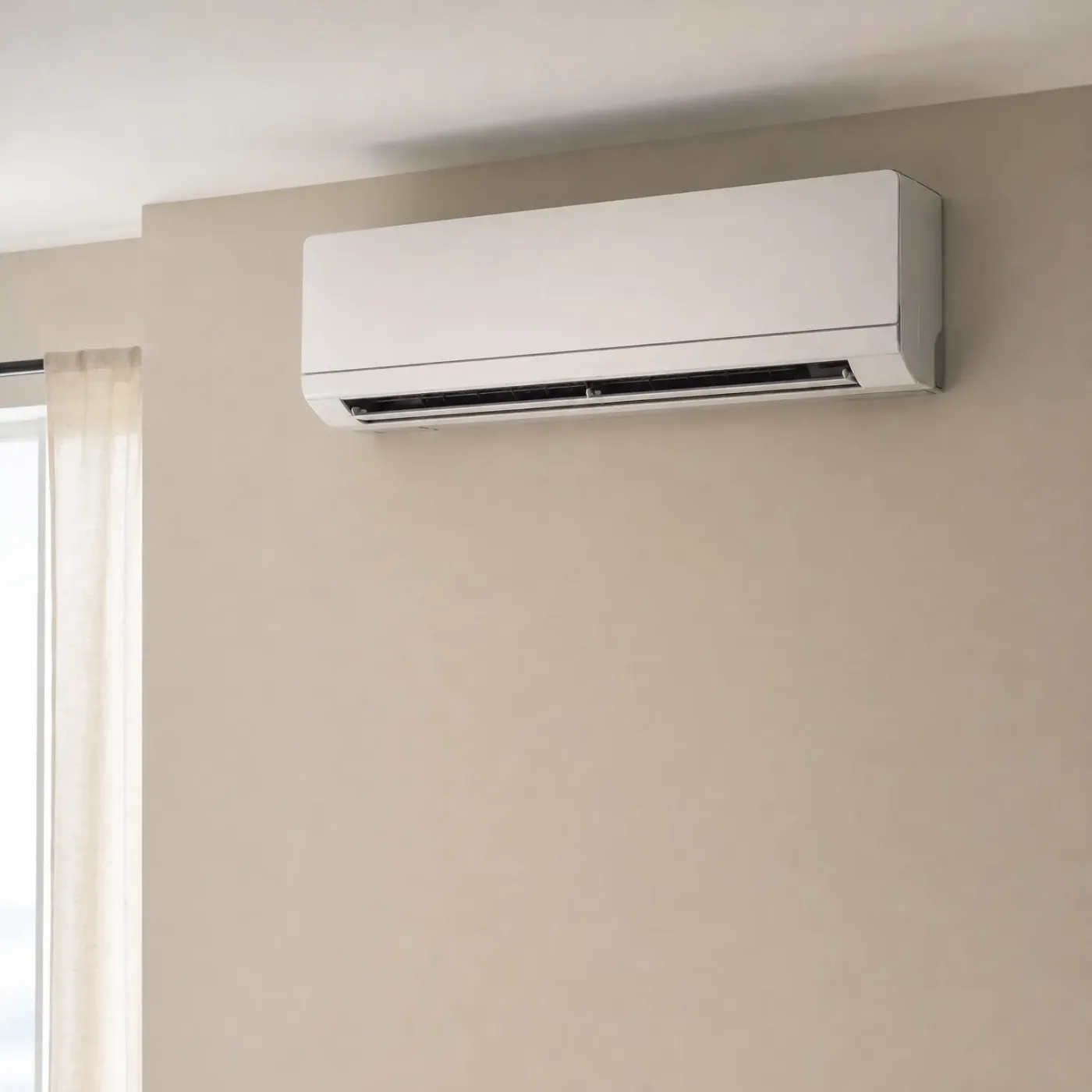
A white wall-mounted mini-split air conditioner installed near the ceiling on a beige interior wall, with a window and bamboo blind at the left edge showing green foliage outside.

Running clear

This is what the indoor unit looks like when the drain is doing its job. No drip at the front panel, no staining on the wall underneath, no puddle on the floor below it. Air moves out of the vents steady and the condensate leaves through the line unseen.

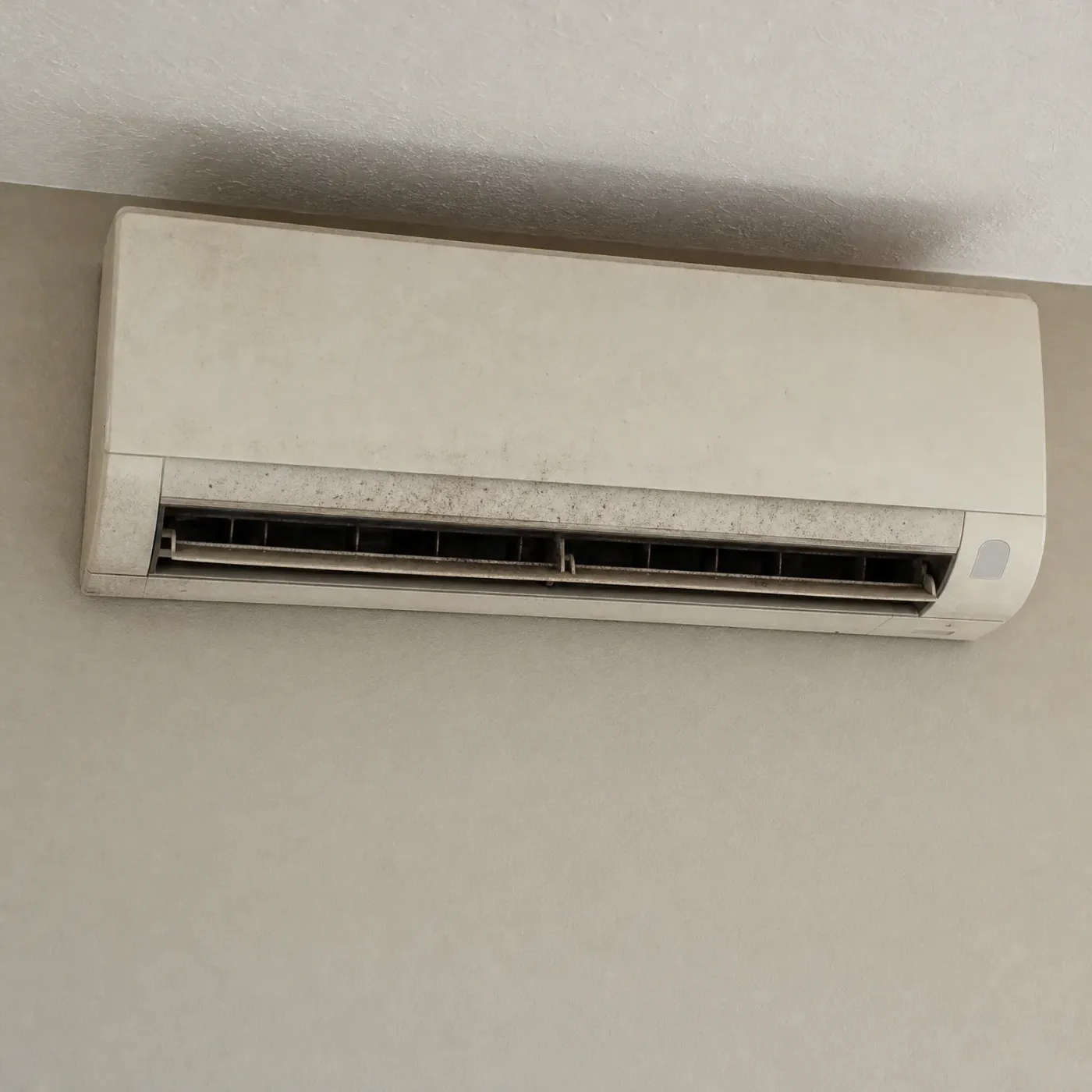
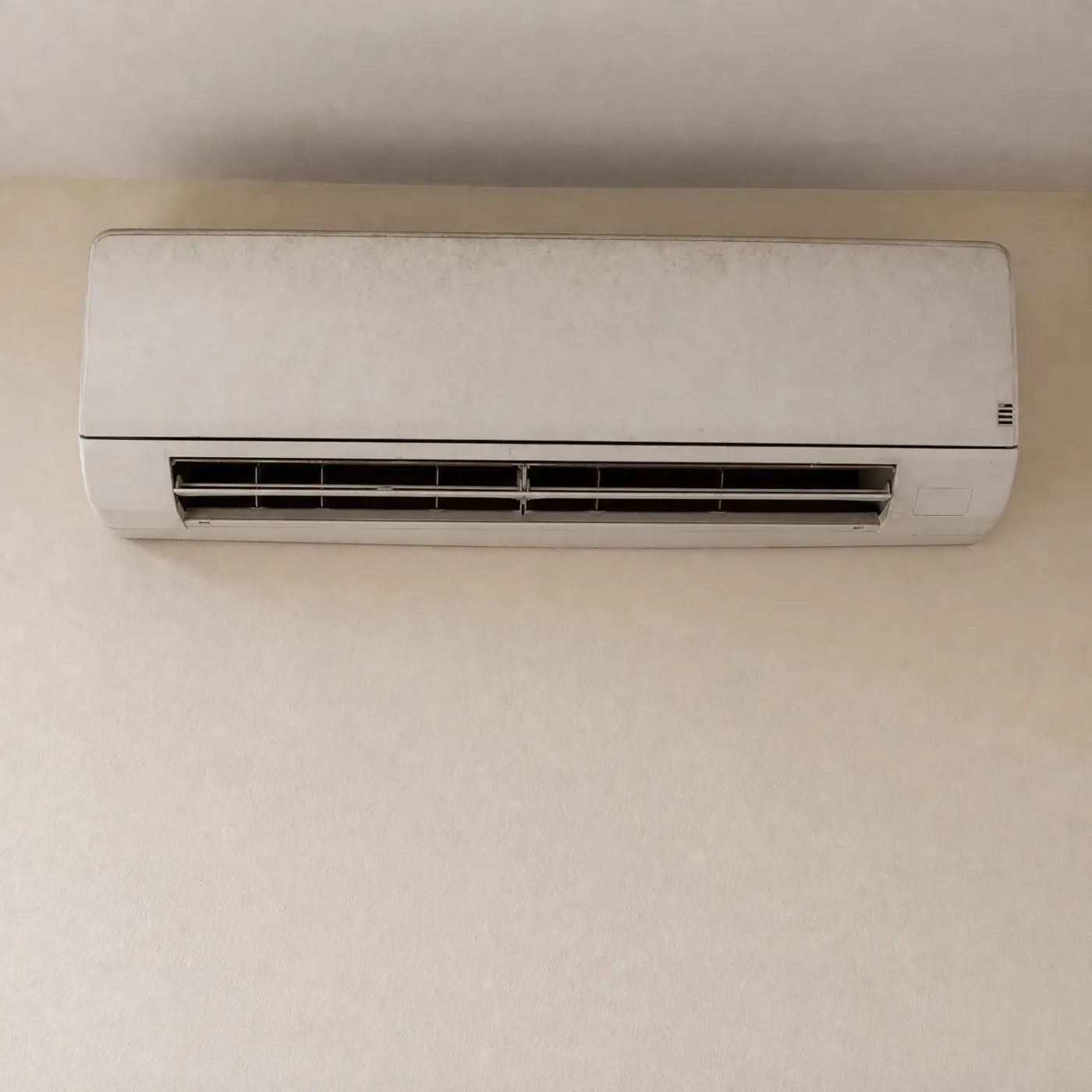
A wall-mounted mini-split air conditioner indoor unit with discolored casing and dusty vents, installed near the ceiling on a plain light-colored wall.

Clogged or frozen

Dust built up like this on the panel and louvers usually means the filter behind it is just as dirty, and a dirty filter lets more moisture collect than the drain can carry off. Combined with a cold snap, that's often enough to back water up and send it out the front of the unit instead of down the line.

Why does my mini split drain line freeze up in winter?

Cold snaps in Virginia can bring overnight lows well below freezing, and that's usually when owners notice water or ice showing up around the indoor unit. It seems backward to blame freezing on a line carrying warm condensate, so the question makes sense. Knowing why it happens points straight at where the problem actually sits and what's worth checking before calling someone out.

The line freezes where it runs outside and sits exposed to the cold air

The condensate drain line carries water from the indoor unit out to the outdoor unit, and part of that run is usually outside the wall, exposed to whatever the air is doing. In heating mode the system still pulls some moisture out of the air, and that water sits in the line as it travels. If the line isn't insulated, or the insulation has gaps, a stretch of it cools down with the outside air and the water inside turns to ice. Once a section freezes, water backing up behind it has nowhere to go but back toward the indoor unit, which is why the leak shows up inside the house instead of outside where the actual freeze is.

A two-story house with gray and light gray siding, white-trimmed windows and a white front door, flanked by deciduous trees, with a partly browned lawn in front under a clear blue sky.

Summers in Virginia run humid, and the weather service puts the average dew point at 64°F across June, July and August. That's heavy, sticky air, and your mini split pulls a lot of water out of it to keep the house comfortable. All that moisture runs down the condensate line and out near the outdoor unit. Even though the leaking you're dealing with shows up in winter, the drain line doing that job all summer is the same line that freezes or clogs when the weather turns cold. A line that's been carrying a steady load of water for months is one more thing to check when it stops draining in January.

NASA POWER T2MDEW county cells weighted by homes

What's that dripping sound by your indoor unit?

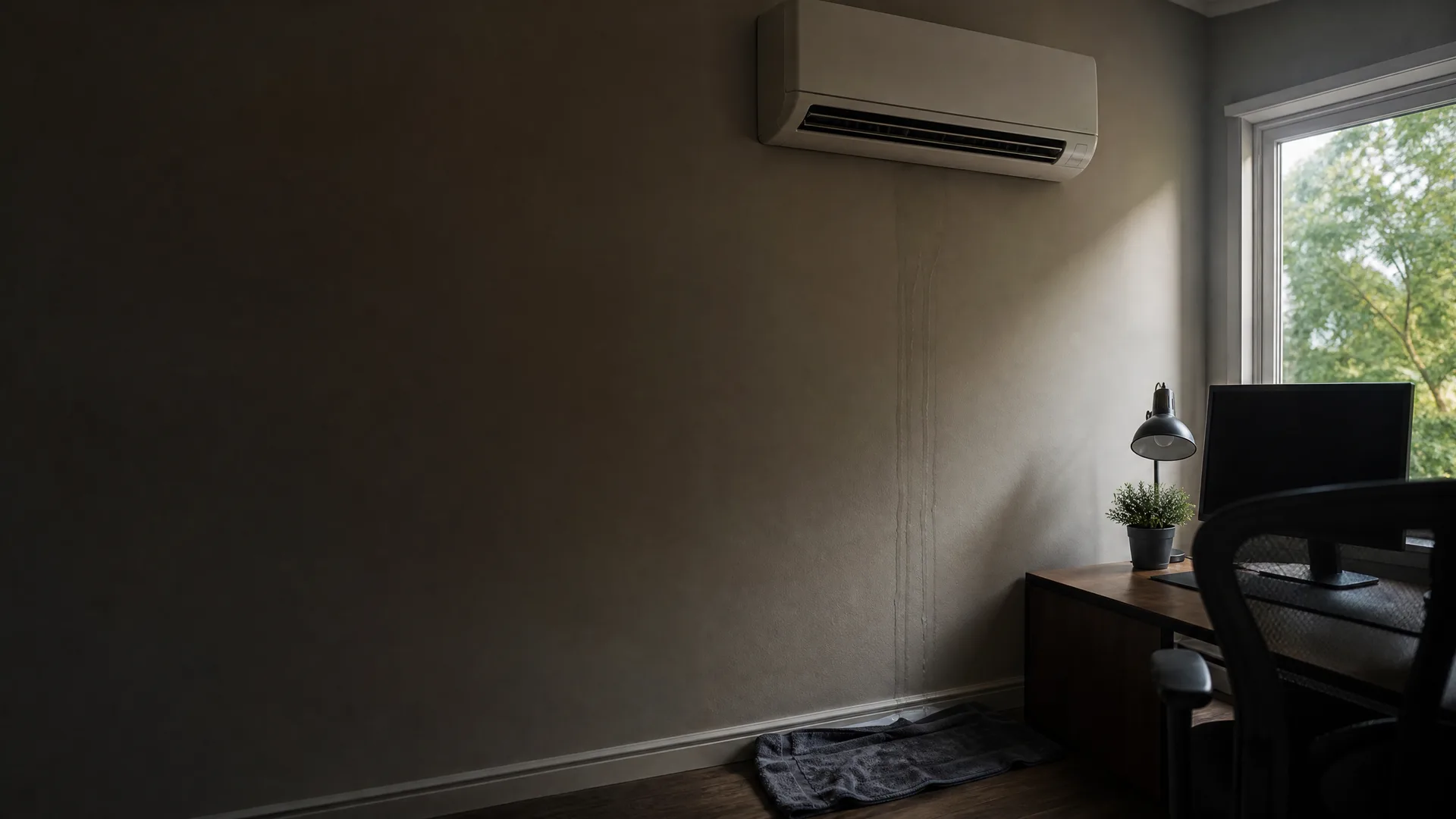
You might hear a drip behind the wall, or find water pooling on the floor under the indoor unit. Sometimes it's a stain spreading across the ceiling or wall below the line set, or ice building up on the unit itself or on the line running outside. The front panel might weep water even when the system isn't running. None of that means the mini split is broken. It means the water it pulls from the air has nowhere to go but back into your house. Left alone, that water can soak into drywall, warp flooring, or feed mold behind the wall where you won't see it until the drywall's already ruined.

A dim room with a wall-mounted mini-split air conditioner above a faint vertical stain running down the wall, a folded grey towel on the wood floor at the baseboard, and a desk with monitor, lamp, small plant and office chair by a window.

You're at your desk on a July afternoon, air conditioning humming, when you notice the streak on the wall below the indoor unit. It's already dried at the edges and wet in the middle, spreading slowly toward the baseboard. You grab a towel off the bathroom rack and lay it under the unit, then stand back and watch a drop form at the corner of the case and fall. You think about the last time this happened, how you spent an evening on the phone with two different companies, telling each one the same thing about the wall and the towel before either could even send someone out.


No phone calls to make

The pro who reaches out is licensed in Virginia.

You only hire the pro if you want to.

Why the slope of the line matters

A condensate drain line only works downhill. It leaves the indoor unit, runs through the wall, and has to drop the whole way to the outdoor end without a flat spot or a dip. If that line got pushed up or sagged when it was run, water sits in the low point instead of draining out. Sitting water is what freezes first on a cold night, and once it freezes there it blocks everything behind it. A line that drained fine in October can back up in January for this reason alone, with nothing else wrong with the unit.

Where insulation comes into it

The drain line often runs alongside the refrigerant lines in the same insulated sleeve outside your house. Where that insulation has worn through, cracked, or was never sealed tight at a joint, the drain line inside is exposed to whatever the air outside is doing. On a night in the 20s, an exposed section can freeze solid even while the rest of the line stays clear. This is why the same unit might drain fine most of the winter and only back up during a hard cold snap. A contractor checking the line will look at the insulation along its length, not just the two ends.

Power costs 15.28 cents per kilowatt-hour statewide

Most homes here heat with electricity, so your mini split is already carrying the load at 15.28 cents per kilowatt-hour. A frozen or clogged drain line doesn't just mean a wet floor. The unit can run harder trying to push past the blockage, and that shows up on the bill before anyone spots the ice.

EIA-861 2025 statewide residential average

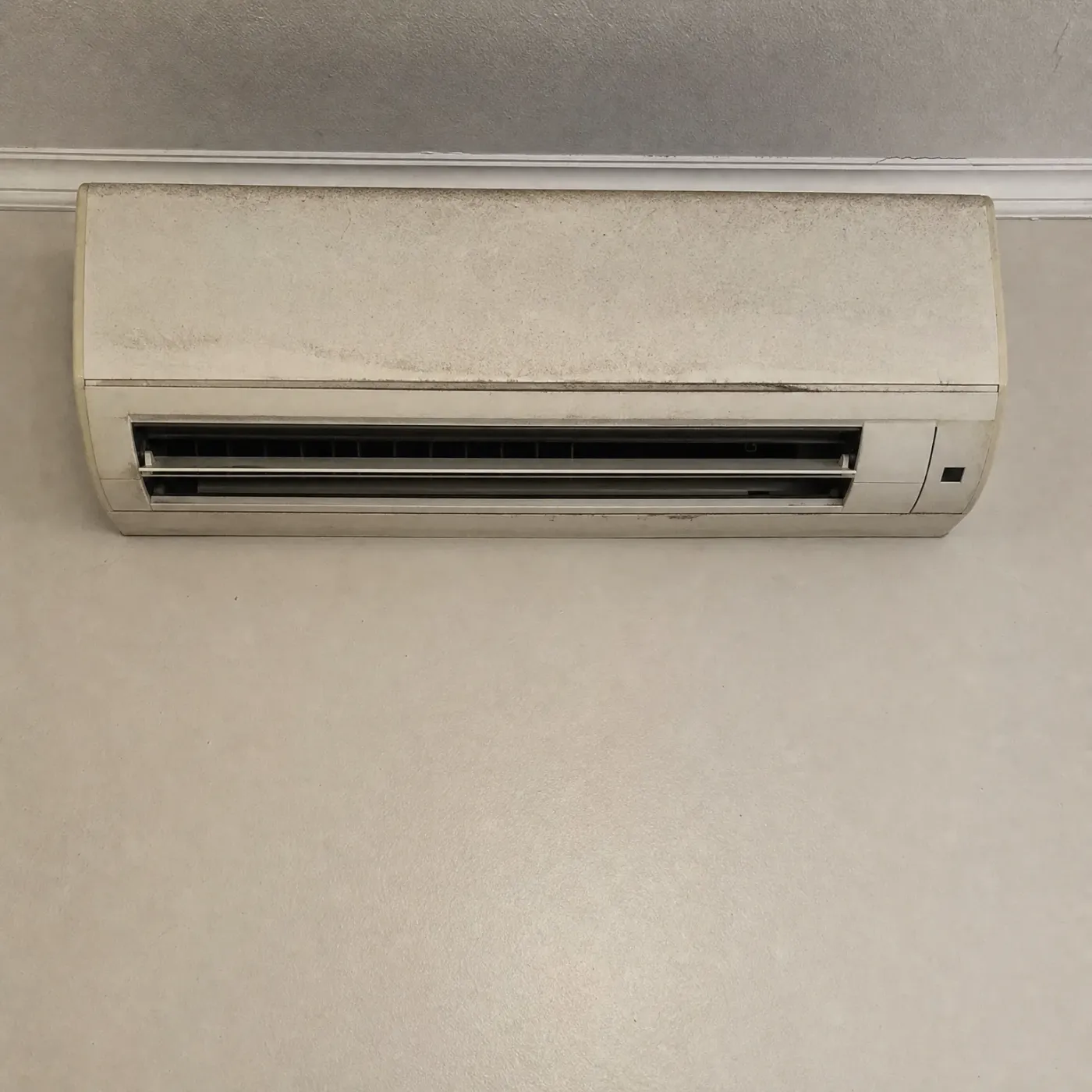
A dusty, discolored wall-mounted mini-split air conditioner indoor unit near the top of a plain light-colored interior wall below a white molding strip.
Before you get your mini split repair
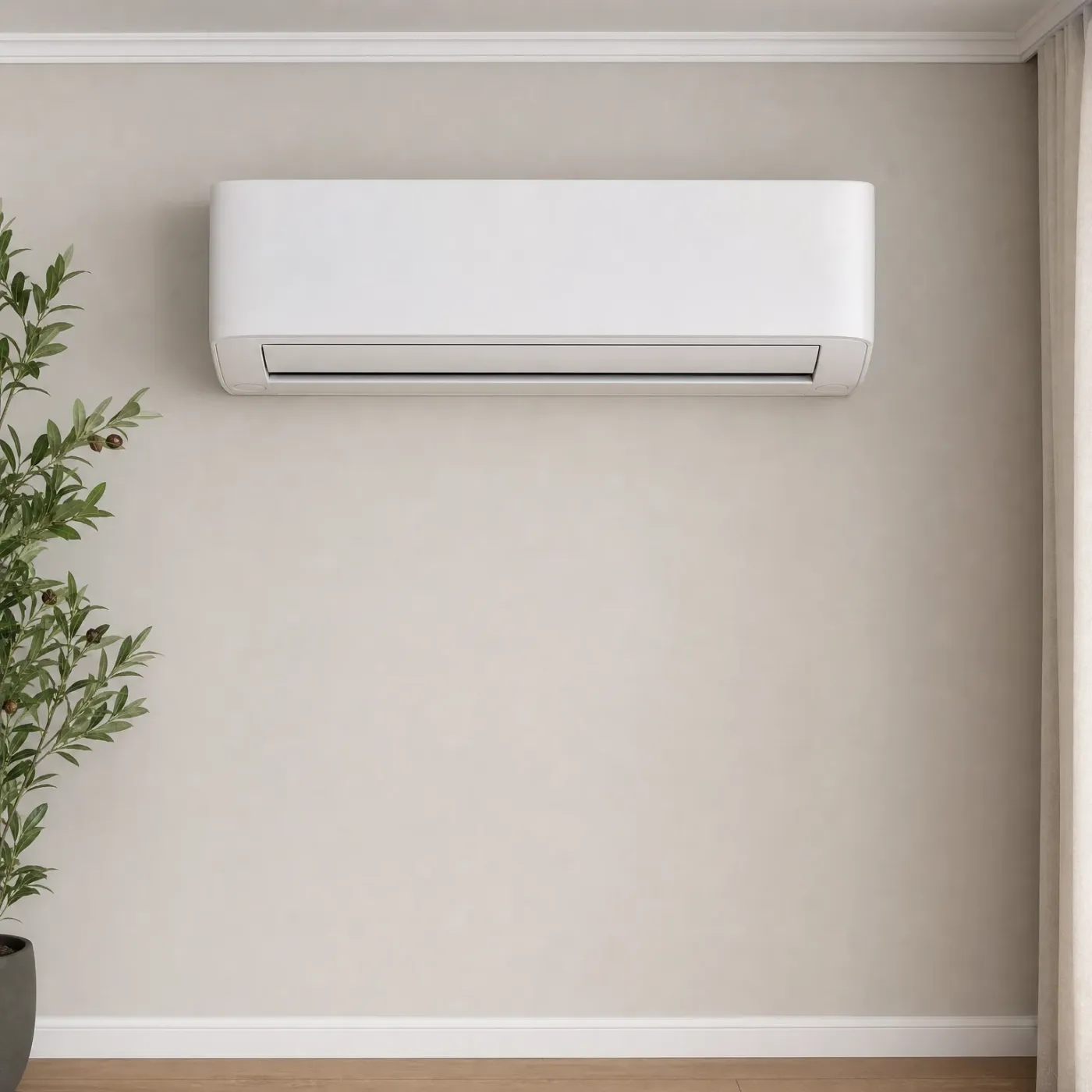
A white wall-mounted mini-split indoor unit on a beige interior wall, with a potted leafy plant at the left and a curtain edge at the right.
After you get your mini split repair

How the drain line actually works

  • The indoor unit's evaporator coil turns the refrigerant cold enough to condense moisture straight out of the air you're heating.
  • That water drips off the coil into a condensate pan sitting underneath it, then leaves through the drain line.
  • The drain line has to carry that water out through the wall and downhill to the outdoor unit with no low spots along the way.
  • A float switch in the pan can shut the unit off or trip an error code once water backs up past a certain level.
  • Ice forms first wherever the line runs closest to outside air, usually right where it exits the wall or sits near the outdoor unit.
  • Once ice blocks the line, water has nowhere to go but back up into the pan, and from there it finds the nearest gap to escape.

Run a mini split in heating mode and it still makes water. The evaporator coil inside has to get cold for a moment to pull heat out of the outdoor air before it moves that heat indoors, and while the coil's cold, moisture in your room's air lands on it and turns liquid. That water has one path out. It drips into the condensate pan under the coil, then down the drain line, through the wall, and downhill to where it exits near the outdoor unit. No pumps push it along. Gravity does the whole job, which is why the line has to drop the entire way without a sag or a high spot anywhere in the run.

Most units have a float switch sitting in that pan. If water backs up past a set level, the switch either shuts the unit down or throws an error code on the display, which is often the first sign something's wrong before you ever see a drip. Ice tends to start at the coldest point in the line, usually right where it passes through the wall or sits exposed near the outdoor unit. Once ice plugs that spot, water behind it keeps coming because the coil doesn't stop making it. With nowhere downhill to go, it backs up into the pan, fills past where the float switch sits, and finds whatever gap is lowest, usually the front panel or a seam in the housing, and that's the water you're seeing on the wall or the floor.

A white wall-mounted mini-split air conditioner installed high on a beige interior wall near the ceiling, with a sheer curtain and window at the left edge.
A dry wall, a steady stream of air from the vents, and no sign of the drain line underneath doing anything but its job.
A white wall-mounted mini-split air conditioner indoor unit with visible dust and discoloration, installed near the ceiling on a plain beige wall.
Dust along the louvers and discoloration like this often sits alongside a drain that's backed up, icing over, or already overflowing behind the panel.
A middle-aged woman with shoulder-length dark hair, wearing a gray cardigan over a cream top, sits in an upholstered armchair and looks toward a sunlit window, with a shelf holding framed pictures and a plant behind her.
A woman and a child wrapped together in a thick knitted blanket on a sofa, both with eyes closed, with a lit table lamp and houseplant in the dim background.
A closed dark laptop and a ceramic mug of coffee on a wooden dining table, with wooden chairs, a dark kitchen cabinet with cutting boards and a potted plant, and a leafy plant by a window in the background.

A frozen or clogged drain line, not a broken unit

Water showing up around your indoor unit in winter almost always traces back to that drain line, iced over or backed up somewhere between the wall and the outdoor end. The fix is clearing or thawing that path and checking the slope that caused it, not replacing the mini split.

A licensed technician who works on these systems through a Virginia winter has seen this line freeze before and knows where to look first. Calling one means skipping the part where you search for who covers mini splits in your area, call a few, describe the same dripping and staining to each one, and weigh quotes against each other. You explain it once, to someone who already knows what a frozen drain line looks like on the wall.

Interior corner with a beige sofa holding a dark green and a light cushion and a textured throw, a potted small-leaved tree beside a white-framed window, and a dark shallow bowl on a wooden coffee table in the foreground.
Elevated view over a dark standing-seam metal roof with a stone chimney and wood-sided gable, surrounded by conifers and autumn-colored trees with forested hills under an overcast sky.

One form, no calling around

Answer a few questions

Asking costs nothing, and the choice to hire stays yours.

A local pro who works on mini splits all winter can usually tell by the pattern of the leak where the line is frozen or backed up, without you pulling the unit apart yourself. One call gets you that one contractor, not a string of them asking you to describe the same drip again.