
Split Systems VA

Why your mini split blows cold air in Virginia

Tell a local repair pro what your mini split is doing.

Get matched

Why is my mini split blowing cold air when it's set to heat?

You set the mini split to heat and cold air is still coming out of the vents. In Virginia that's a real problem once the weather turns, since so many homes here rely on electric heat to stay warm. You want to know if the unit is broken, stuck in the wrong mode, or just doing something normal before it catches up.

Usually a mode or defrost problem, not a broken unit

A mini split blowing cold air in heat mode is often stuck between the remote's setting and what the outdoor unit is actually doing. Right after you switch to heat, the system runs a few minutes of fan before the compressor and coil warm up, and that air feels cool because it's still close to room temperature. In colder weather the unit also defrosts itself by reversing briefly to melt ice off the outdoor coil, which pushes cool air inside for a few minutes at a time. If the air stays cold well past that, the reversing valve that switches the system between heat and cooling may be stuck, or the refrigerant charge may be low. Either one keeps the unit from producing real heat even though the remote says it's heating.

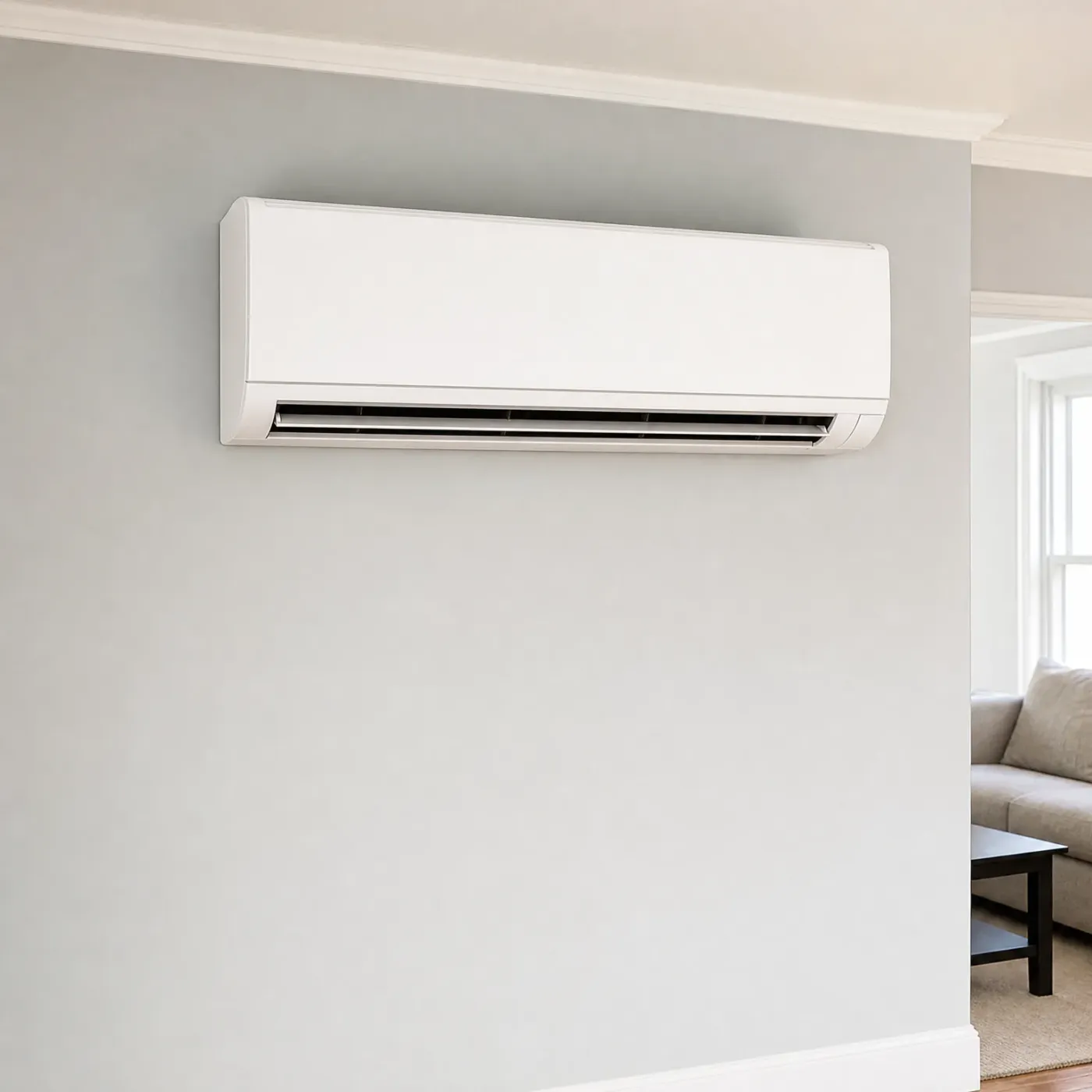
A white wall-mounted mini-split indoor unit installed high on a gray interior wall, with a sofa, dark table and window visible in an adjoining room to the right.

Running the way it should

Set to heat, this unit pulls warmth into the room and the air coming off the vents feels warm within a few minutes. The louvers stay clean, the casing stays white, and the living room it serves holds a steady temperature without the unit straining to get there.
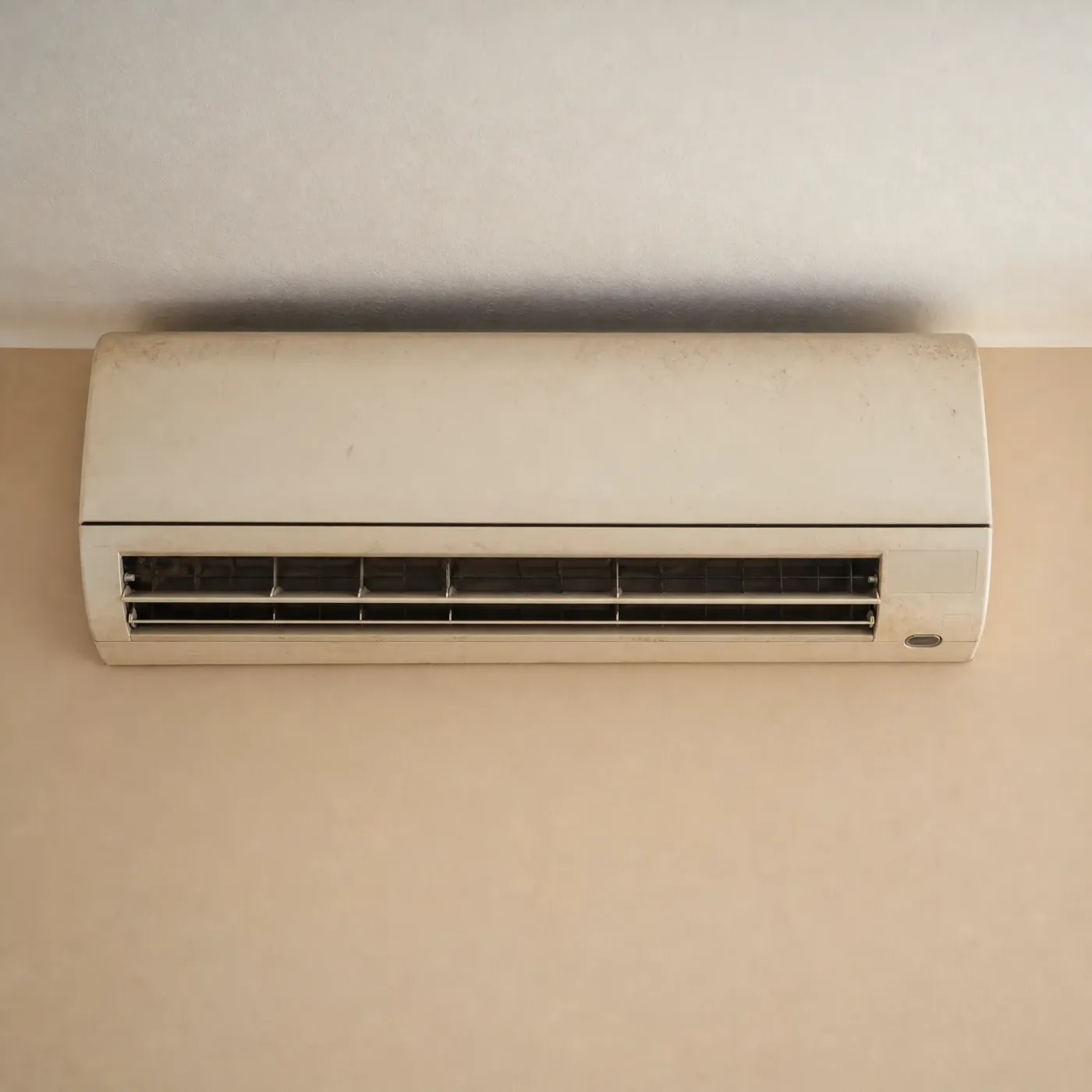

A wall-mounted mini-split air conditioner indoor unit with a dusty beige casing and dark louvered vent, installed near the ceiling on a plain beige wall.

Signs something's wrong

Dust and yellowing on the casing mean the unit has been running a long time without a filter cleaning or a look inside. A mini split in this state is more likely to struggle in heat mode, blowing cold air instead of warm no matter where the thermostat is set.

A woman in a cream sweater with her hair in a bun laughs while seated at a stone counter holding a glass of red wine, in a dimly lit interior with a sofa, houseplants and a large window at night.
A woman with long dark hair in a cream knit sweater laughs while looking off to the side, seated in front of a dimly lit kitchen with an island, stools, open shelving and a potted plant, with a glass of red wine in the foreground.
A smiling woman with long dark wavy hair in a light knit sweater sits at a marble counter with a glass of red wine, with a dimly lit living room and kitchen in the background.
A smiling woman with long wavy brown hair in a beige sweater sits at a white marble counter with a glass of red wine, with a living room, dining table and kitchen cabinets behind her.

Heat mode asks a lot of a mini split. The reversing valve has to switch which way the refrigerant flows, and the outdoor unit has to pull warmth out of outside air even when that air is cold. Either step can go wrong in a way that still lets the system run, just not the way it should. A valve that's stuck partway sends the wrong mix of refrigerant through the lines. Ice building up on the outdoor coil blocks it from absorbing heat at all. Even working correctly, the unit pauses heating on purpose during a defrost cycle, and the indoor fan can keep blowing during that pause, so you feel a few cold minutes that aren't actually a problem. Low refrigerant means there's not enough heat to move no matter what the thermostat says. A bad sensor can convince the control board the room is already warm, so it stops heating early. And if the indoor blower runs past the point the compressor shuts off, whatever air is left in the lines comes out cold on its way out.

What's Actually Happening Inside the Unit

  • A mini split set to heat still runs a reversing valve to switch the refrigerant flow, and when that valve sticks partway, the unit can keep pushing cold air even with the thermostat set right.
  • The outdoor unit has to pull heat from the outside air, so a coil caked with ice or blocked by leaves starves it and the indoor air coming off the vents turns cold or lukewarm.
  • A defrost cycle runs automatically to clear ice off the outdoor coil, and during that cycle the indoor fan can blow cool air for a few minutes before switching back to heat.
  • Low refrigerant charge means the system can't move enough heat into the room even when every setting is correct, so the vents feel cold instead of warm.
  • A failing temperature sensor can tell the control board the room is warmer than it is, so the unit short cycles or stops heating before the air ever warms up.
  • If the indoor blower keeps running after the compressor shuts off, the air left in the ducts or lines cools fast and comes out feeling cold.
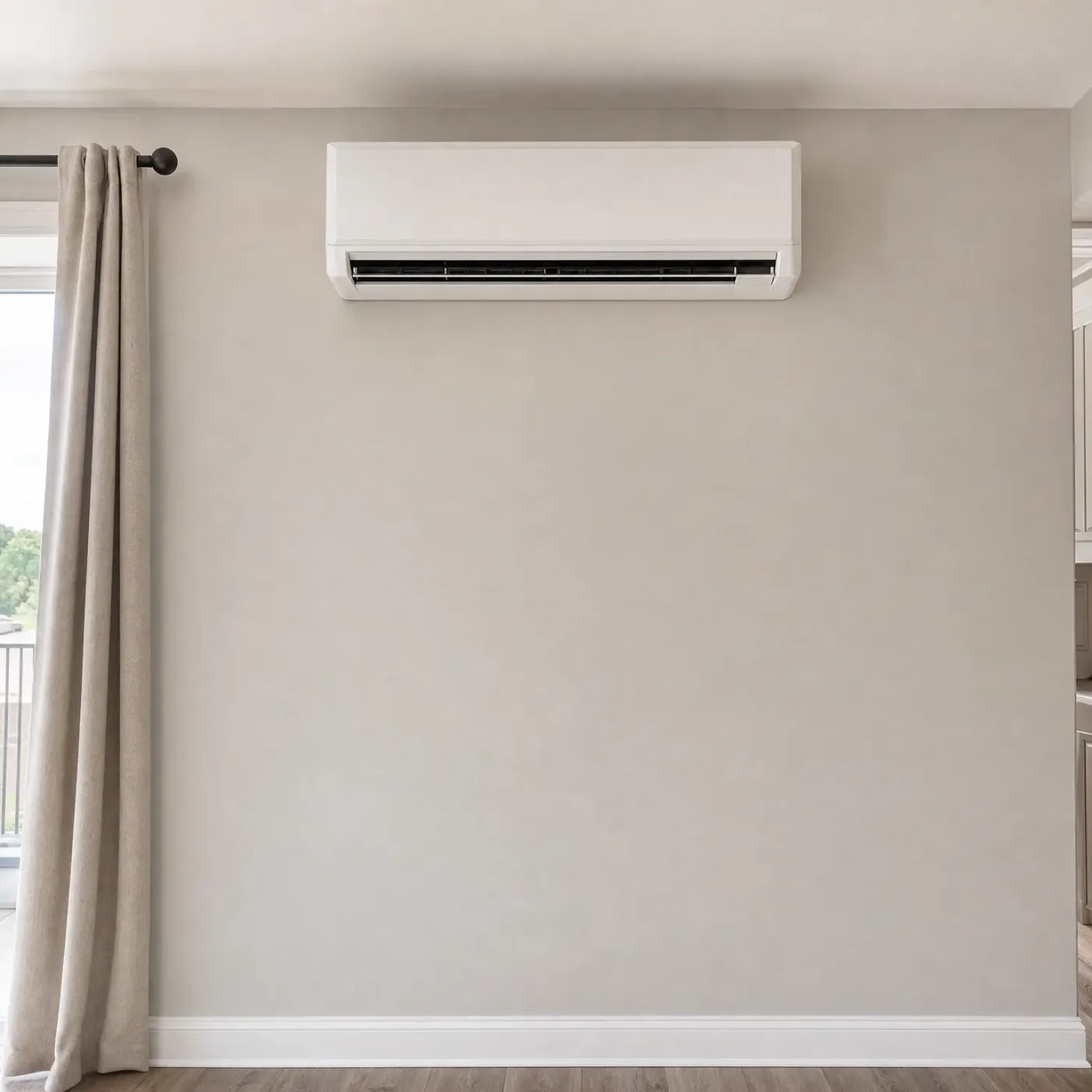
A white wall-mounted mini-split air conditioner unit high on a light gray interior wall, with a beige curtain and window at the left and wood-look flooring below.
A clean mini split like this one switches over to heat without any fuss, warm air within minutes of the setting changing.
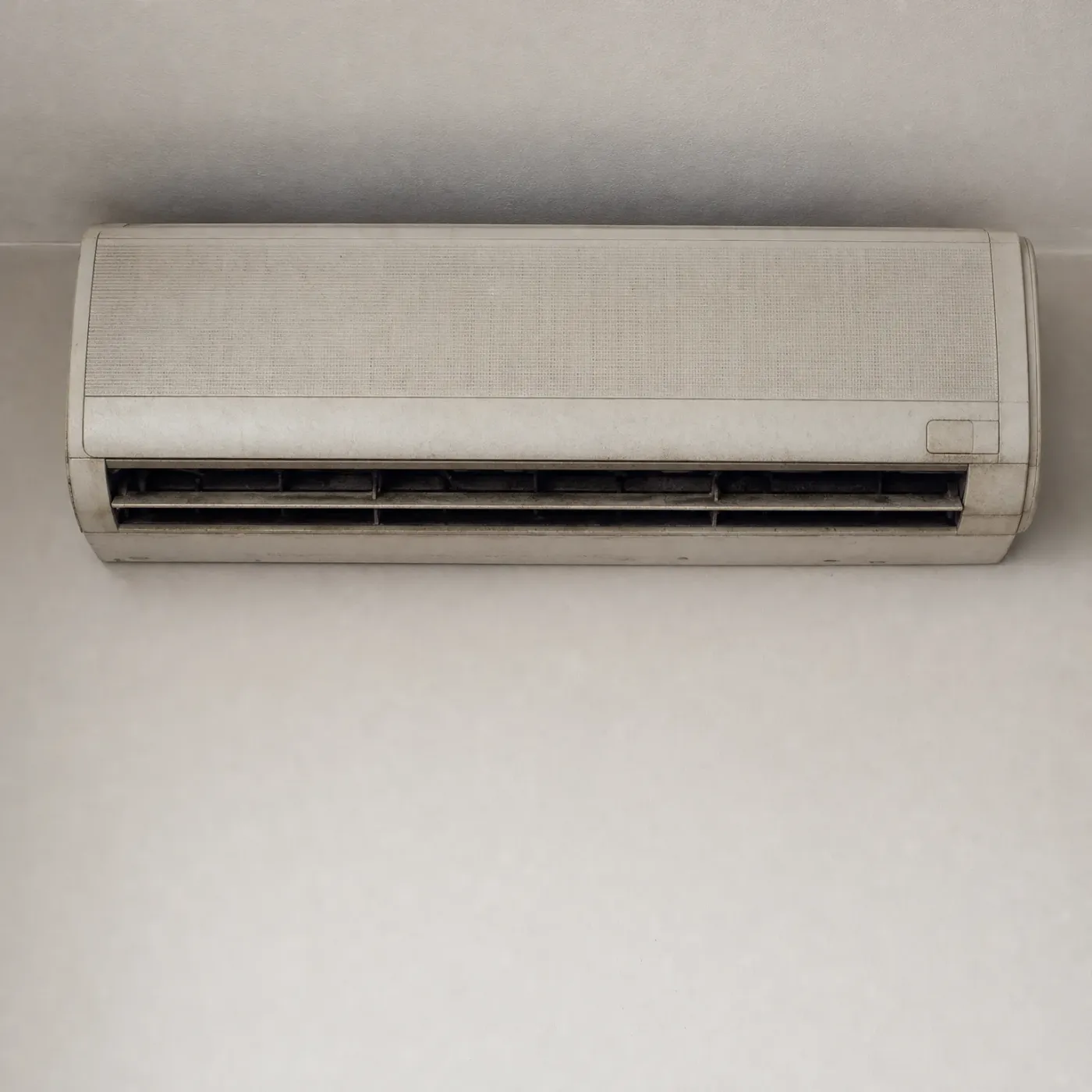
A dusty white wall-mounted mini-split air conditioner indoor unit with open louvers, installed near the ceiling on a plain light-colored wall.
Dust and grime caked around the outlet vents like this often mean the coil behind them is too dirty to pull in or release heat properly.
A single-story house with light gray horizontal siding, dark gray shingled gables, black shutters and a dark front door, fronted by a mulched bed of small shrubs and a large lawn under a clear blue sky.

Summer air in Virginia averages a dew point of 64°F in June, July and August, a figure the National Weather Service tracks for homes across the state. That's heavy, sticky air, and it's the same air your mini split has to wring moisture out of every time it runs cooling. All that condensing work adds up, and by the time heating season rolls around, a coil that's been fighting humidity all summer can be part of why the switch to heat doesn't go smoothly. If your unit is blowing cold air instead of warm, you don't have to sort through contractors and repeat the story to each one. Answer a few questions here and a contractor who handles mini splits in your area will reach out to you directly.

NASA POWER T2MDEW county cells weighted by homes

Get the right pro for your mini split

Explain the job once and skip repeating it on every call.

Asking costs nothing, and the choice to hire stays yours.

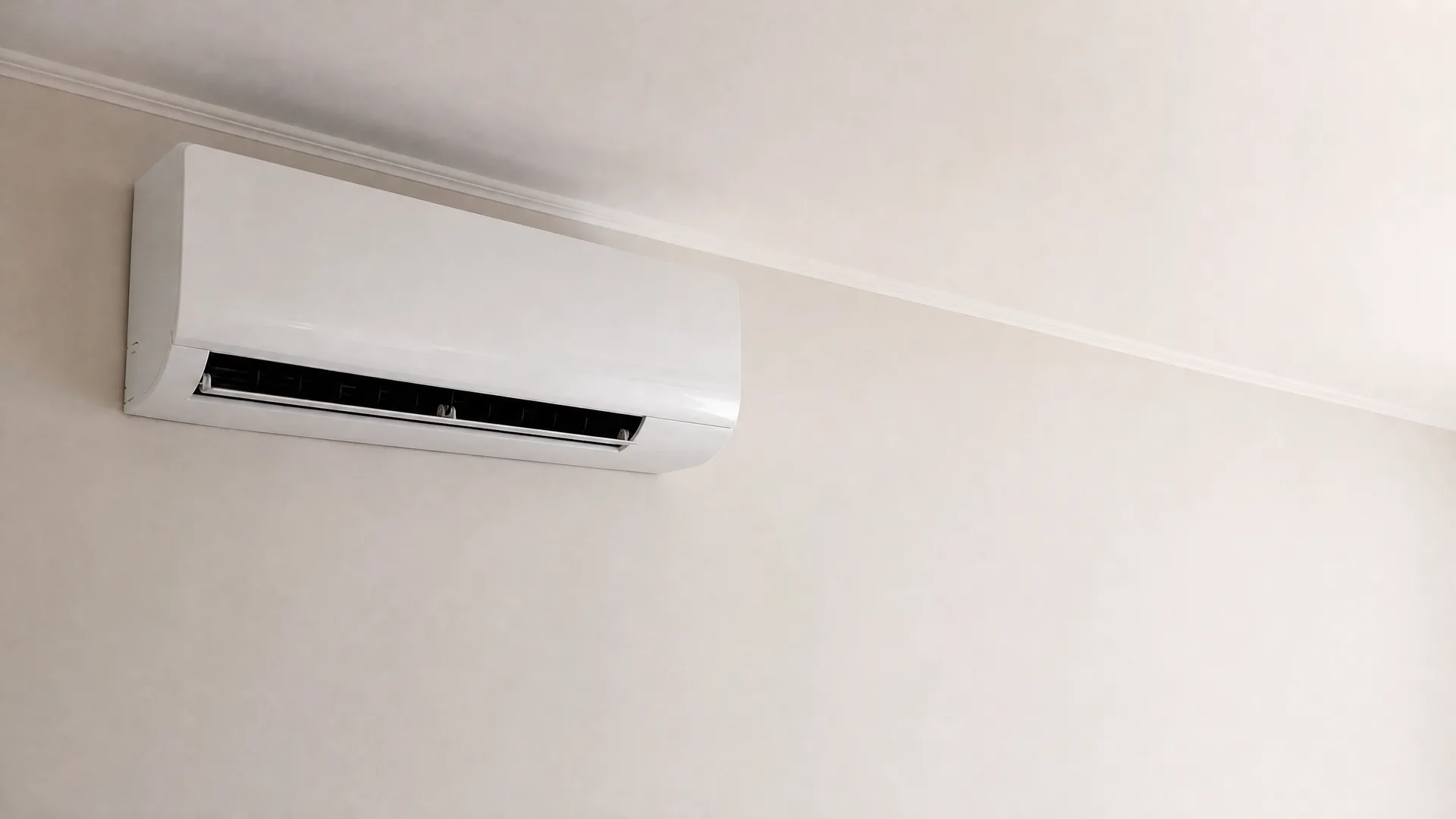
A white wall-mounted mini-split air conditioner indoor unit installed high on a plain beige wall near the ceiling.

The defrost cycle and cold air

When the outdoor temperature drops near freezing, frost builds on the outdoor coil. The unit has to run a defrost cycle to clear it, and during that cycle it briefly reverses back to cooling mode to melt the ice off the coil. That's normal, and it only lasts a few minutes. If cold air keeps blowing well past that, the valve likely isn't switching back.

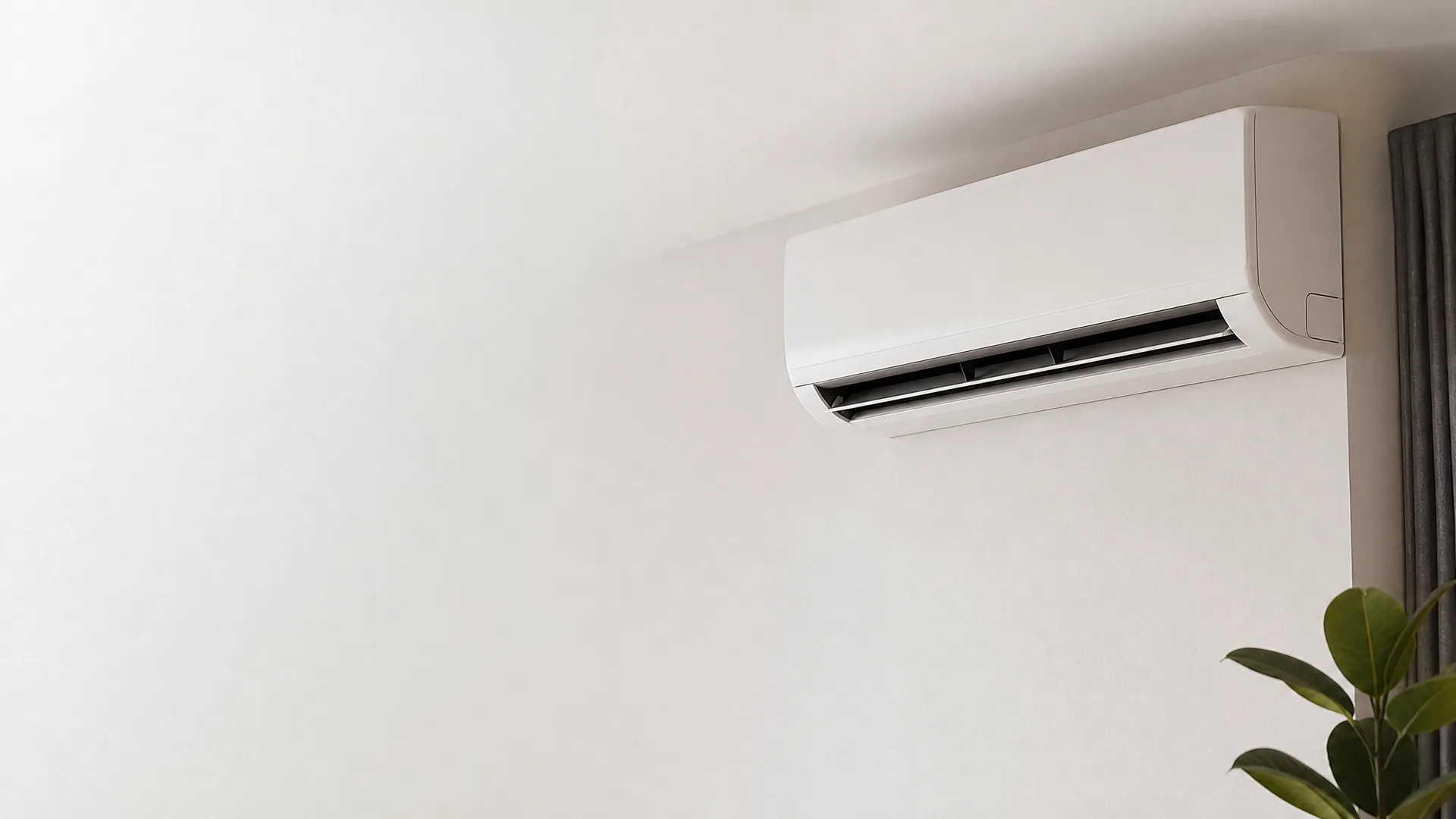
A white wall-mounted mini-split air conditioner unit near the ceiling of a plain white wall, with a gray curtain at the right edge and green plant leaves in the lower right corner.

What the thermostat sensor does

A small sensor near the indoor coil tells the unit how warm the air coming off it actually is. If that sensor reads wrong, the system can think it's heating properly when it isn't, and it won't kick into a higher stage of heat to correct for the cold air you're feeling. A technician can test that sensor with a meter in a few minutes.

A woman stands in the open doorway of a white stucco house holding the dark door, facing a man in a black cap and shirt seen from behind in the blurred foreground, with a potted flowering plant beside the entry.

Cold air on heat mode means something specific is wrong

A mini split set to heat and still blowing cold has a cause, whether that's a reversing valve stuck partway, a coil too dirty to pull heat from the outside air, or a defrost cycle running longer than it should. None of those clear up on their own, and none of them are something to diagnose by guessing from the thermostat.

Once you know what to look for, the next step is getting someone qualified to look at your unit and tell you which of these it is. That means skipping the part where you search around, call a few places, explain the same problem three times, and try to compare quotes that aren't for the same work. You can be matched with a contractor who handles mini splits in your area, and they'll reach out to you directly about what's going on with yours.

A dark ceramic mug on a round wooden table beside a light grey sofa with a woven cushion and knit throw, with a window, potted plant, floor lamp and wooden cabinet blurred in the background.
A modern two-story house with dark siding and stone base at dusk, with lit soffit lights, a path of large rectangular pavers set in dark gravel, planting beds, a lawn, and an orange and blue sunset sky above distant trees and water.

Mini Split Repair

A pro who works on mini splits

Step 1 of 3: Equipment
  • A living room corner with a beige upholstered armchair holding a green pillow and knitted throw, a ceramic table lamp on a side table, white built-in bookshelves, a framed landscape print, a curtained window, and a round wooden table with a lit candle and bowl in the foreground.
    • A local pro who knows mini splits gets your details and gets in touch.
  • A lit table lamp with a tapered beige fabric shade and a speckled rounded ceramic base sits on a wooden surface beside a potted plant, with curtains and a window in the background.
    • Send the request today and let a mini split pro reach out to you.
    • Get the mini split repair search off your mind today.
  • A cream upholstered armchair with a gray pillow and knit throw sits beside a wooden table with a eucalyptus-filled vase, in front of a lit stone fireplace with stacked firewood.
    • One form replaces the calls you'd make to find a mini split pro.
    • Describe what your mini split is doing once, in one form.
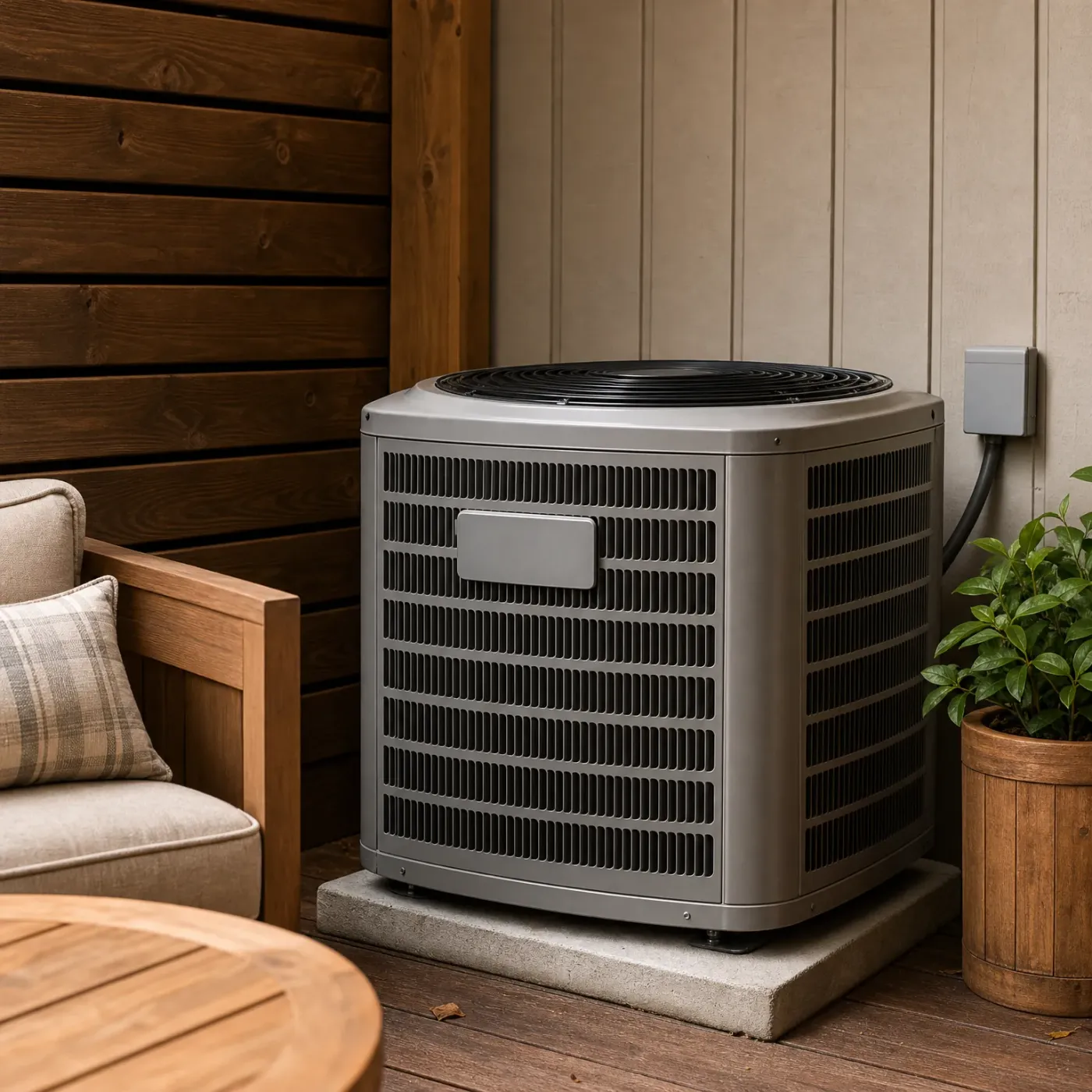
  • A gray outdoor air conditioner condenser unit on a concrete pad beside a wood-sided wall, with a horizontal wood slat fence, a cushioned patio chair, a wooden table, and a potted green plant nearby.
    • Only one pro gets your request, so you hear from one company.
    • Your request stays with one local pro.