Send the form and the search for an installer is over.
Sizing a mini split for a Virginia home comes down to more than square footage. Your summers get sticky, and a unit that's too small will run constantly and still leave the air damp. One that's too big cools the room fast but shuts off before it pulls the moisture out, so the space feels clammy even at the right temperature. A contractor who sizes it right looks at your windows, your insulation, which way the room faces, and whether electric heat is carrying you through the winter too, since most homes here do.
That math is not something you want to guess at, and it is not something you want to spend your weekend chasing down either. Finding a contractor who does load calculations instead of rough estimates usually means calling around, asking the same questions three or four times, and trying to tell from a quote alone whether someone actually knows what they're doing.
This page skips that part. Send the form once and the search is off your plate. No more comparing quotes that don't explain their numbers, no more repeating your home's layout to a new voice on the phone, no more wondering if the estimate you got was a real calculation or a guess based on the box the unit came in.
What's left after that is the actual work: someone coming out, measuring the room, checking what's already in the walls, and telling you the size that fits your home instead of a general one. Power here runs at a typical rate, so getting the size right once matters more than it might somewhere cheaper to run the wrong unit twice.
The button below starts that. Nothing to explain twice, nothing to compare on your own.
There's no single number that fits every Virginia home. A mini split is sized in BTUs, and the right number depends on the room's square footage, its ceiling height, how many windows it has, and which way they face. A 12,000 BTU unit covers roughly 500 to 600 square feet under normal conditions, but Virginia's summer humidity changes that math. A unit sized only for square footage can cool the air fast without running long enough to pull the moisture out of it, so the room feels cool but still damp. Since most homes here heat with electricity too, the same unit likely needs to carry your winter heat load as well, not just summer cooling. Getting the size right means someone looks at the actual room, not just a chart. An installer can measure the space and work out the load for both seasons, so you get a unit that keeps up without wasting power running longer than it should.
Is your mini split the wrong size for your room
If it's undersized, you've probably noticed it running nearly nonstop through the sticky stretch of summer and the room still feels damp even when the temperature reads fine. The unit never gets a break, and your power bill reflects that. If it's oversized, the opposite happens. It blasts the room cold in a few minutes, shuts off, then kicks back on again soon after. That short cycling means it's cooling the air but not running long enough to pull the moisture out, so the room can feel clammy even at a comfortable temperature. Either way, the unit is working harder than it should, and that extra strain adds up over the years you plan to live in the house.
A mini split does two jobs in summer: it drops the temperature and it pulls moisture out of the air. In Virginia, that second job matters more than people expect, because the summer dew point here averages 64°F across June, July and August, according to NOAA climate data. At that level the air sits on the damp side of comfortable, and an undersized unit can get the room down to the temperature on the thermostat while the air still feels wet. The right size keeps running long enough, at low enough speed, to actually wring that moisture out instead of just chilling it. Once you send in the details of your room, you're done chasing down someone to size and install it right. That part stops being your problem.
Answer a few questions instead of calling shop after shop.
It costs nothing to send, and you don't have to hire anyone.
One room versus the whole house
A single zone mini split in the main living area handles that room well, but it won't touch the bedrooms down the hall. If you're trying to cool the whole house with one indoor unit, you'll run it harder than its size allows and still have rooms that stay warm and sticky. A multi-zone system, with a unit sized to each room, is the only way to get even cooling through the whole place.
Oversizing versus undersizing the room
Go too big and the unit blasts cold air, hits the thermostat setting, and shuts off before it's run long enough to pull the humidity out. The room feels cool but clammy. Go too small and it runs almost nonstop all summer, never catching up on the heat or the moisture. Either way you end up with a room that doesn't feel right, just for different reasons.
How a contractor actually sizes the unit
A contractor doing this right runs a load calculation, not a tape measure. That means walking the room, checking the insulation, counting windows and their exposure, and factoring in what's on the other side of each wall. Square footage is one input among several. Two rooms the same size can need different BTU ratings depending on whether one has a west-facing window catching afternoon sun and the other doesn't. The calculation also accounts for the indoor unit's placement, since a wall unit mounted too close to a corner or blocked by furniture won't move air the way it's rated to.
Getting this wrong in either direction costs you for as long as the unit runs. Finding someone who'll actually do the calculation instead of guessing off square footage alone is the harder part. That usually means calling a few companies, asking if they size by load or by room size, and sorting through answers that don't match. Send the form once and that search is off your plate. You still have to let the contractor into the room to measure it.
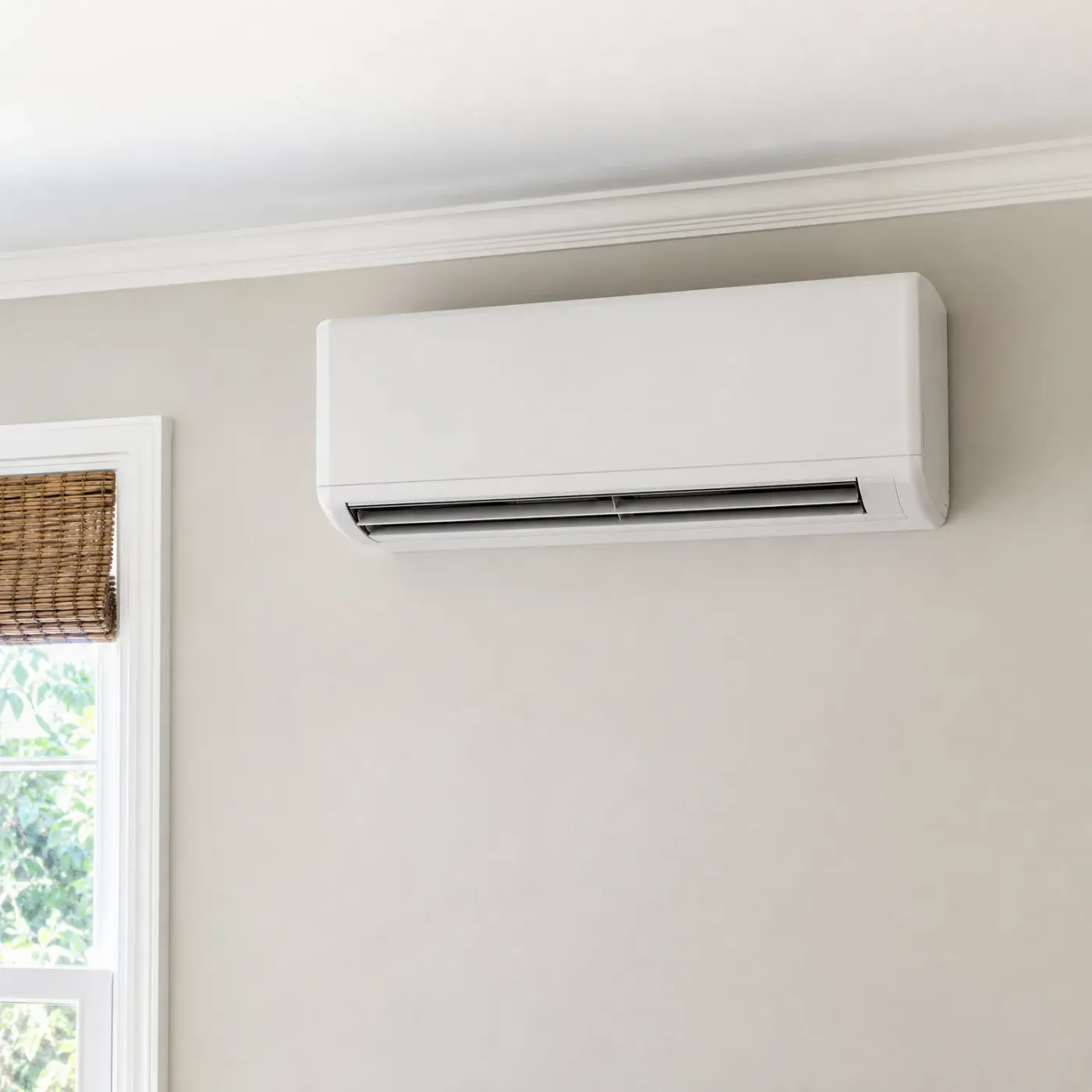
Running the way it should
A unit sized right for the room cycles on, pulls the air down to temperature and the moisture with it, then shuts off. It sits quiet most of the day. The coil behind that front panel stays clean because the system isn't straining to keep up.
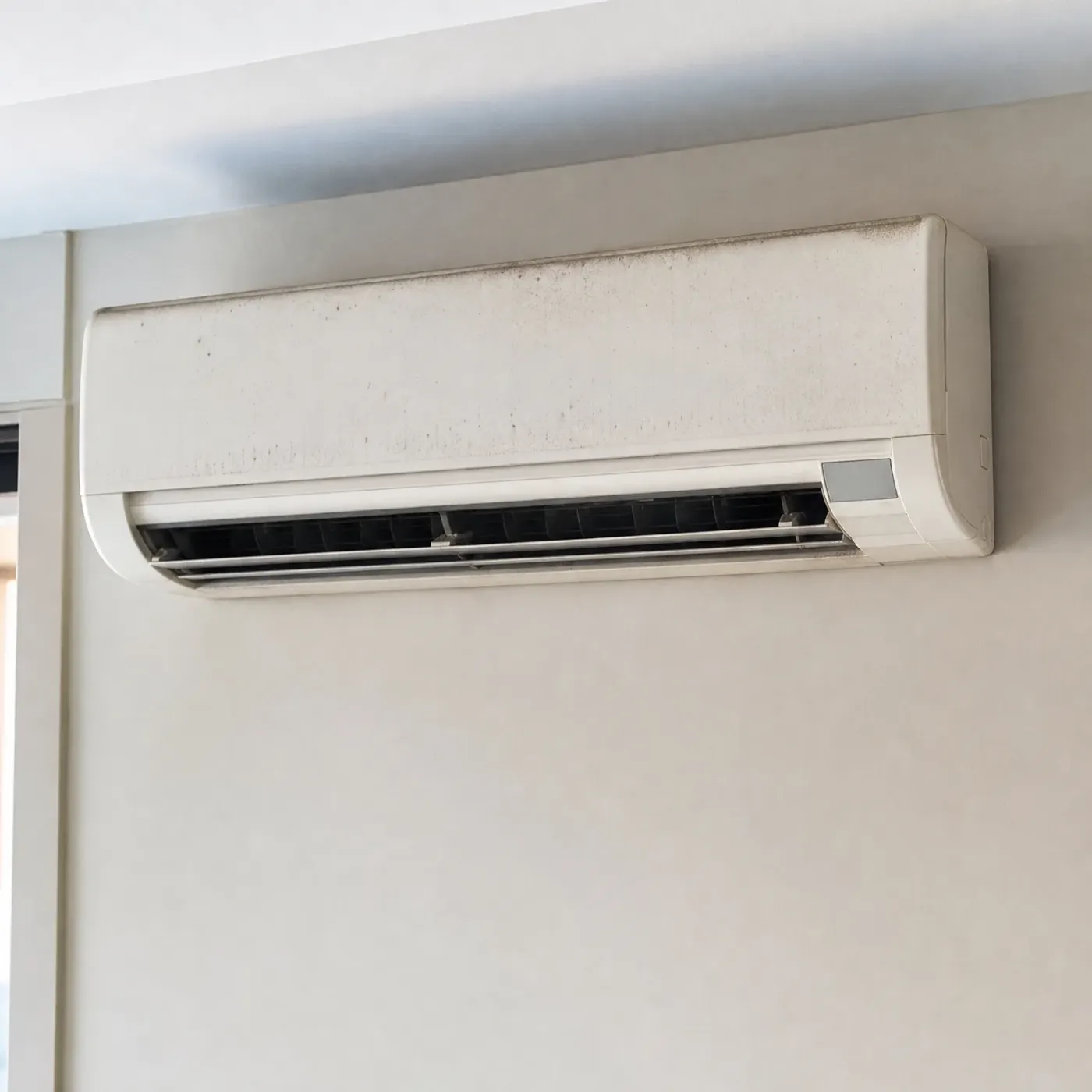
Running the way it shouldn't
Dust like this builds up when a unit runs far more than it should, which happens when it's too small for the room. It never gets the chance to rest and clean air through it the way it's built to. The discoloration is a sign of strain, not just age.
Too Small or Too Big
Undersized
It runs nearly the whole day during the hot stretch and still can't hold the room at the temperature you set.
The compressor almost never shuts off, so the parts inside it wear faster than they would cycling normally.
The room cools some but stays sticky, because a unit that never pauses doesn't get the slow pass over the coil that pulls moisture out.
Your power bill runs higher than a properly sized unit would, since it's working flat out instead of cycling.
Once you're in the hottest part of summer, it can lose ground entirely and never catch up to the set point.
Oversized
It blasts the room down to temperature in a few minutes, then shuts off before it's had time to dry the air.
The quick on off cycling leaves the room cold but damp, since moisture removal needs steady runtime, not a short burst.
Starting and stopping that often puts more wear on the compressor over time than a unit that runs in longer, steady stretches.
You'll notice the temperature swinging, since the thermostat is satisfied and the unit shuts off well before the room evens out.
It costs more upfront for a capacity the room doesn't need and won't use.
Power costs 15.28 cents per kilowatt-hour statewide
At 15.28 cents a kilowatt-hour, an undersized or oversized mini split shows up on your power bill, not just in how the room feels. A unit sized right for your space cycles normally instead of running flat out, and that's what keeps the cost down over a Virginia summer.
EIA-861 2025 statewide residential average
The size question, answered
The right size for your mini split comes from a load calculation on your room, not a square footage chart.
A unit that matches your room cycles on and off, holding the temperature and pulling the humidity down with it.
Getting the size wrong shows up two ways: a room that never feels dry, or a power bill that climbs faster than it should.
A contractor who measures windows, exposure and insulation before quoting a BTU number is doing this the right way.
Once you send the details, you're done calling around and repeating the same explanation to different companies.
The unit you end up with should run quietly in the background, not fight your Virginia summer all day long.
Square footage alone won't tell you what size mini split your room needs. The number comes from a load calculation: the room's dimensions, its windows and which way they face, how much insulation is behind the walls. Skip that step and you end up with one of two problems. Too small, and the unit runs through the sticky part of summer without ever catching up, leaving the air cool but damp. Too big, and it shuts off before it's pulled the moisture out, so the room feels clammy even at the right temperature on the thermostat. Either way shows up on your power bill, since a unit that's fighting its size runs harder and longer than one that matches the room.
A contractor who sizes it right walks the room first and quotes the BTU number after, not before. That's the only way to land on a unit that cycles normally, cools the air and dries it out at the same time, and then goes quiet until it's needed again.
You don't have to be the one who tracks down that contractor. Once you send over your room's details, the back and forth of calling around, explaining the same thing to three different companies, and sorting through quotes that don't match up is off your plate. What's left is a unit sized for your Virginia summer, installed by someone who did the math instead of guessing at it.