
What defrost mode means on a Virginia mini split
Why does my mini split show "defrost" and blow cold air?
Cold snaps here can leave the outdoor unit of a mini split coated in frost, and when that happens the indoor head may show "defrost" on the display while blowing air that feels cold instead of warm. With most Virginia homes leaning on electric heat through the winter, a mini split that seems to stop warming the room on a cold night is worth understanding before you assume something is broken.
The unit is melting ice off its outdoor coil, not failing
Defrost mode is normal. In cold weather, the outdoor coil can build up frost, and the system pauses heating every so often to run in reverse and melt it off, which is why the indoor head blows cool air for a few minutes. Once the coil is clear, it switches back to heating on its own. This happens more on the colder nights of the winter, and it should end by itself within a short stretch of time. If defrost mode runs long, repeats constantly, or the unit never goes back to blowing warm air, that points to a problem with a sensor, the reversing valve, or low refrigerant, and that calls for a technician who works on these systems.




Power costs 15.28 cents per kilowatt-hour statewide
Virginia power runs 15.28 cents per kilowatt-hour, close to the national average. That matters most when your outdoor unit is icing up and running defrost cycles on a cold night. Each cycle pulls extra power to melt the frost, so a unit that's defrosting often is costing you more than one running clean.
EIA-861 2025 statewide residential average

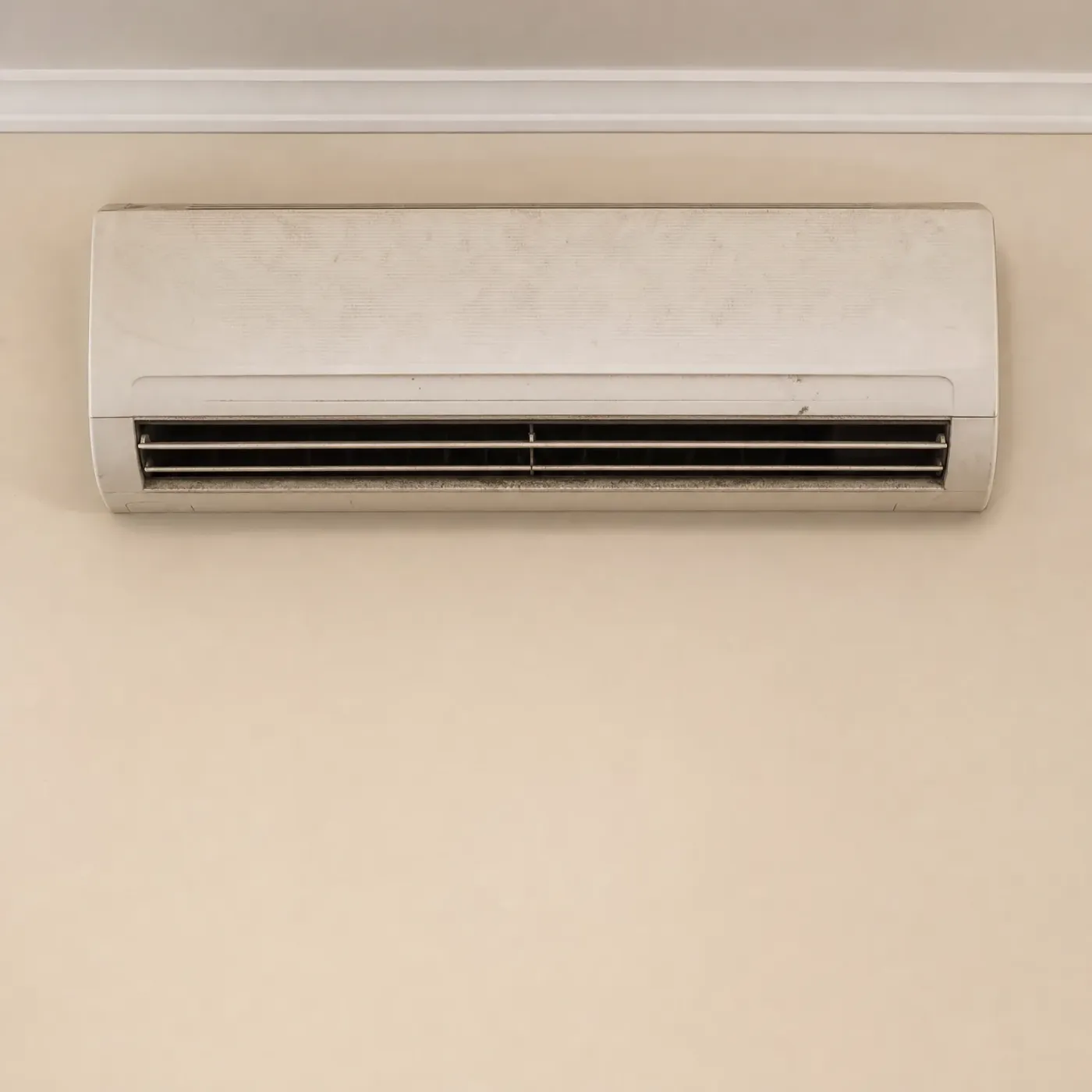
Frost builds on the outdoor coil during cold, humid nights.
A sensor reads the coil temperature and tells the system it's icing.
The reversing valve switches the system into cooling mode briefly.
Heat meant for your room melts the frost off the coil instead.
Why frost forms faster some nights
Frost builds fastest when the outdoor air sits close to freezing and still carries moisture, the kind of night Virginia gets plenty of between December and February. Warmer winter air can hold more moisture, and when that moist air passes over a cold outdoor coil, the moisture gives up its heat and turns straight to ice. A dry, colder night actually frosts the coil slower than a damp one a few degrees warmer. That's why defrost mode can kick in several times in an evening during a wet cold snap, then barely run at all once the air turns dry and colder behind it.
What a stuck defrost cycle looks like
A mini split that defrosts normally clears the coil and goes back to heating within several minutes, and the indoor head stops blowing cold once it switches back. If the display keeps reading defrost for much longer than that, or the outdoor unit still has visible ice after the cycle ends, something in the defrost control isn't resetting the system the way it should. That's a sign for a licensed technician to look at the sensor or valve rather than something to wait out, since a unit that can't finish a defrost cycle will keep running cold air into your room instead of heat.


Hand off the mini split problem
A mini split that won't come out of defrost, or that keeps going back into it every few minutes, usually has a reason that's specific to the unit, not a mystery. A sensor reading wrong, a reversing valve stuck partway, low refrigerant charge making the coil run colder than it should. Someone who works on these systems all winter in Virginia has seen the pattern before and knows where to check first instead of guessing. That's worth more than a general HVAC call when the problem is a mini split doing something a standard split system doesn't do. Sending the request means one contractor who handles this equipment regularly gets it, not a handful of companies competing for your callback. On a cold night with the indoor head blowing air that feels like outside air, the part that matters is not doing the figuring out yourself. Send it along and let someone who knows this equipment take it from here.
What a Stuck Defrost Cycle Means
- Defrost mode is the system clearing frost from the outdoor coil, and the cold air you feel indoors is part of that normal cycle.
- A unit stuck in defrost, or cycling into it every few minutes on a cold Virginia night, points to a specific part worth having checked.
- A local contractor who services mini splits all winter has usually seen the sensor, valve or charge problem behind a stuck defrost cycle before.
- Sending one request connects you with one licensed contractor local to Virginia, so you're not fielding calls from several companies at once.
- Once that request is sent, tracking down the right contractor stops being something you have to manage yourself.
Defrost mode itself is nothing to worry about. Your outdoor unit frosts up on cold, damp Virginia nights, and the system runs a short cooling cycle to melt it off before going back to heating your room. The cold air you feel for a few minutes is part of that, not a sign anything is wrong.
A unit that won't come out of defrost, or keeps dropping into it every few minutes, is a different matter. That pattern usually traces back to one part: a sensor giving the system a false reading, a reversing valve that's not switching cleanly, or a refrigerant charge that's lower than it should be. None of those clear up on their own, and none of them are worth guessing at from the thermostat.
This is where having someone who works on these systems all winter pays off. A contractor local to Virginia who services mini splits through the cold months has likely already run into whatever is causing yours to stick, because the same few parts tend to be behind it. Sending one request puts you in touch with one licensed contractor, not a handful of companies calling to bid on the job.
From there, the part that used to be your problem, finding someone who actually knows this equipment, isn't anymore. You sent the request. The rest is on them.
Send one request and you're done looking
The pro who reaches out is licensed in Virginia.
You're not committing to anything by asking.