What a mini split tune-up covers in Virginia

Send the form and the mini split tune-up stops being something to remember.

I'm done searching

A mini split tune-up covers the indoor head and the outdoor unit both. The contractor cleans the filters and the coil inside, checks the blower wheel for dust buildup, and clears the condensate drain so it isn't blocked when summer humidity has the system running long hours. Outside, they check the refrigerant charge, clean the outdoor coil, and make sure the fan and electrical connections are sound. A dirty filter or a coil caked with dust makes the system work harder to pull the same heat out of the air, and that shows up on your electric bill since most homes here heat and cool with it. A clogged drain line can back up and leak into the wall or ceiling below the head. Catching a weak refrigerant charge before summer means the system isn't struggling to keep up once the heat and humidity set in for good.

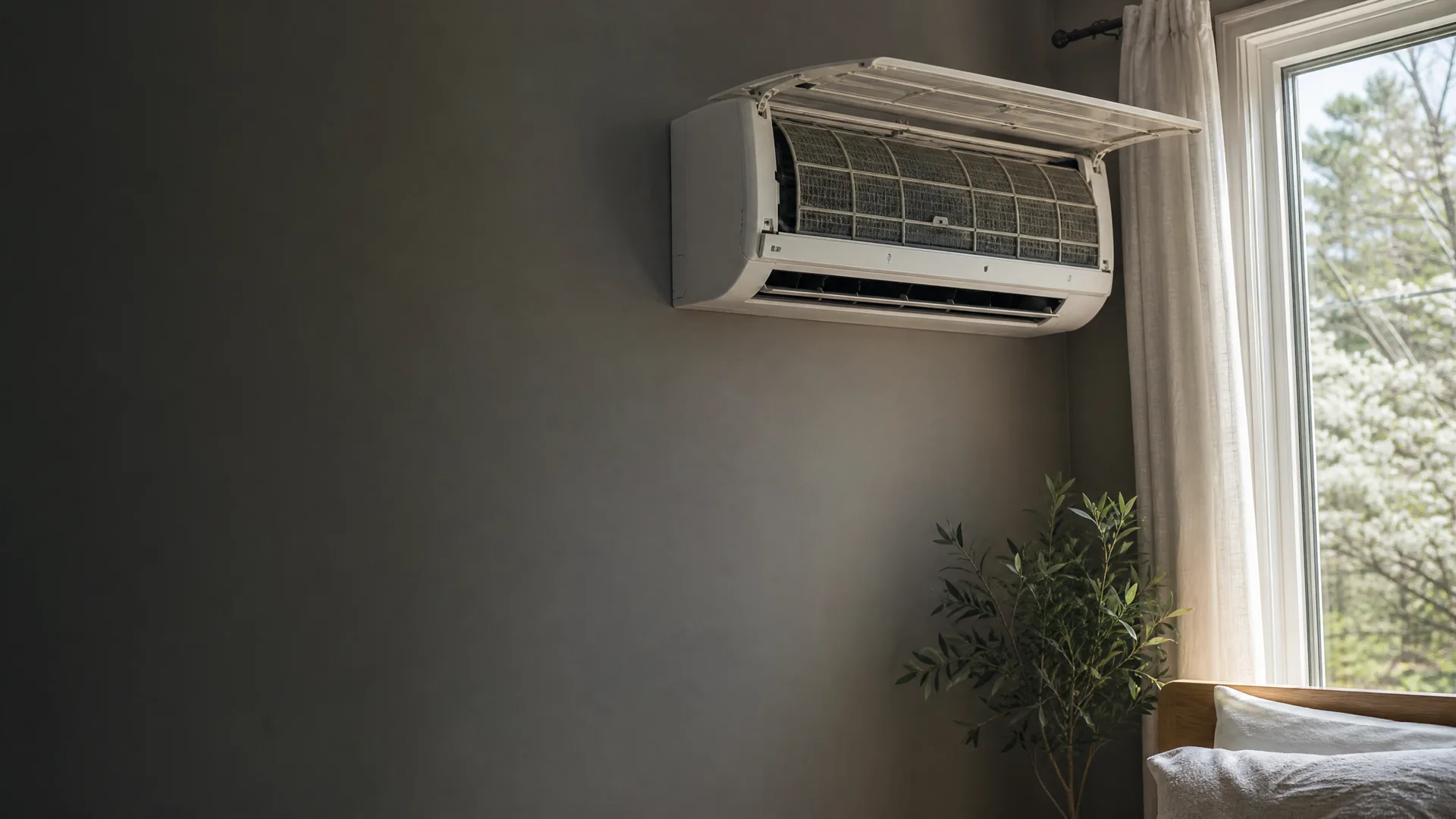
A wall-mounted mini-split air conditioner with its front cover open exposing the filters, on a gray interior wall beside a curtained window with green trees outside and a potted plant below.

You pop the cover up on a Saturday morning because the bedroom didn't feel as cold as it used to overnight. Light's coming in low through the blinds. The filter screen slides out grey, dust packed into the mesh so thick you can't see through it. You run a thumb across it and it leaves a line. This is the one that's been running since April, the one closest to where you sleep. You hadn't thought about it since last fall. Behind it, barely visible, the coil fins look dull instead of bright. You set the filter on the sill, meaning to rinse it, already thinking about the other two heads in the house you haven't checked at all.


Tune-Up Now or Wait for Summer

Skip the tune-up

  • The coil stays dirty and the system pulls more power to move the same amount of heat out of your house.
  • A clogged condensate drain backs up and you find water dripping from the indoor head onto the floor or wall below it.
  • Dust packed into the blower wheel throws it out of balance, and the head runs louder than it did last year.
  • Refrigerant charge that's drifted low goes unnoticed until the unit can't keep a room cool on a hot afternoon.
  • A breaker trip or a frozen coil in July means you're calling for a repair instead of a scheduled visit.

Get it done now

  • The contractor pulls the filters and the coil clean before the first stretch of 90-degree days sets in.
  • The condensate drain gets cleared, so the line is open when the air is holding the most moisture it will all year.
  • The blower wheel gets checked for dust buildup now, while it's a cleaning job and not a replacement.
  • The outdoor unit gets looked over before it's running flat out every afternoon through August.
  • Catching a low charge or a loose connection in spring means it doesn't turn into a no-cool call in the middle of summer.
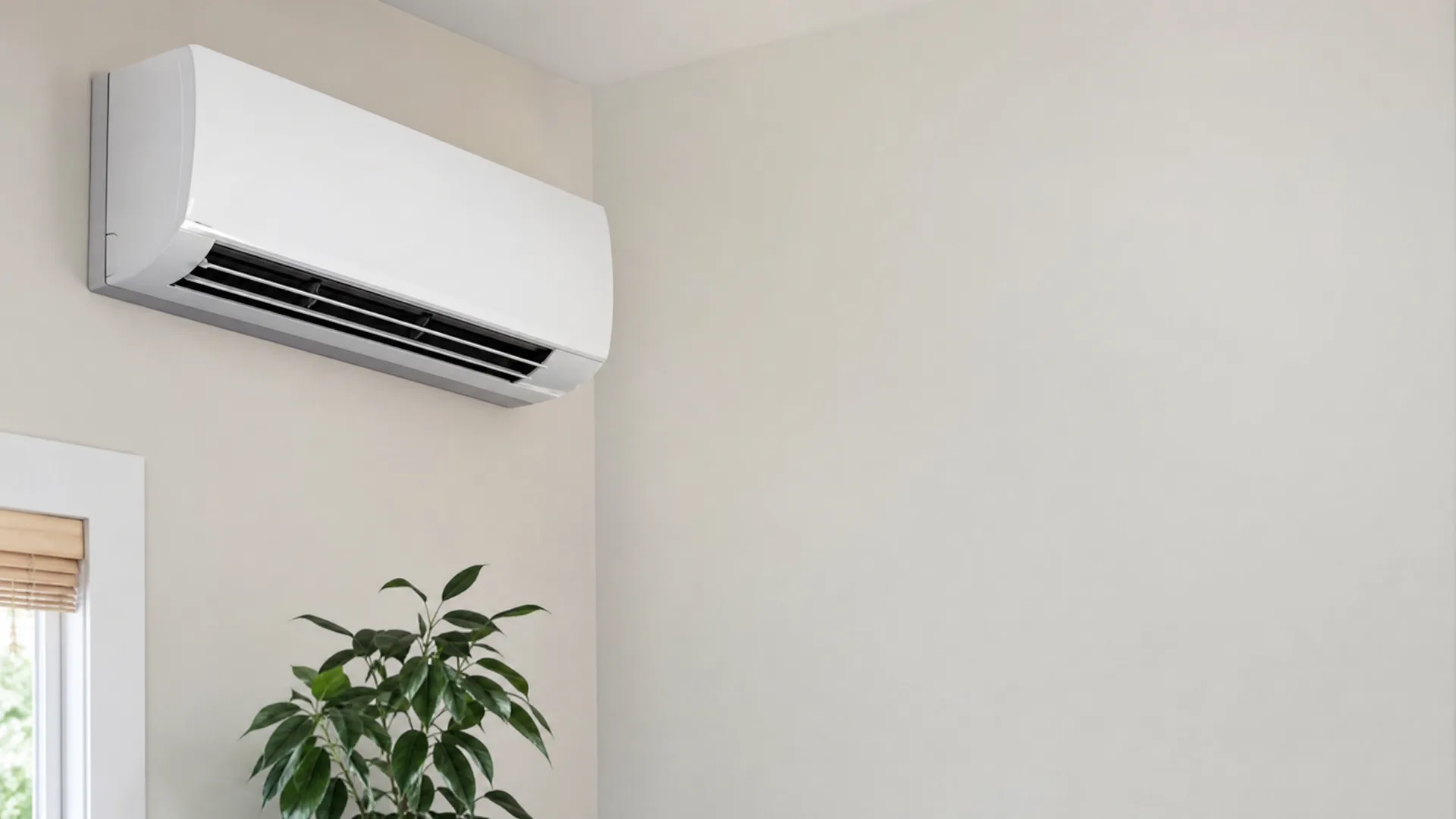
A white wall-mounted mini-split air conditioner near the ceiling of a beige interior corner, with a green houseplant and a curtained window at the lower left.

Why the outdoor coil matters

The outdoor unit sits outside year round, and Virginia summers put pollen, grass clippings and plain dirt on those fins. A contractor checking that coil will straighten bent fins and rinse off what's built up. Air has to move through that coil for the system to dump heat outside. When it's coated, the compressor works harder to do the same job, and that shows up on your electric bill before it shows up as a breakdown.

A white wall-mounted mini-split air conditioner indoor unit on a plain light gray wall, positioned to the right of frame.

What the refrigerant check tells you

A mini split doesn't use refrigerant up. If the charge is low, it's because something is leaking, and a tune-up is when that gets caught. Low refrigerant makes the indoor head blow air that isn't as cold, and it makes the outdoor unit run longer to make up for it. Checking the charge against what the system was built to hold is routine, and it's the difference between catching a slow leak now and losing cooling in August.

What does a contractor actually check on the outdoor unit during a tune-up?

You already know the indoor head gets a cleaning, but the outdoor unit sits out there taking the weather all year, and you want to know what actually gets checked beyond a quick look. It's the half of the system you don't see from inside the house, so it's easy to wonder if it gets the same attention.

The contractor checks the refrigerant charge, the fan motor and the electrical connections

A contractor checks the refrigerant level against what the system was designed to run, since a low charge makes the compressor work harder without cooling your house any better. The fan motor gets checked for noise and for how freely it spins, since a motor dragging under dust and debris pulls more power. Electrical connections at the disconnect box get checked and tightened, since a loose one can trip the unit out or wear the contacts. The contractor also checks that the unit sits level on its pad, since a tilted unit drains poorly and strains the compressor mounts. All of this runs through once a year, before Virginia's humidity puts the load on the system that finds whatever was already weak.

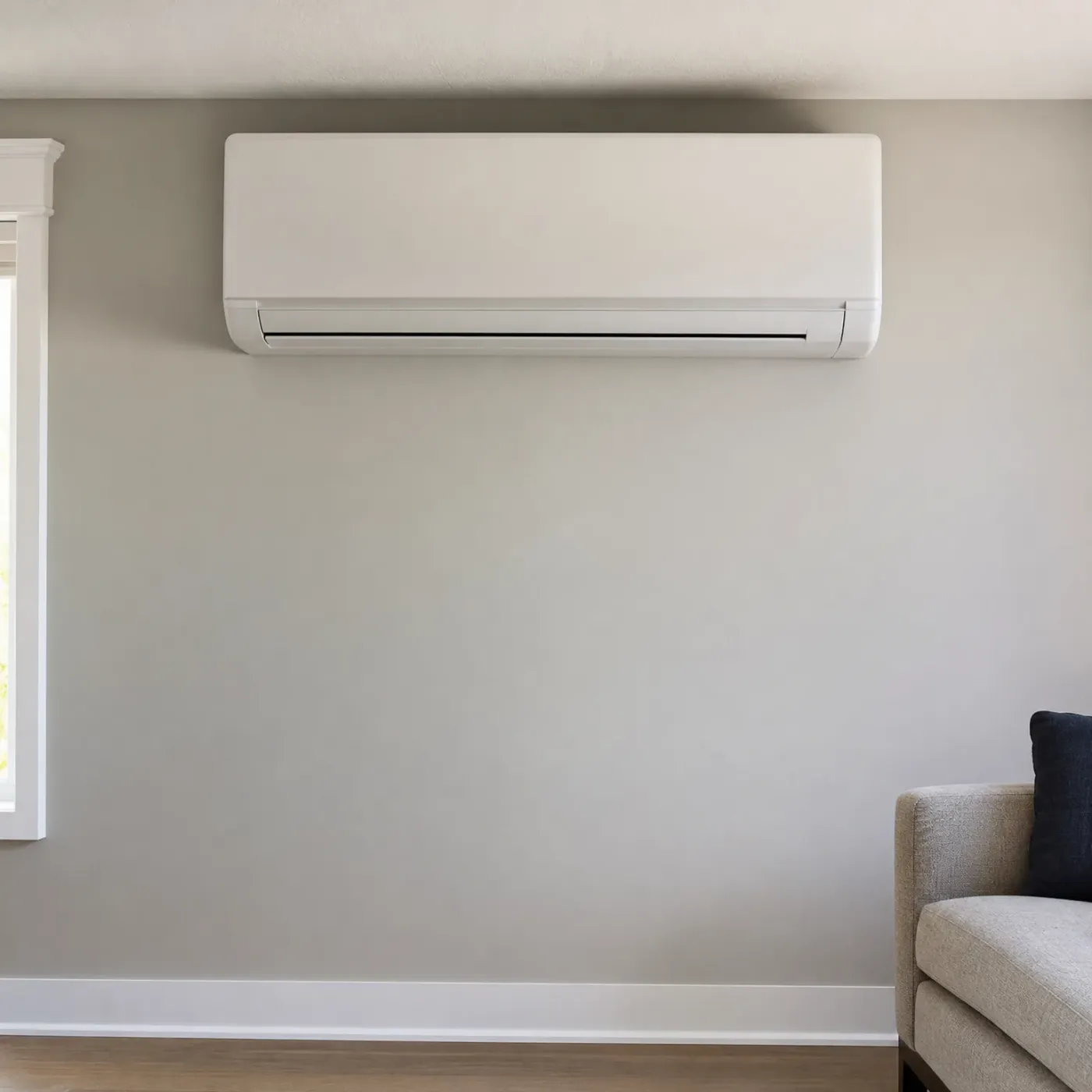
A white wall-mounted mini-split indoor unit installed high on a gray interior wall, with a window at left and part of a light gray sofa with a dark cushion at lower right.

After a tune-up

This is what a mini split looks like when the coil and filters are clean and the drain runs free. Air moves through the vents without resistance, so the unit cools the room without straining. This is the state a tune-up is meant to get you back to and keep you at.

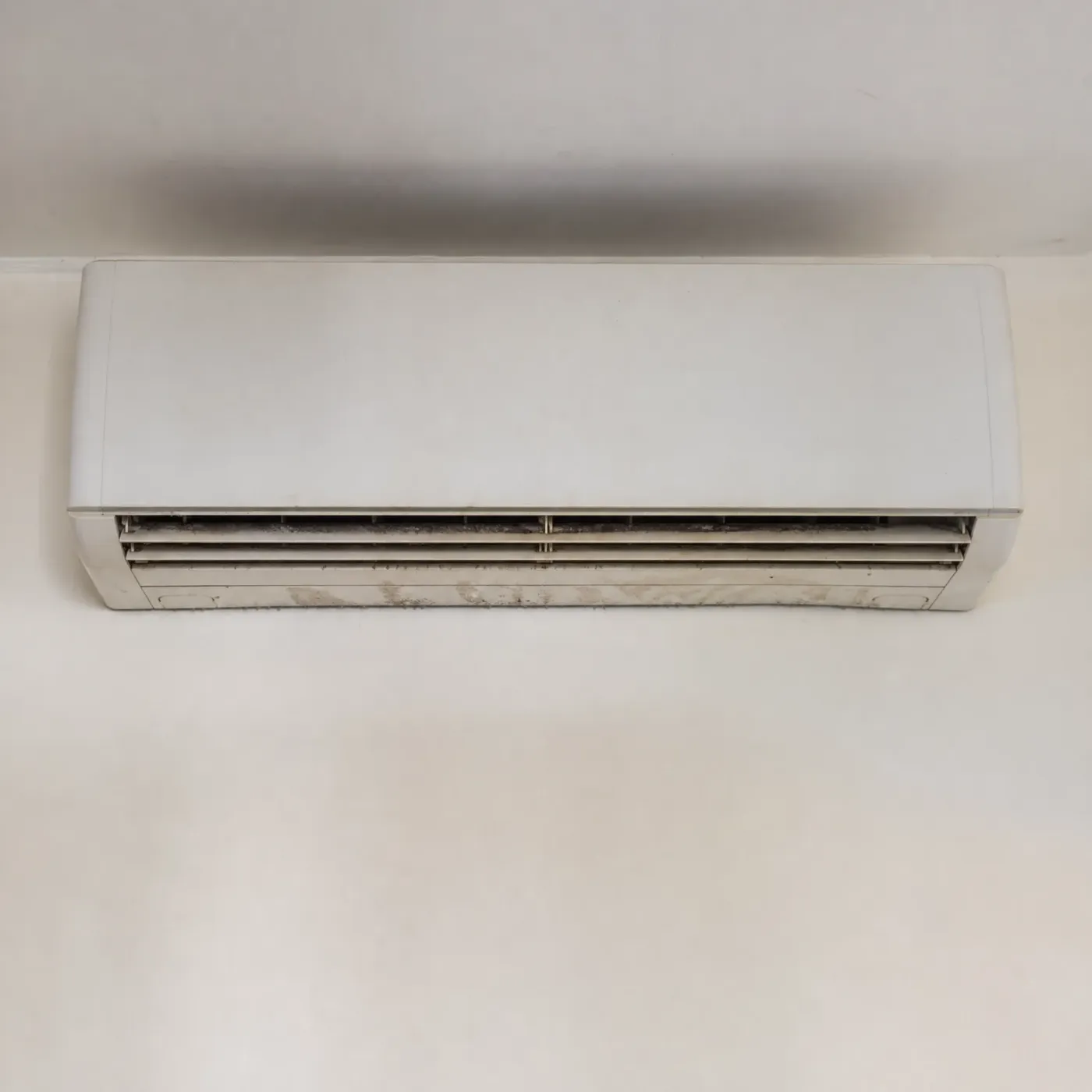
A white wall-mounted mini-split air conditioner indoor unit with visible dust and staining along its lower vent, installed on a plain pale wall.

Gone too long without one

Dirt and mold have built up along the vents and lower casing because the filters and coil haven't been cleaned. Air coming off the unit picks up that smell as it passes through. Left alone, that buildup keeps spreading across the casing and into the coil behind it.

A gray-haired man with a beard in a blue button-placket shirt reclines on a couch with his eyes closed, beside a sunlit window with a green plant.
A woman in a cream knit sweater sits in an armchair with her eyes closed near a window showing yellow autumn foliage, with a mug on a round wooden side table beside her.
Living room with a grey sectional sofa, wall-mounted white mini-split air conditioner above it, a potted tree beside sliding glass doors with beige curtains, and a wooden coffee table with a vase of foliage in the foreground.

Send one request and you're done looking

A licensed local pro takes the request for your mini split tune-up.

One request and finding someone for the tune-up is handled.

Find a licensed pro

You only hire the pro if you want to.

Why does one room never feel as cool as the rest?

You notice it most in the room with the mini split head, usually in the afternoon when the sun's been on the house for hours. The air coming out feels weak, more like a fan than cooling. You might hear the indoor unit running longer than it used to, or notice it short cycling, kicking off and back on every few minutes. There could be a musty smell when it first kicks on, or a thin film on the louvers you can see if you look close. Some homeowners find a drip mark on the wall under the indoor head, or a damp spot on the floor nearby. A unit working this hard against a dirty coil or a clogged drain pulls more power to do the same job, and that shows up on your electric bill before anything else does.

A two-story house with light beige horizontal siding, a gabled roof, a small covered front porch with dark door, and shrubs along the foundation, set behind a mown lawn and wet sidewalk with large leafy trees on both sides.

Virginia summers run a dew point near 64°F across June, July and August, by NOAA's average. That's sticky air, the kind that sits on your skin instead of drying off it. Your mini split isn't just cooling that air, it's wringing the moisture out of it, and a dirty coil or a weak filter makes that harder work for the same result. You'll notice it as a room that stays cool but still feels damp, or a unit that runs longer in the evening than it used to. A clean system pulls that moisture out the way it's built to.

NASA POWER T2MDEW county cells weighted by homes

A man in a gray sweater reclines in a brown leather armchair with his eyes closed, beside a wooden side table holding a mug, a folded newspaper and a potted plant, with a bookshelf and sunlit window behind him.
A man with greying hair and a dark sweater leans back on an armchair with his eyes closed and a slight smile, in a living room with a bookshelf, plant, folded newspaper and mug on a wooden table.
A man in a gray fleece jacket sits reclined in a leather chair with his eyes closed, in a room with bookshelves, a table lamp, a window, and a desk holding a folded newspaper and a dark mug.
A bearded man in a gray fleece pullover sits with eyes closed in a brown leather armchair in a living room, with a floor lamp, bookshelf, potted plants, a side table holding newspapers and a dark mug, and a bright window behind him.

One mini split head

If your house runs on a single mini split head for one room or a small addition, a tune-up is a short visit. The contractor cleans that one filter and coil, checks the one outdoor unit tied to it, and clears the drain. There's only one line set to look over and one blower wheel to check for dust. You're not paying for time spent walking between rooms or units, just the one system doing its job of keeping that space cool through a Virginia summer.

A multi-zone setup

Plenty of Virginia homes run several indoor heads off one outdoor compressor, one for each bedroom, the living room, maybe a finished basement. A tune-up here means checking every head on that line, not just the loudest or weakest one. Each filter gets pulled and cleaned, each coil checked, each drain cleared, because a problem at one head can point to something at the shared outdoor unit. More heads means more time on-site, but it also means one contractor looking at the whole system at once instead of piecing it together room by room.

Power costs 15.28 cents per kilowatt-hour statewide

At 15.28 cents a kilowatt-hour, every bit of strain on your mini split shows up on the bill. A dirty coil or clogged filter makes it run longer to cool the same room, and you pay for those extra minutes all summer.

EIA-861 2025 statewide residential average

What a Tune-Up Comes Down To

  • A mini split tune-up means a clean coil, clear filters and a drain that runs free, nothing more mysterious than that.
  • Skip it and the same strain shows up twice: a higher bill in July and a weaker room when the heat's worst.
  • A contractor who works on mini splits all summer in Virginia knows which part usually fails first on units that sit outside through pollen season.
  • Booking through this page puts you with one licensed local contractor, not a handful of companies competing for your callback.
  • Whether you've got one head or several, the checks are the same ones this page already walked through.
  • Once the system's clean, it goes back to doing what it's built to do: cool the room without straining to get there.

A mini split tune-up isn't complicated. The coil gets cleaned, the filters get cleared, the drain gets checked so it runs free instead of backing up under your indoor head. That's the whole job, done right on both the indoor unit and the one sitting outside taking Virginia's pollen and summer humidity all season.

Skip it and you feel it in two places at once. The bill climbs in July because a dirty coil makes the system work harder to pull the same heat out of your house. The room feels weaker right when you need it most, air coming out more like a fan than cooling.

A contractor who services mini splits through a Virginia summer has seen which parts give out first on units that sit outside year round. That's not guesswork for them, it's what they check every time because they know what pollen season does to an outdoor coil here. Book through this page and you're handed to one licensed, local contractor, not shopped around to several companies hoping for a callback.

Whether your house runs on one head or several, the checks don't change. Same filters, same coil, same drain, just more of them if you've got more rooms on the system. Once it's done, the unit goes back to doing what it was built to do, moving heat out of your house without straining to get there, and that strain is what you were paying for every time the compressor ran longer than it needed to.

A white wall-mounted mini-split air conditioner on a dark grey textured wall, with a monstera plant leaf at the lower right corner.

Finding a pro stops being your job

Step 1 of 3: Equipment