Tell us about the job
Takes about a minute. No obligation.
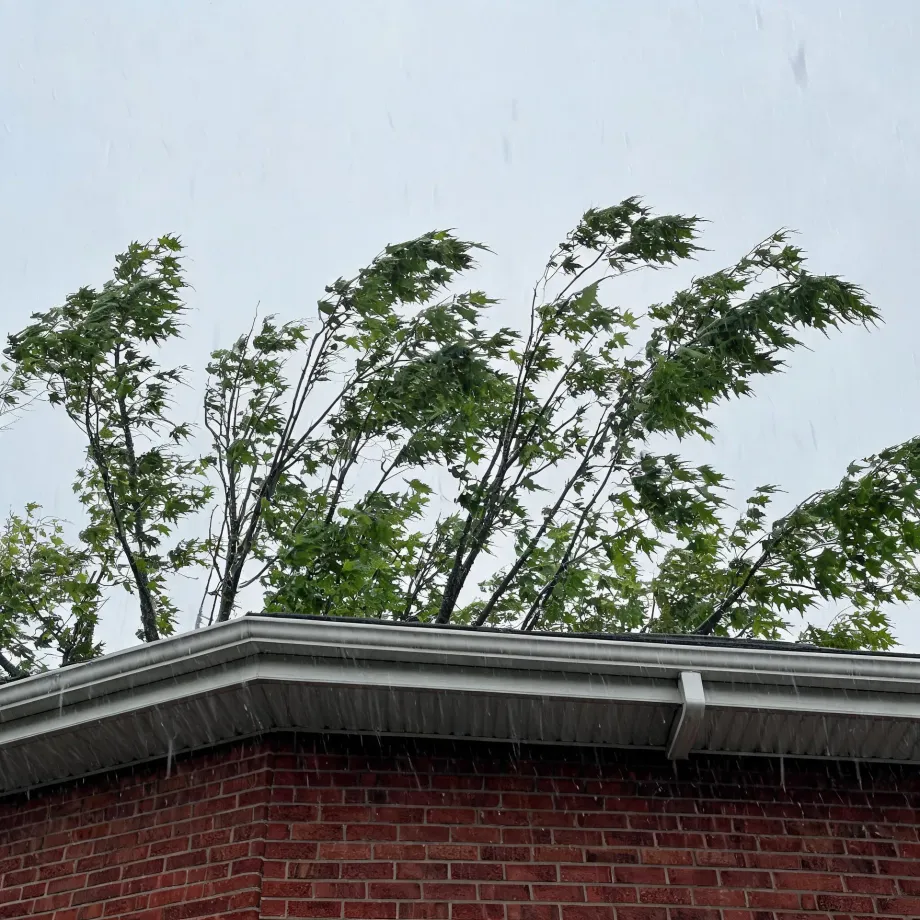
A contractor diagnosing a mini-split repair in Louisa County starts outside, at the condenser unit, because the equipment has been running against a genuinely active weather environment. 126 severe weather events were recorded in Louisa County, Virginia between 2015 and 2024. At that rate, the outdoor components accumulate stress across cooling and heating seasons alike, and a compressor or condenser coil that tests weak has likely been working hard for some time before it showed a symptom. The fault may still be installation quality or deferred maintenance, but neither of those gets ruled in until the contractor has looked at what the outdoor unit has actually been through.
A refrigerant leak, a failed capacitor, a board that has stopped communicating: these are what a contractor opens a mini-split to find, and in housing stock of this vintage they are where the repair actually lives. Half the homes in Louisa County, Virginia were built in 1995 or earlier (2020-2024 ACS 5-year). A house built then was not designed around a mini-split; the equipment came later, installed into what was already there. That gap matters for repair work because when something fails, the fault is almost always in the unit itself, in a coil, a sensor, or a control board, and the house behind it is not the variable. Whether the needed part is still in supply is a real question for a system that has been running for years, and that is what the contractor has to confirm once the unit is open.
The Parts of a Mini-split a Contractor Checks First
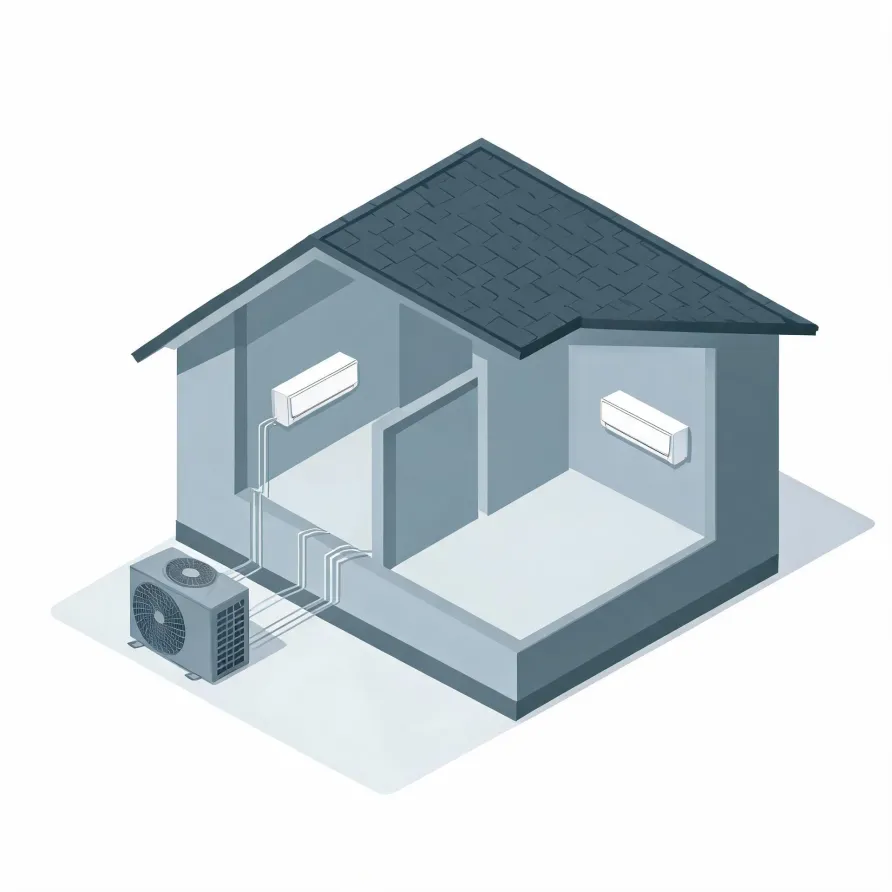
The indoor air handler mounts high on a wall inside the room and is the piece a homeowner sees every day. It holds the evaporator coil, a blower fan, and a filter. When cooling or heating fails, or when airflow drops off, the contractor starts here, pulling the unit apart to check each of those components for damage, blockage, or refrigerant issues.
The outdoor condenser unit sits on a pad or bracket outside the house and carries the compressor and condenser coil. A refrigerant line set and a control wire run between the two units through a small penetration in the wall. The condenser and the compressor are frequent sites of failure, and the line set can develop leaks that show up as lost performance indoors.
The drawing shows a typical mini-split layout, and a licensed contractor determines which components need attention in your specific home.
Get matched in Louisa CountyLouisa County, by the numbers
126 severe weather events were recorded in Louisa County, Virginia between 2015 and 2024.
NOAA National Centers for Environmental Information, Storm Events Database, bulk CSV export, events 2015-01-01 through 2024-12-31.Half the homes in Louisa County, Virginia were built in 1995 or earlier (2020-2024 ACS 5-year).
U.S. Census Bureau, 2020-2024 American Community Survey 5-Year EstimatesLouisa County, Virginia holds 18,366 housing units (2020-2024 ACS 5-year).
U.S. Census Bureau, 2020-2024 American Community Survey 5-Year EstimatesOwners occupy 82.2% of the occupied homes in Louisa County, Virginia (2020-2024 ACS 5-year).
U.S. Census Bureau, 2020-2024 American Community Survey 5-Year EstimatesCodes & Standards for Mini-Split Repair in Louisa County, Virginia2 sourced rules & standards
Licensing and Legal Requirements in Louisa County, Virginia
Virginia’s contractor licence classes start above $1,000: the entry class covers a single contract or project over $1,000 but less than $30,000, or less than $250,000 of work in any 12-month period, with larger classes above that.
Virginia requires a contractor licence: no person may engage in, or offer to engage in, contracting work in the Commonwealth without one.
Severe Weather Events in Louisa County, Virginia
Extreme weather puts real strain on heating and cooling equipment, and Louisa County has its own pattern of conditions that shape how hard that equipment works. Repair needs here are not abstract: they follow from what the local climate actually does to a system over time.
126 severe weather events, 2015–2024. Source: NOAA National Centers for Environmental Information, Storm Events Database.