
Is a cold-climate mini split worth it in Virginia

Step 1 of 3: Equipment

Yes, a cold-climate mini split holds up in Virginia, and it works harder for you here than a standard one would. Winters in Virginia rarely hit the deep cold that makes an ordinary heat pump give up and lean on backup heat, but they do bring enough cold nights that a regular unit loses efficiency right when you need it most. A cold-climate model keeps producing heat well below freezing without dropping into that weaker mode, so you get steady warmth through the cold stretches instead of a system straining to keep up. Since most homes in Virginia heat with electricity, that steadier output matters for your bill, not just your comfort. Come summer, the same unit handles the mugginess without trouble, since cold-climate systems cool exactly like standard ones. The gain is entirely on the winter side. If your home already runs on electric heat, this is the version of a mini split built for how Virginia's winters actually behave.

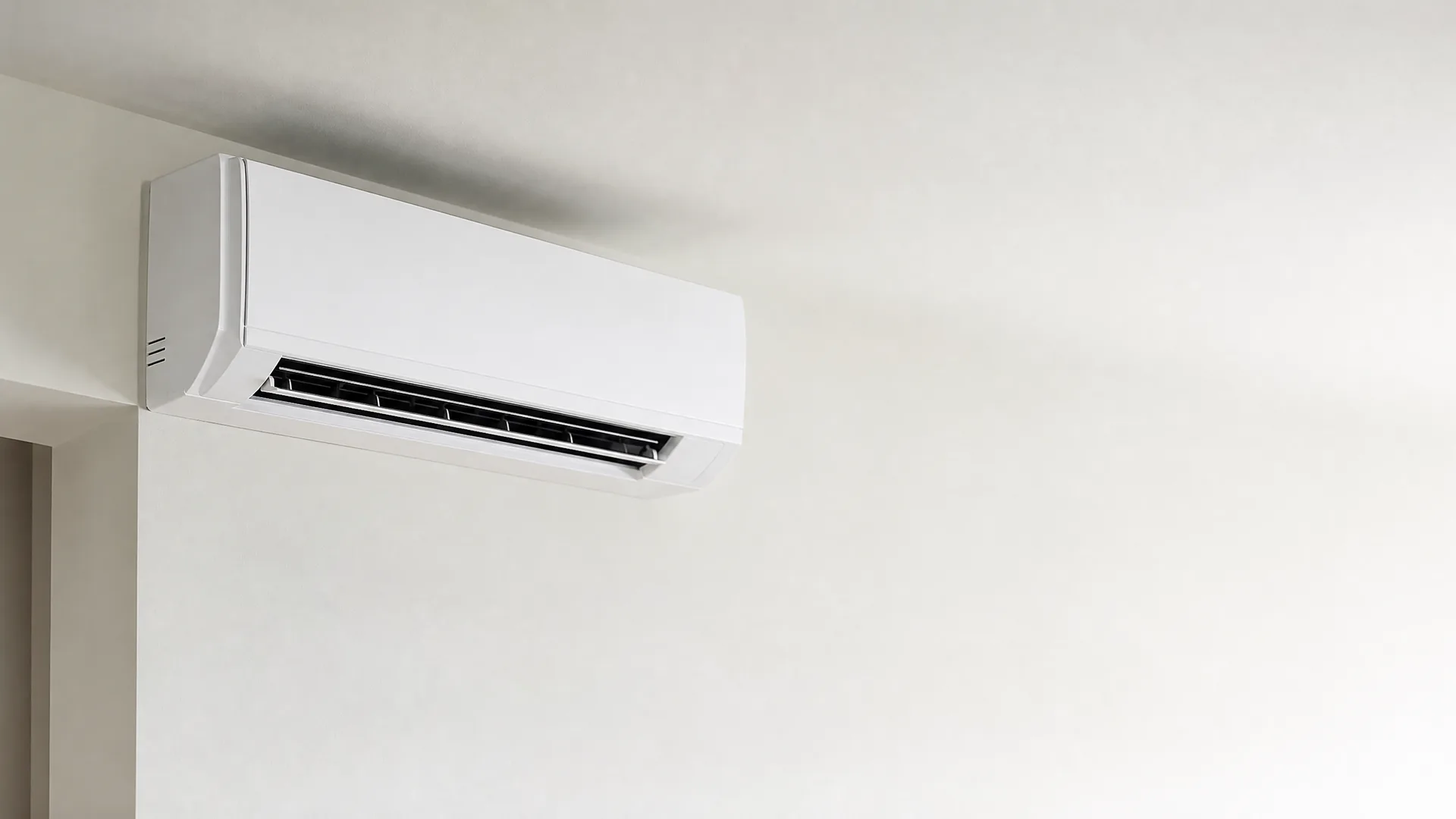
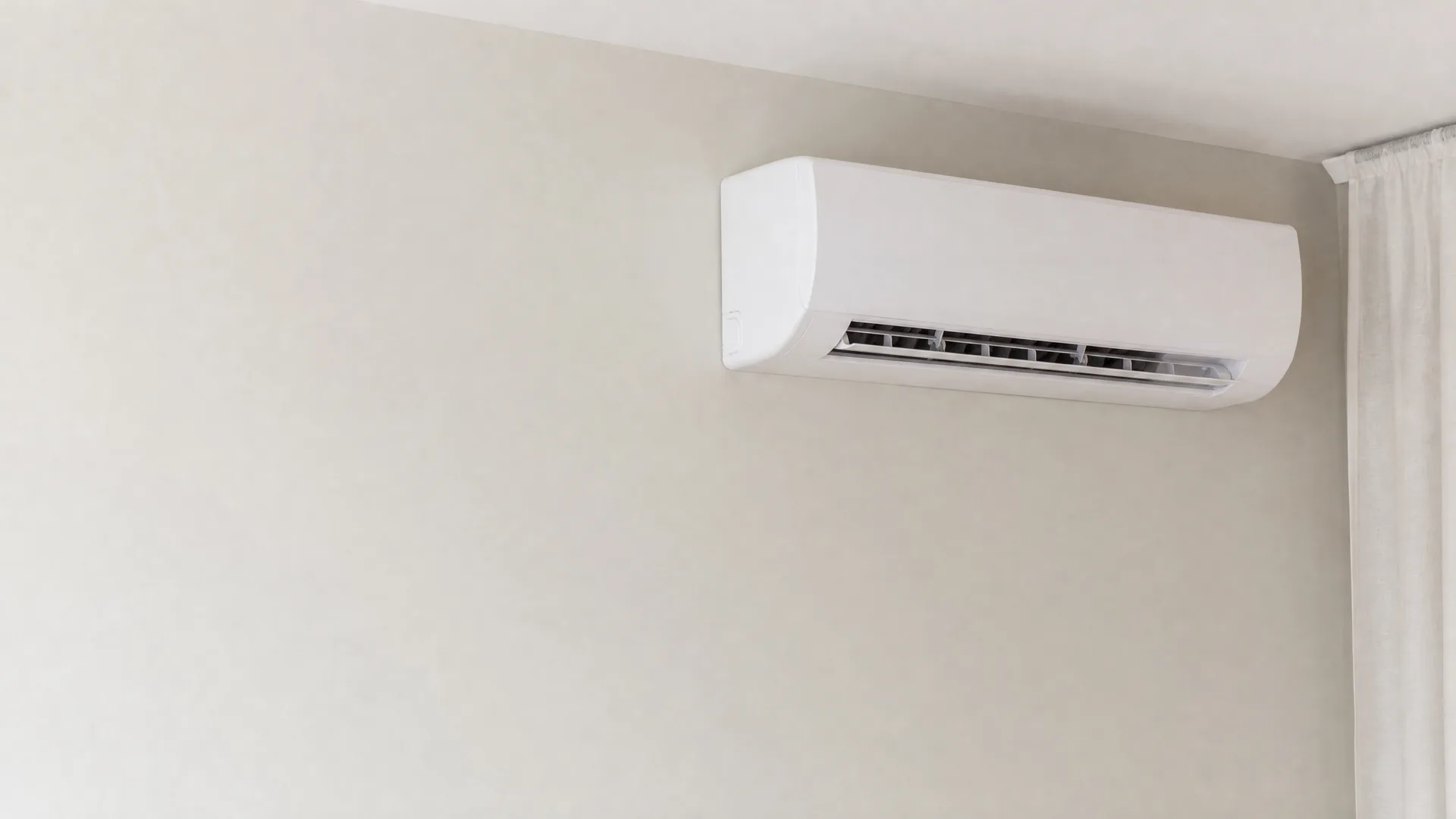
A white wall-mounted mini-split air conditioner unit near the ceiling on a plain light-colored interior wall with open space to the right.

Why the low-temperature rating matters

A standard heat pump starts losing capacity around freezing and struggles well before it hits single digits. A cold-climate mini split keeps producing heat down to zero and below, because it uses a variable-speed compressor that ramps up instead of just switching on and off. Virginia doesn't see many nights that cold, but when one comes, this is the difference between a house that stays warm and one that falls back on electric strip heat.

A white wall-mounted mini-split air conditioner unit installed near the ceiling on a plain beige interior wall, with a light curtain at the right edge.

What it means for your electric bill

Since most homes in Virginia heat with electricity, the furnace or heat strips you'd otherwise lean on cost more to run than a heat pump moving the same heat. A cold-climate mini split keeps its efficiency through more of the winter than a standard unit does, so it keeps pulling less power per degree of heat even on the colder nights, instead of handing the load over to resistance heat.

Cold-Climate vs Standard Heat Pump

Cold-climate mini split

  • Keeps producing heat down to zero and below, so it carries the house through a cold snap without falling back on strip heat.
  • Costs the same to run per degree of heat as a standard heat pump once the temperature is above freezing, since both use the same compressor principle there.
  • Holds its output through the swing from a 60-degree afternoon to a 25-degree night without short cycling.
  • Handles a muggy Virginia summer the same way a standard mini split would, since the low-temperature rating only changes what happens in winter.
  • Needs a contractor who sizes it to the room and the local design temperature, not just to the square footage on a brochure.
  • Installed once, correctly, it keeps that cold-weather output for as long as the compressor and refrigerant charge are sound.

Standard heat pump

  • Loses capacity as the temperature drops toward freezing and keeps losing it as the night gets colder.
  • Switches over to electric resistance backup heat once it can no longer keep up, and that backup heat costs more to run than the compressor does.
  • Works fine through the stretch of the year that stays above freezing, which is most of a Virginia winter.
  • Can leave a room noticeably cooler on the coldest nights if the backup heat isn't sized to cover the gap.
  • Costs less to buy than the cold-climate version, since it isn't built to hold capacity at the lowest temperatures.
  • Still needs the same careful sizing and installation a cold-climate unit does, or it won't perform at either end of the season.
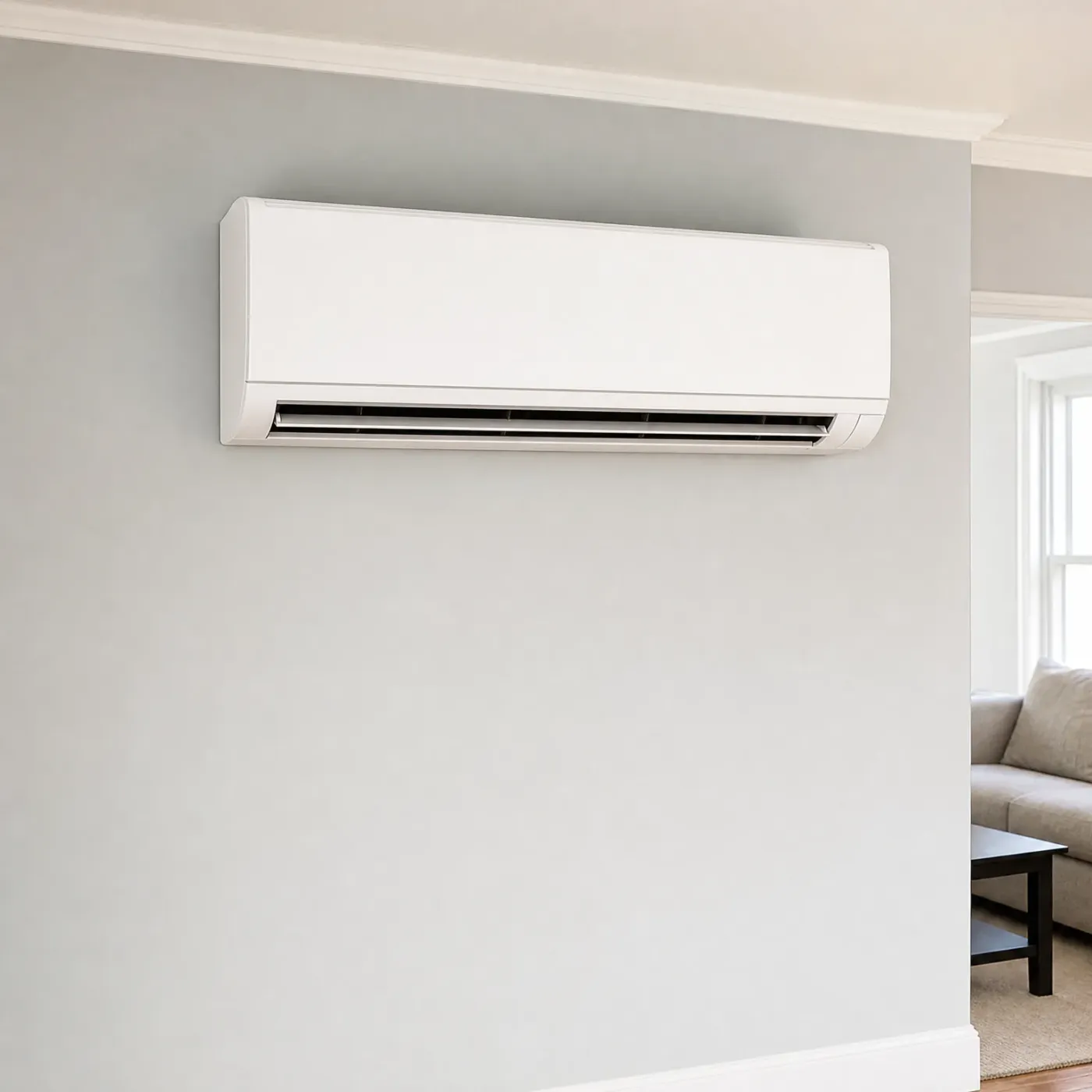
A white wall-mounted mini-split indoor unit installed high on a gray interior wall, with a sofa, dark table and window visible in an adjoining room to the right.

Installed right and sized for your home

This is a mini split doing what it's supposed to do. It cycles on, holds the room at temperature, and runs quiet. That depends on it being sized for the room and the line set run, and charged to spec on install.
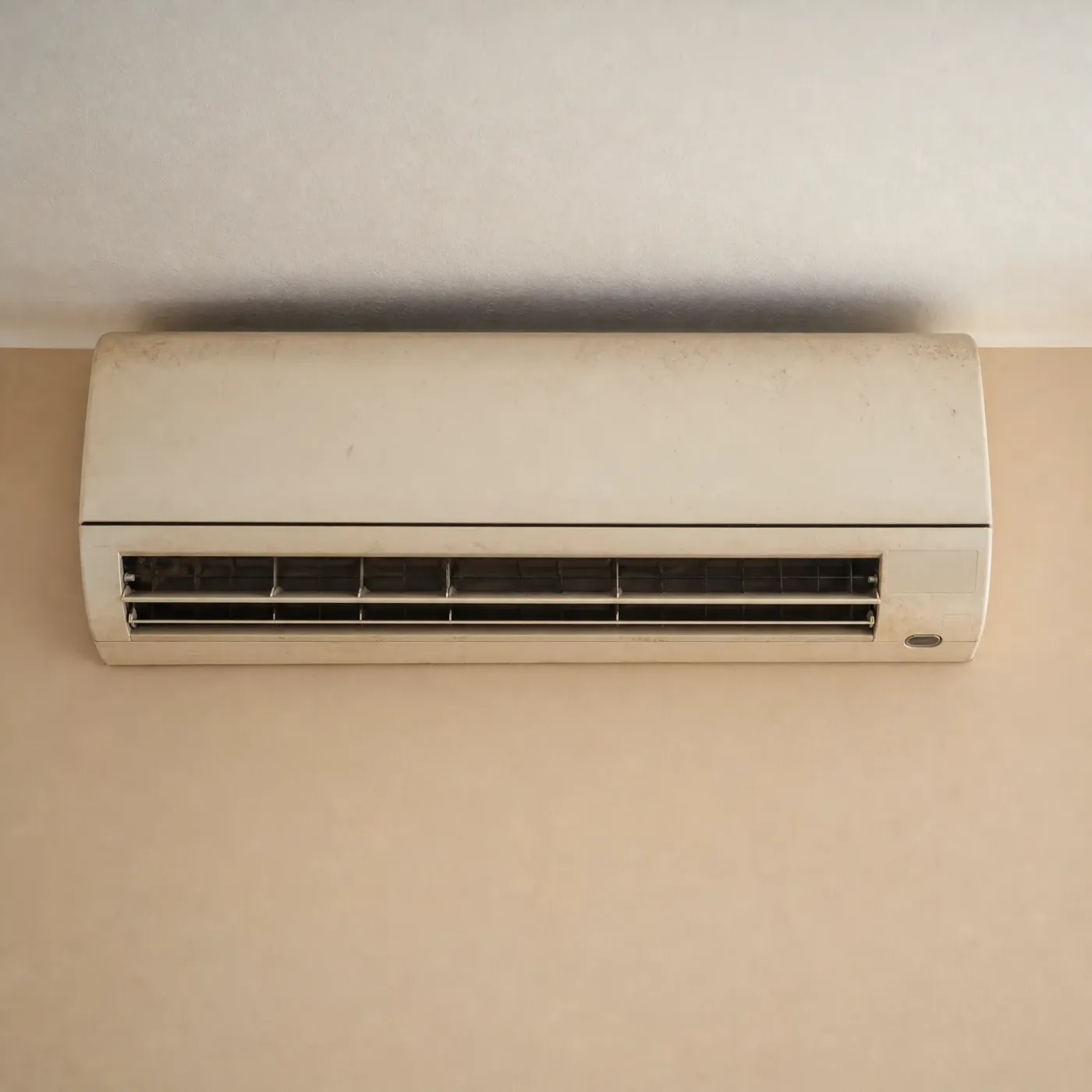

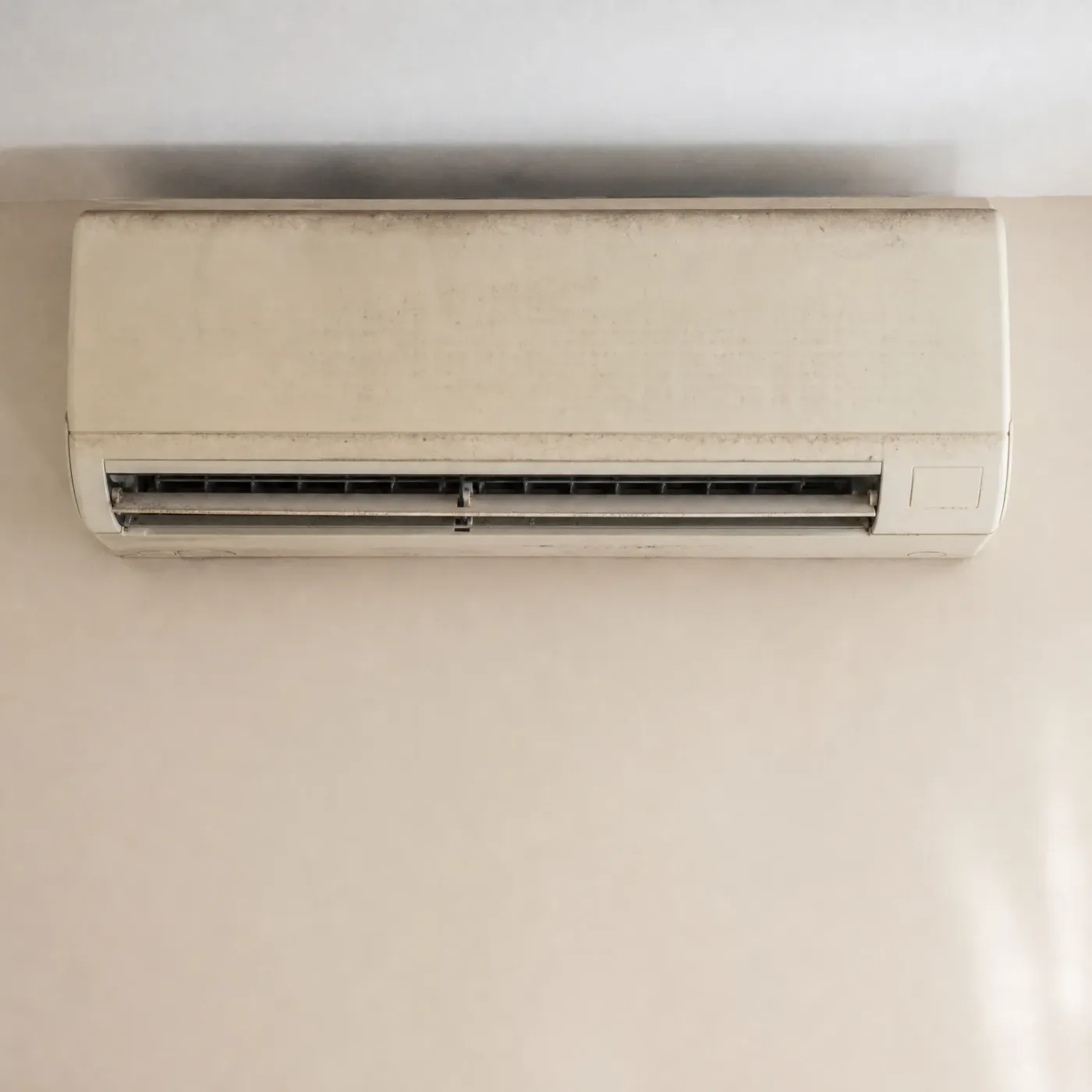
A wall-mounted mini-split air conditioner indoor unit with a dusty beige casing and dark louvered vent, installed near the ceiling on a plain beige wall.

What a bad install looks like years later

That yellowing on the casing is years of dust pulled through a unit that's been running hard, maybe longer and harder than it should because it was undersized or the coil never gets cleaned. A tech who services these units every season can tell you which it is.

A man with grey hair and stubble in a dark sweater sits on a grey sofa indoors, looking off to the side, with a potted plant and a sunlit window behind him.
A man with gray hair, a beard and glasses, wearing a dark green sweater, sits on a gray sofa in a sunlit living room with a potted plant, table lamp and wooden sideboard behind him.
A middle-aged man with graying hair and a short beard sits on a blue sofa in a living room, looking toward a window, with a bookshelf, lamp and framed picture in the background.
A man with graying curly hair and a dark green sweater sits on a gray sofa in a sunlit living room, looking off to the side, with a framed picture, shelving, an armchair and a window with sheer curtains behind him.

Skip calling around

One installer gets your project, so there's no bidding war over it.

There's no charge for the request.

Your electric bill already carries the full cost of winter heat. A mini split that quits at 20 degrees and hands off to strip heat is the same resistance heat you're already paying full price for.

A cold-climate unit keeps running on the compressor through those nights instead, so a cold snap doesn't quietly double what January costs you.

A dusty white wall-mounted mini-split air conditioner indoor unit with open louvers, installed near the ceiling on a plain light-colored wall.
Before you get your mini split installation
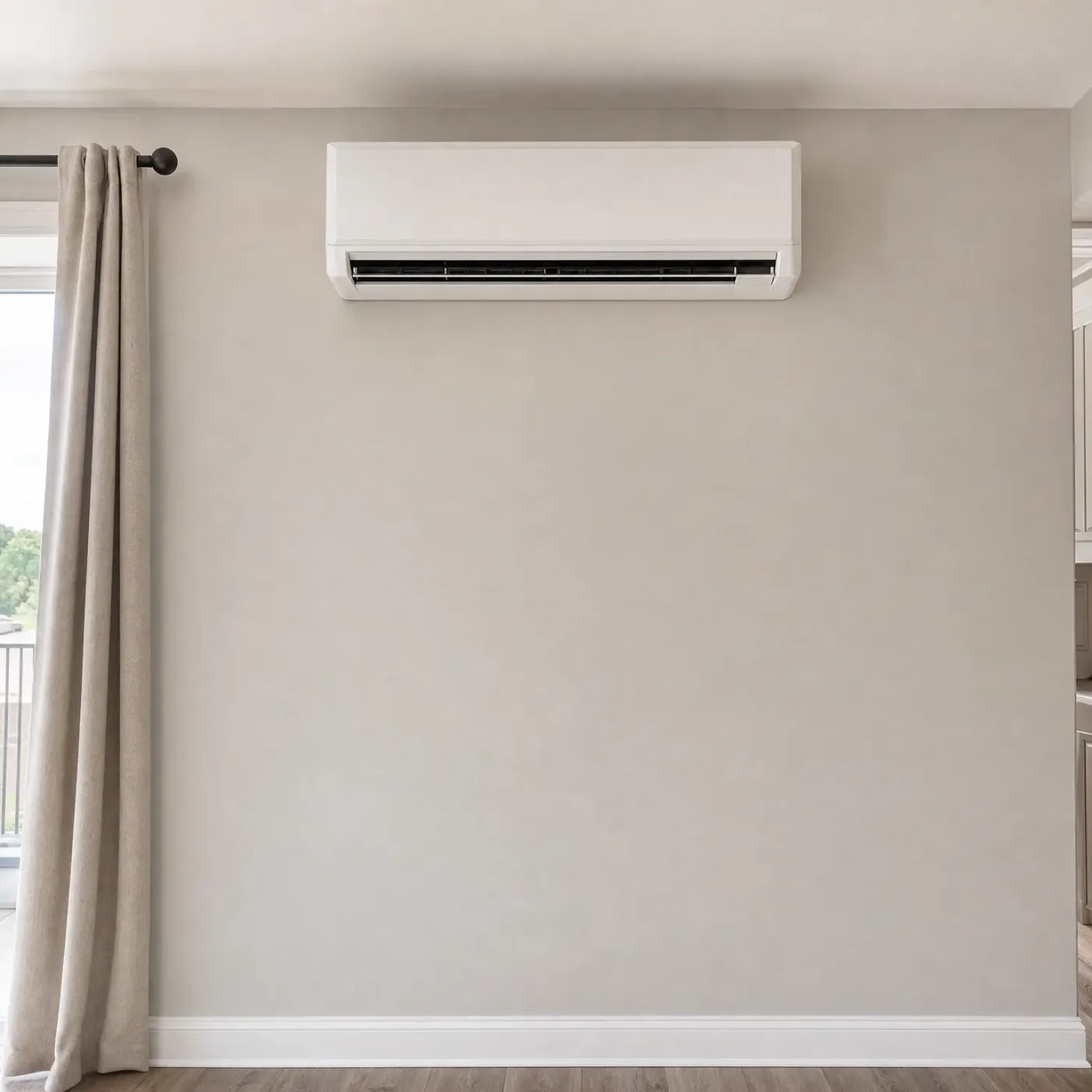
A white wall-mounted mini-split air conditioner unit high on a light gray interior wall, with a beige curtain and window at the left and wood-look flooring below.
After you get your mini split installation
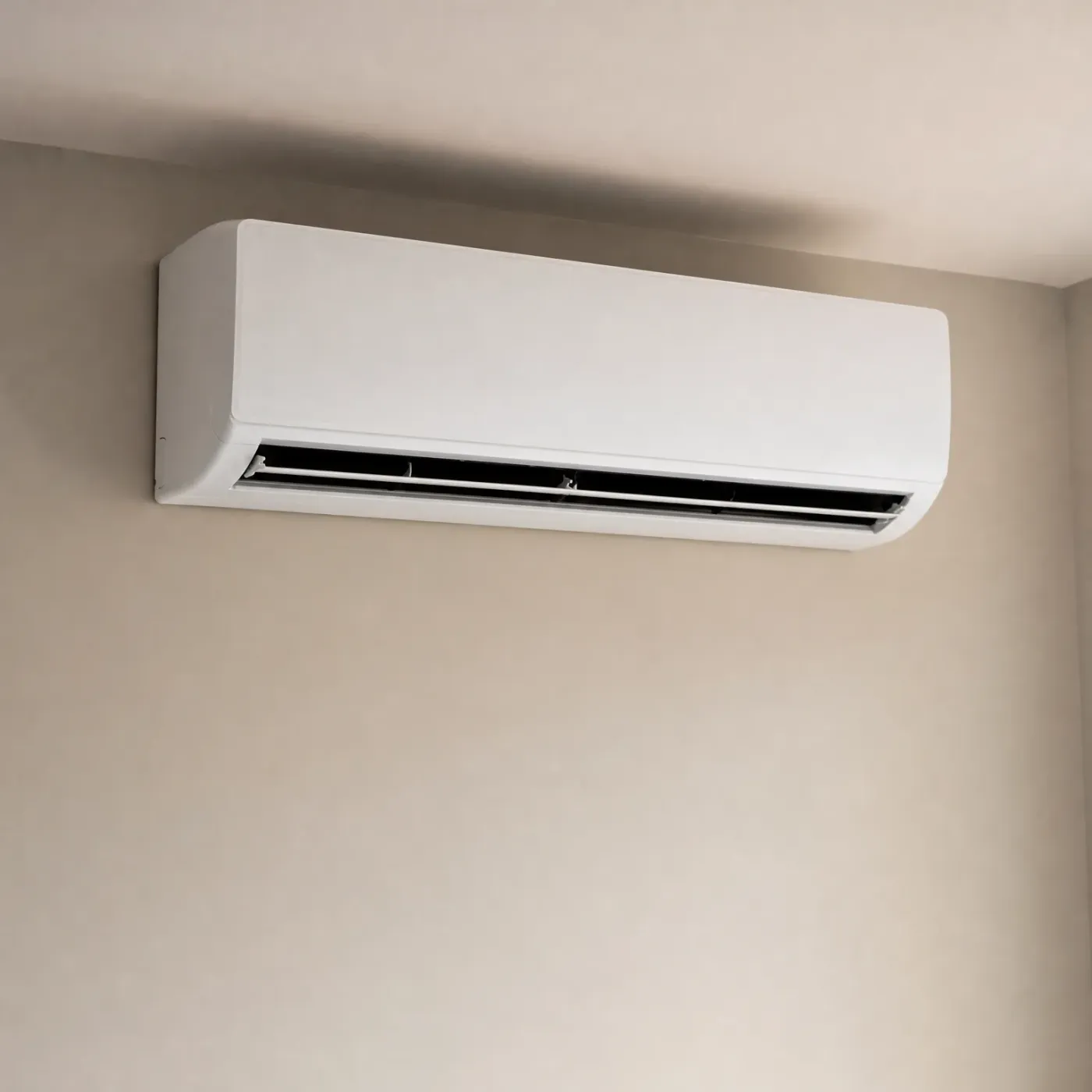
A white wall-mounted mini-split air conditioner installed near the ceiling on a plain beige interior wall.

Running as it should

This is what a mini split looks like doing its job. Closed panel, clean lines, air moving steady out of the grille along the bottom. Inside, the coil and filter stay clear enough that the unit doesn't have to strain to hold the room at temperature, in July's heat or January's cold snaps.

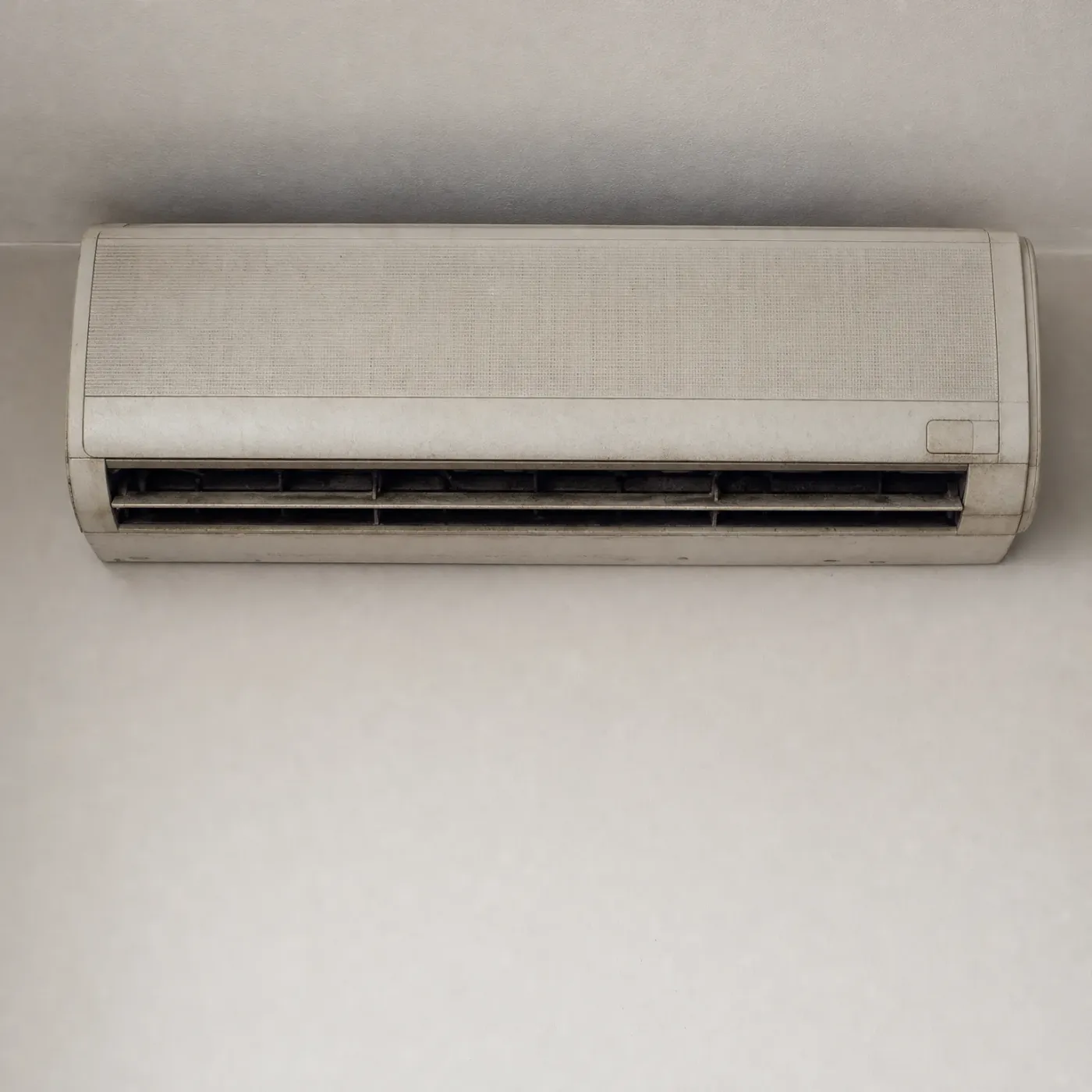
A dusty, discolored wall-mounted mini-split air conditioner unit near the ceiling of a plain beige interior wall.

Worn and struggling

Years of dust and grime have built up on the casing here, and that buildup doesn't stay on the outside. A unit this worn is pulling air through a dirty filter and coil, so it runs longer to do the same job and costs you more doing it, whether it's August or a cold night in February.

A closed silver laptop and a ceramic mug of dark coffee sit on a wooden table in front of two chair backs, with a kitchen counter, tiled backsplash, wooden cutting boards, a vase of greenery and a potted plant by a window behind.

What happens inside the unit when it's cold out

A cold-climate mini split uses a variable-speed compressor, and that's the part doing the real work on a cold morning. Instead of switching on at one fixed speed like an older heat pump, it ramps up, pulling heat out of outdoor air that's well below freezing and pushing it through the indoor coil. The outdoor unit also runs a defrost cycle on its own schedule, melting off any frost that builds on the coil so it keeps pulling heat efficiently instead of icing over and losing capacity.

None of that matters if the unit was never sized to the room or charged correctly at install, which is where most problems with these systems actually start. Finding someone who installs this specific equipment, rather than a general HVAC outfit that mostly does central air, usually means a round of calls and quotes before you even get a straight answer on what size unit your space needs. A local contractor who works on cold-climate mini splits all winter already knows the common sizing mistakes and what tends to fail first when a unit's undersized for the room.

Interior corner of a room with a window and sheer curtain at left, a gray upholstered sofa with a cushion at right, and a round wooden table holding stacked books and a round vase with an olive branch.
  1. The outdoor unit pulls in cold outside air across the coil.

  2. Refrigerant inside the coil absorbs heat from that air.

  3. The variable-speed compressor squeezes the refrigerant to raise its temperature.

  4. The indoor unit blows that heat across its coil into the room.

Power costs 15.28 cents per kilowatt-hour statewide

At 15.28 cents per kilowatt-hour, every degree your mini split makes with the compressor instead of strip heat shows up on the bill. Since most Virginia homes already heat with electricity, that gap between compressor heat and resistance heat is real money, not a rounding difference.

EIA-861 2025 statewide residential average

A woman with shoulder-length brown hair wearing a beige knit cardigan sits in a gray upholstered armchair near a window, looking off to the side with a slight smile, with bookshelves blurred in the background.
A woman with her hair in a bun holds a sleeping young child against her chest, both wrapped in a textured beige knit blanket on a sofa in a dimly lit room with a lamp, framed picture, and bookshelf behind them.

Where this leaves you

  • A cold-climate mini split holds its heat output through a Virginia winter without falling back on strip heat.
  • Sizing it to the room and the line set run is what makes it cycle properly instead of short cycling or running constantly.
  • A local installer who works on this equipment every season knows which brands hold their rated output here and which ones underperform.
  • Getting one contractor out instead of several means one visit, one set of eyes on your home, and no repeat explanations.
  • Installed and charged to spec, the unit should hold the room at temperature and run quiet through the coldest nights you get.
  • The equipment answers the cold question. Whether it performs that way in your house comes down to who installs it.

A cold-climate mini split is built for Virginia winters. That part isn't in question. What decides whether it actually runs that way in your house is the install: the sizing, the line set, the charge. Get those wrong and even the right unit will short cycle, run constantly, or lean on strip heat on the nights you need the compressor working hardest.

That's the part a local contractor handles, not the equipment spec sheet. Someone who installs and services this equipment through a full Virginia winter has seen which units actually hold their rated output in weather like yours and which ones fall short of what the brochure says. That's not something you can check by reading reviews. It's judgment that comes from doing the work here, season after season.

You'll be matched with one contractor, not a handful. That means one visit, one person looking at your home, your line set run, your electrical setup, and sizing the unit to fit. You explain your situation once. No juggling calls from three companies giving you three different numbers and three different opinions on what you need.

The mini split itself will do what a cold-climate unit does. Whether it does that in your living room on a cold January morning depends on who's standing in your driveway with the line set in hand. That's the piece worth getting right.

Kitchen corner with cream upper cabinets, oak lower cabinets, white marble-look countertop, beige tile backsplash, a ceramic vase of greenery, a wooden cutting board and bowl, and a black-framed window at right.
Interior corner of a room with a white-framed window and wide sill, beige walls with panel molding, a wooden cabinet holding a ceramic vase with a green leafy plant, and blurred shrubs and trees outside.
A wood-framed armchair with beige cushions and a woven lumbar pillow sits in a corner beside a large window overlooking green trees, with a tall ceramic vase holding leafy branches on the left and plaster walls and wood flooring.
Interior corner with a white-framed window above a sill, beige walls with baseboard molding, a greige shaker-style cabinet with brass knobs and a potted plant on top, light wood flooring and a woven jute rug.
A dark-framed six-pane window with white trim and sill set in gray horizontal lap siding, with hydrangea shrubs below and a white column and shingled roof section at left.

Describe it once

The pro who reaches out is licensed in Virginia.

Fill out one form

You only hire the pro if you want to.