Doing its job
This is a mini split running the way it should. It holds the room at the temperature you set, quietly, with air moving steadily out of the unit. A unit like this sized right for the space keeps up even when it's cold outside.
 Match me with a pro
A local installer who puts in mini splits gets your project.
A mini split can heat a Virginia home through the winter. Most of them are heat pumps, which means they pull heat from outside air and move it in, down to outdoor temperatures well below freezing. Whether yours can carry your whole house alone, or whether it's better suited to one room or one addition, depends on what unit you have, how many zones it covers, and how your house holds heat.
That's the part worth getting a straight answer on before winter tests it. A single-zone mini split in an addition is a different situation than a multi-zone system meant to cover a whole floor. The right answer for your house is specific to your equipment and your layout, not a general rule about mini splits in Virginia.
If your home heats with electricity, as most do here, a mini split's efficiency can make a real difference in what you pay to stay warm. That's worth confirming against your actual setup too.
This is where a contractor who installs and services mini splits in your area can look at what you have, how your home is laid out, and tell you plainly whether it's enough on its own or whether it needs backup for the coldest stretches of winter. You don't have to figure that out by guessing, or by waiting to find out the hard way on a cold morning.
Send your details once and that search is off your plate. A contractor who knows mini splits and knows Virginia winters reaches out to you directly, looking at your specific situation instead of a general answer that may not fit your home. That's one less thing to carry into the cold months.
Winters in Virginia aren't brutal, but they do dip well below freezing some nights, and you're wondering if the mini split you have or are planning to install can really carry the house through January without a backup furnace or baseboard heat kicking in.
A properly sized mini split heat pump can keep a Virginia home warm all winter on its own. These systems pull heat from outside air even when it's well below freezing, and most Virginia winters don't test that limit for long. The question is whether the unit covers every room you need heated. A single indoor head warms the space it's in well, but a drafty bedroom down the hall or a finished basement might not get enough heat from one unit alone. That's a layout question, not a climate one. Someone can look at your home's square footage and room arrangement and tell you whether one system does the whole job or whether you need a second head or zone to cover it completely.




A mini split sized for your home can be the only heat you need, but a lot of Virginia homes have one covering a room addition or a converted space while the rest of the house runs on electric baseboard or an older furnace. If that's your setup, the question isn't whether a mini split works here, it's whether the one you have or the one you're considering can cover every room when it's cold enough to matter, and that comes down to sizing and the unit's low-temperature rating, not the brand. Since most homes here already heat with electricity, switching the whole house to one or more mini splits usually means trading one electric bill for a more efficient one, not taking on a new kind of cost. Getting that sizing right, room by room, is a job for someone who can look at your house and tell you what it actually needs.
A mini split heats by moving heat, not making it. The outdoor unit has a compressor, the same part that runs it in summer, and in winter it reverses, pulling whatever heat is in the outside air and carrying it inside through refrigerant lines. That works down into the teens and often lower, but as the outdoor air gets colder there's simply less heat in it to pull, so the unit has to work harder for less output. Manufacturers rate these systems at 47 degrees, which looks good on paper, but your coldest nights in Virginia will run well under that, and the output you actually get on those nights is what matters for heating the house.
Cold climate models account for this with a backup heat strip built into the unit, which kicks in only when the compressor can't keep pace on its own. The indoor head itself doesn't warm the air directly, it draws room air across a coil and pushes it back out faster to raise the temperature, which is why placement matters. A head mounted in the living room will struggle to warm a bedroom down the hall. Sizing one for a whole house means matching its cold weather output to how much heat your home actually loses, not the number on the spec sheet at 47 degrees. Some homes need more than one head, or a ducted system, to get heat where it needs to go.
At 15.28 cents per kilowatt-hour, running a mini split as your only heat costs less than it would with electric baseboard, since it moves heat instead of generating it. Your winter bill still depends on how low it drops outside and how well the unit is sized for your house.
EIA-861 2025 statewide residential average
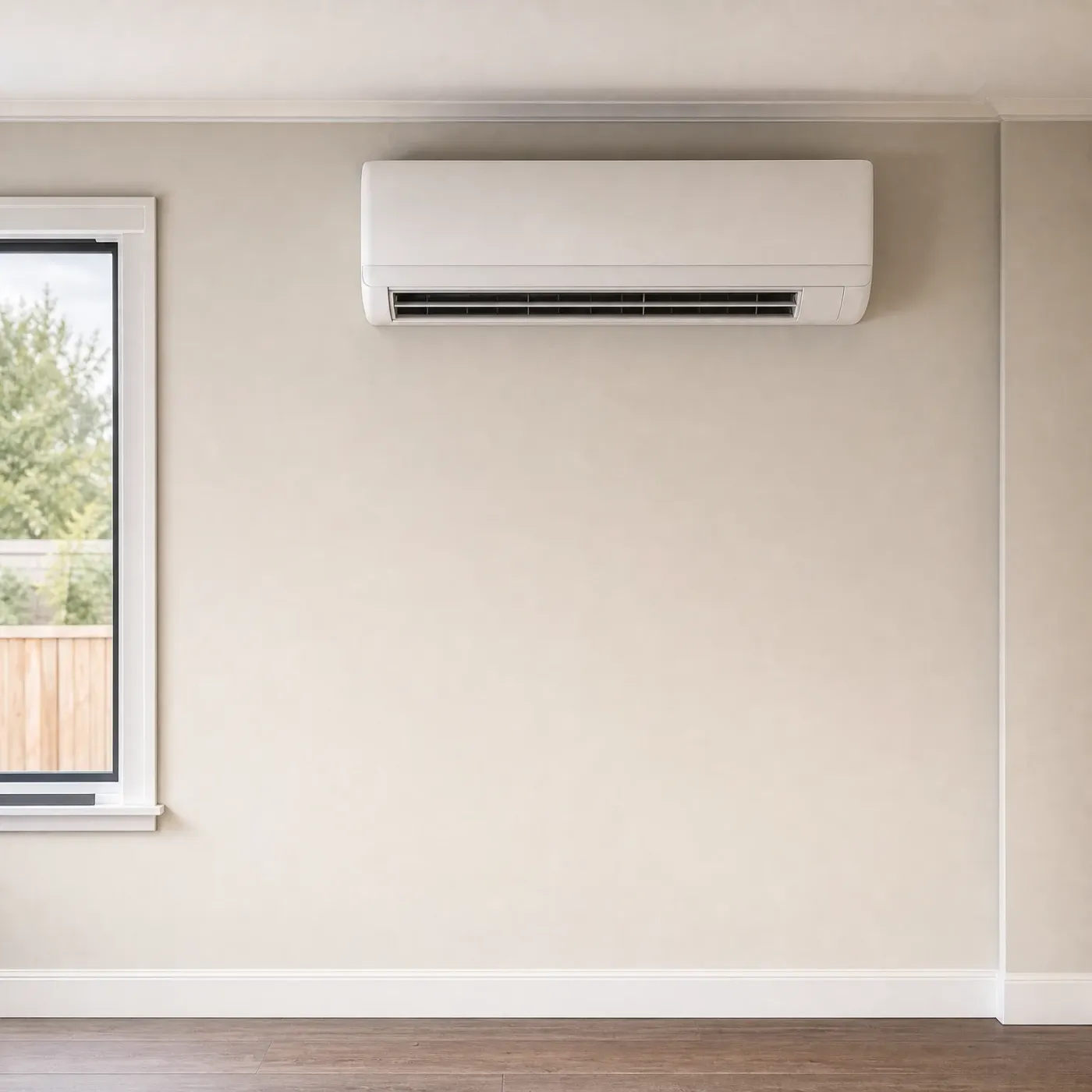
This is a mini split running the way it should. It holds the room at the temperature you set, quietly, with air moving steadily out of the unit. A unit like this sized right for the space keeps up even when it's cold outside.
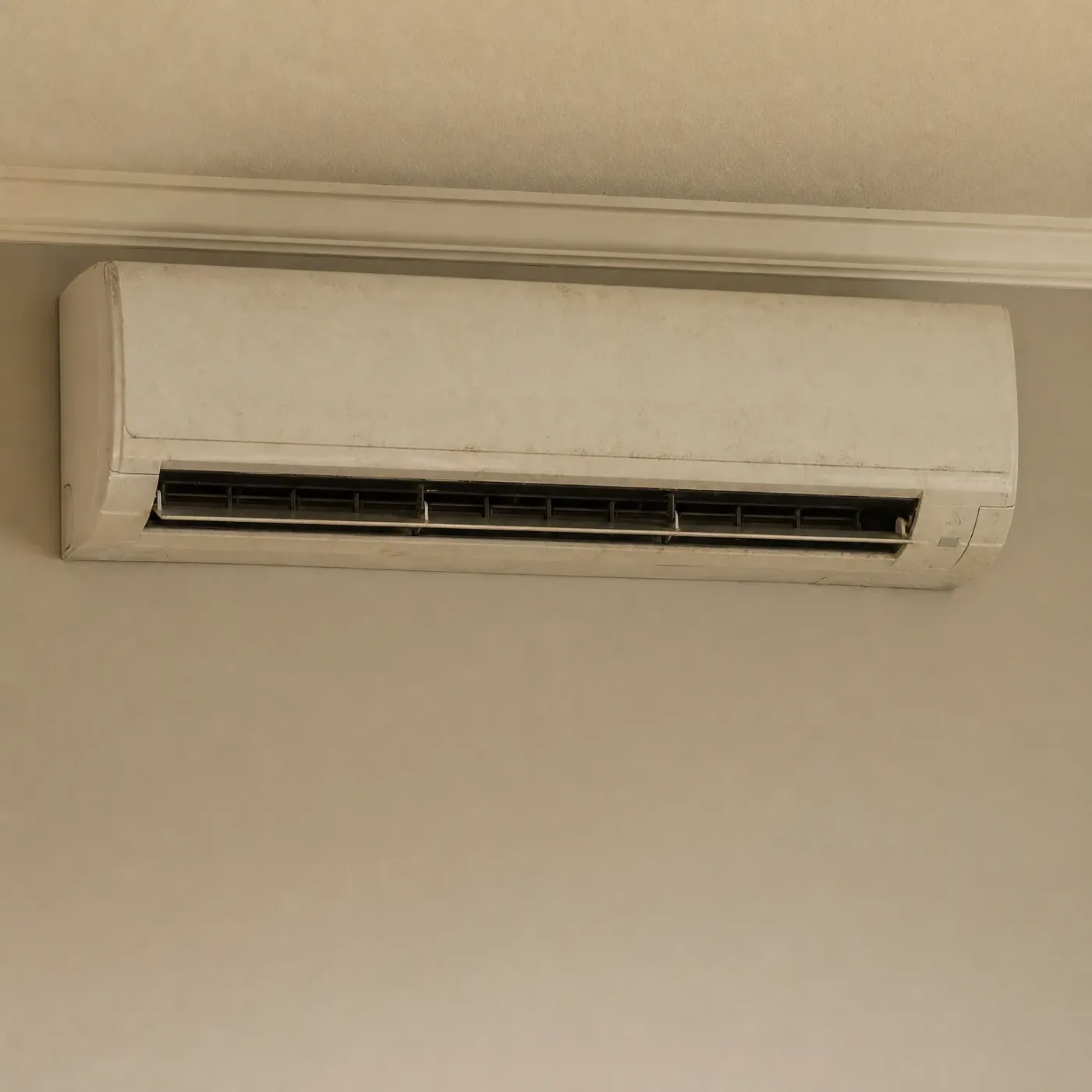
Dust built up like this on the casing usually means the filters haven't been cleaned in a while, and that makes the unit work harder for less heat. If yours looks like this and struggles on cold nights, it may be worth having someone check whether it still matches the room it's heating.
A mini split can be the only heat you need in Virginia, as long as it's sized for the whole house and built to keep working at the temperatures you actually get. One that's covering a single room while the rest of the house leans on baseboard or an old furnace is doing a different job, and that's worth sorting out before the next cold stretch rather than during it. Either way, the answer comes down to your unit, your house, and what's backing it up when the temperature drops. A contractor who knows Virginia installs can look at what you have and tell you straight whether it's enough or what it needs. Once you send the form, you're done hunting for someone to call. That part moves off your plate, and you can stop thinking about it until someone reaches out.
One request ends the search for a mini split installer.