






Adding a mini split to a Virginia home with a furnace

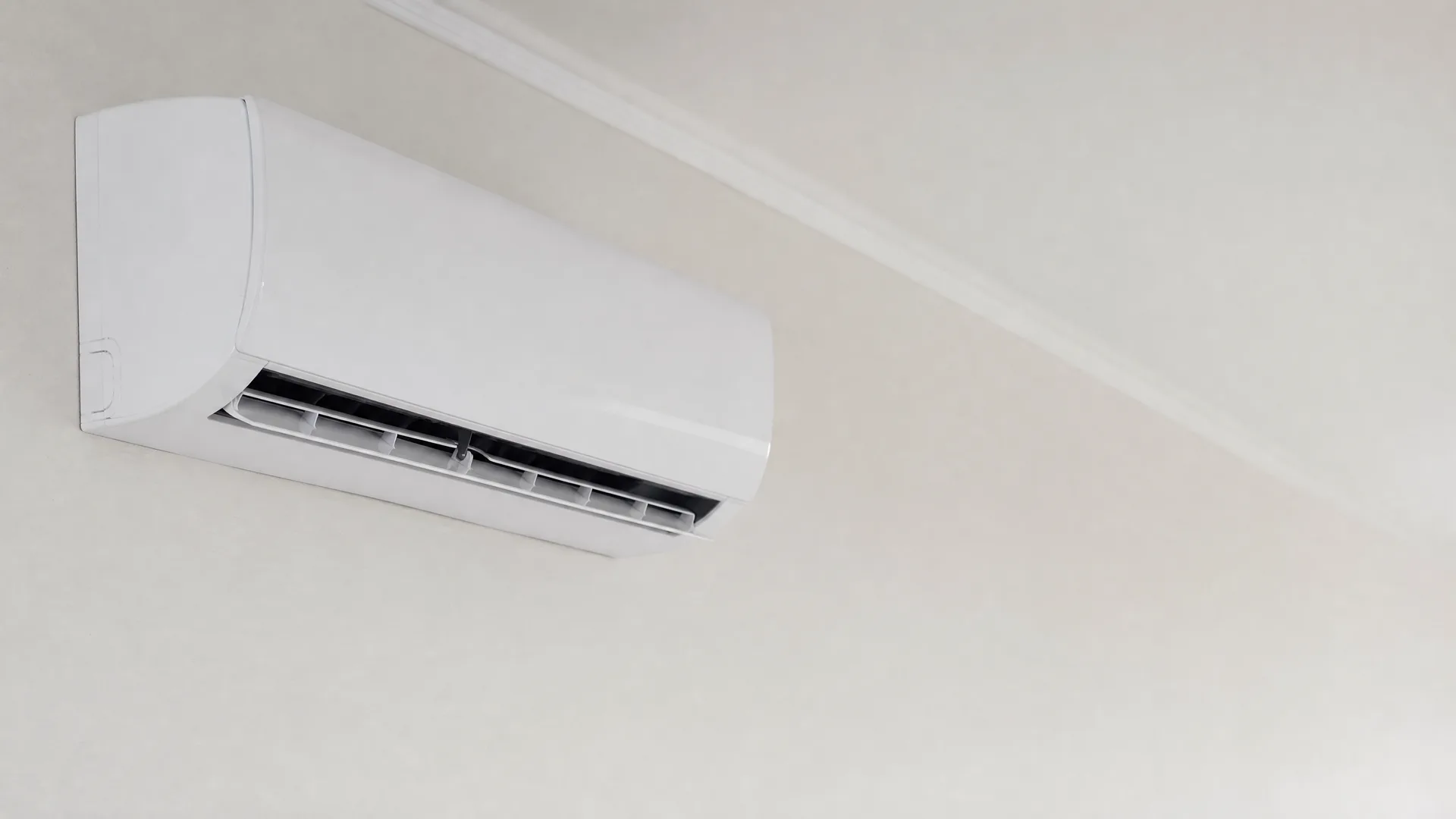
A white wall-mounted mini-split air conditioner indoor unit centered against a plain light gray background.
Get matched

Can I add a mini split to my house if I already have a furnace?

You already have a furnace heating the house, and you're wondering whether adding a mini split means ripping that out or starting over with new ductwork. Most houses in Virginia run on electric heat already, and summers here get sticky enough that a lot of furnace-only homes never had real cooling to begin with, or the cooling they have can't keep up in the rooms farthest from the vents.

Yes, a mini split works alongside your furnace

A mini split doesn't connect to your furnace or your ductwork at all. It runs on its own refrigerant lines to an outdoor unit, so a contractor can install one without touching the furnace, the vents or the gas line. Your furnace keeps heating the house the way it always has. The mini split adds cooling and extra heat to whichever room or zone it's installed in, usually a room that stays hot in summer or cold in winter no matter what the rest of the house is doing. Since most homes here already heat with electricity, running a mini split alongside that system doesn't change how the house is wired or add a new fuel type to account for. It just gives that one space its own control.

  1. A contractor picks a spot for the indoor unit on an interior wall.

  2. A small hole gets drilled through the wall for the line set.

  3. The line set carries refrigerant lines, power wire and a drain line.

  4. An outdoor condenser gets mounted on a pad or wall bracket outside.

Add a Zone or Run Both Systems

Keep the furnace as is

  • The furnace keeps heating every room through the ductwork it already has, with no changes to that system.
  • A mini split added to one or two rooms gives you a second way to cool or heat just those spaces.
  • You still pay to run the furnace on the coldest days, since the mini split alone may not keep up in every room.
  • Ductwork, vents and the furnace itself stay untouched, so there's nothing to repair or replace in that system now.
  • The electric bill reflects two systems running independently rather than one unit covering the whole house.

Let the mini split take over a zone

  • A mini split can carry the full heating and cooling load for the room or rooms it serves, no ductwork needed.
  • Rooms with the mini split can run off the furnace's heating cycle entirely, since the indoor head handles it.
  • Setting the mini split as the main source for that zone means the thermostat for the furnace matters less there.
  • A room over the garage or at the end of a duct run that's always been too hot or too cold gets its own even temperature.
  • Running the mini split instead of the furnace for that space can shift usage toward electricity you're already paying for your heat.
A gray-haired, bearded man in a dark coat dusted with snow stands smiling in a dimly lit room with a lamp, mirror, framed art, and a sofa in the background.
An older man with white hair and a beard, wearing a dark snow-dusted coat and scarf, stands in a warmly lit interior hallway with a framed landscape picture, a table lamp and a potted plant behind him, and a snowy view through a window at left.
An older man in a dark snow-flecked overcoat and scarf stands smiling in a warmly lit home entryway, with a glass-paned door showing darkness outside and a lamp-lit room visible through a doorway behind him.
An older man with gray hair and a beard, wearing a dark snow-dusted jacket and scarf, stands smiling in a warmly lit interior hallway with a lit table lamp, a vase of dried branches, and a framed picture in the background.
A woman in a cream sweater and jeans stands in the open doorway of a white stucco house, holding the dark door, while a man in a dark quilted jacket seen from behind walks toward the entry past potted plants.

What this looks like in your house

Pick the room that gives you the most trouble. Maybe it's a bonus room over the garage that the furnace ductwork barely reaches, or a sunroom that cooks by July. That's the room where a mini split earns its keep. The indoor unit goes on an interior wall, the line set runs out through a small hole, and that one room stops depending on a duct run that was never sized for it.

Every mini split install is different once you get past the general idea. Wall thickness, where the outdoor unit can sit, how far the line set has to travel, whether the electrical panel has room for another circuit. A contractor who works on these year-round in Virginia has seen most of what a house like yours can throw at the job, and asking about your specific room and your specific wall is how you find out what it actually takes before anyone starts drilling.

A living room corner with a beige sofa and cushion, a round wooden coffee table holding a pale ceramic vase of eucalyptus stems and a wooden bowl, and a curtained window with a potted plant above a latticed radiator cover in the background.
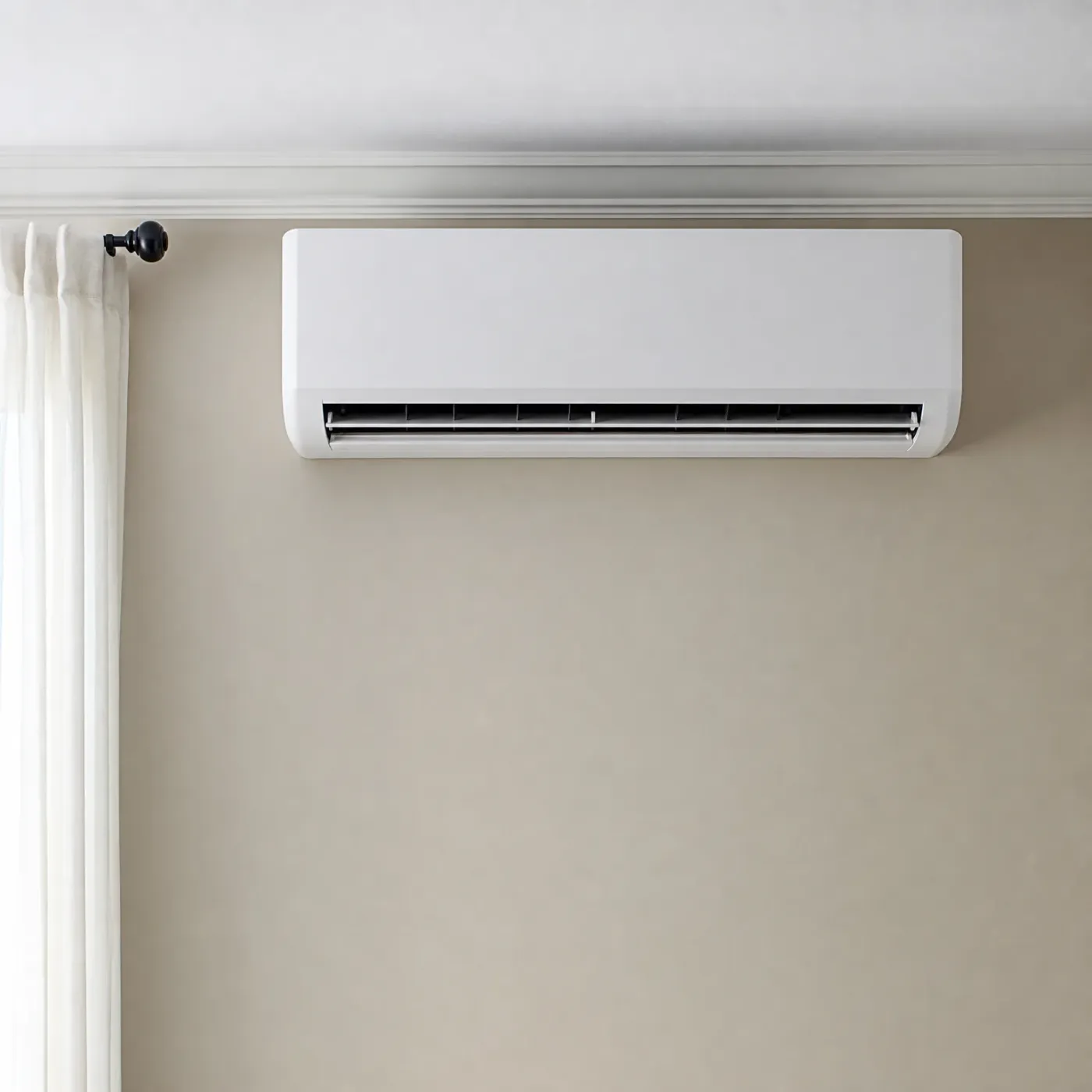
A white wall-mounted mini-split air conditioner installed high on a beige interior wall below crown molding, with a sheer white curtain on a dark rod at the left edge.

Running clean

A mini split that's kept up looks like this one: the casing clean, the airflow steady across the room. You'll feel it working evenly whether it's pushing cool air in July or taking the edge off a cold morning. This is what you're paying for when you add one.
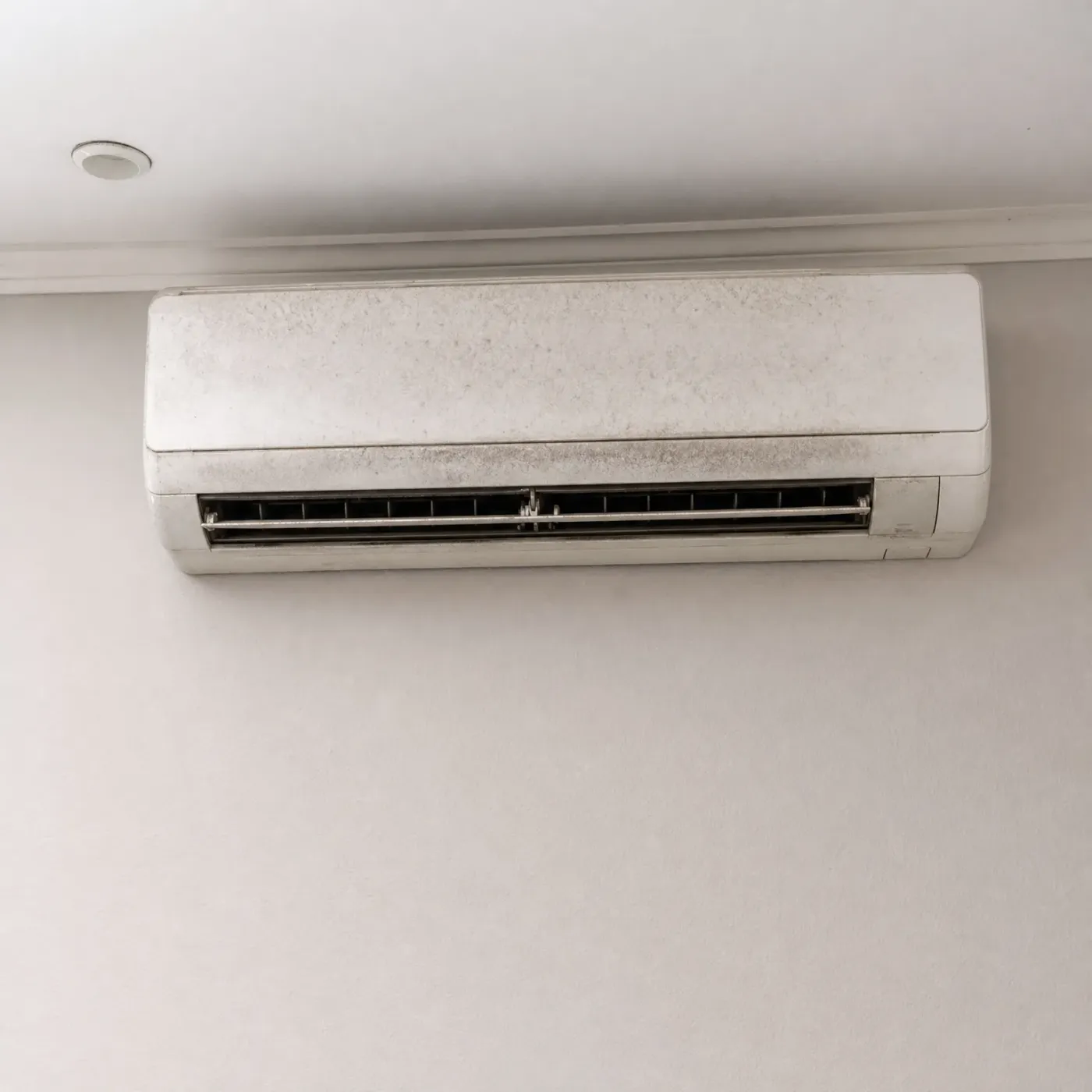
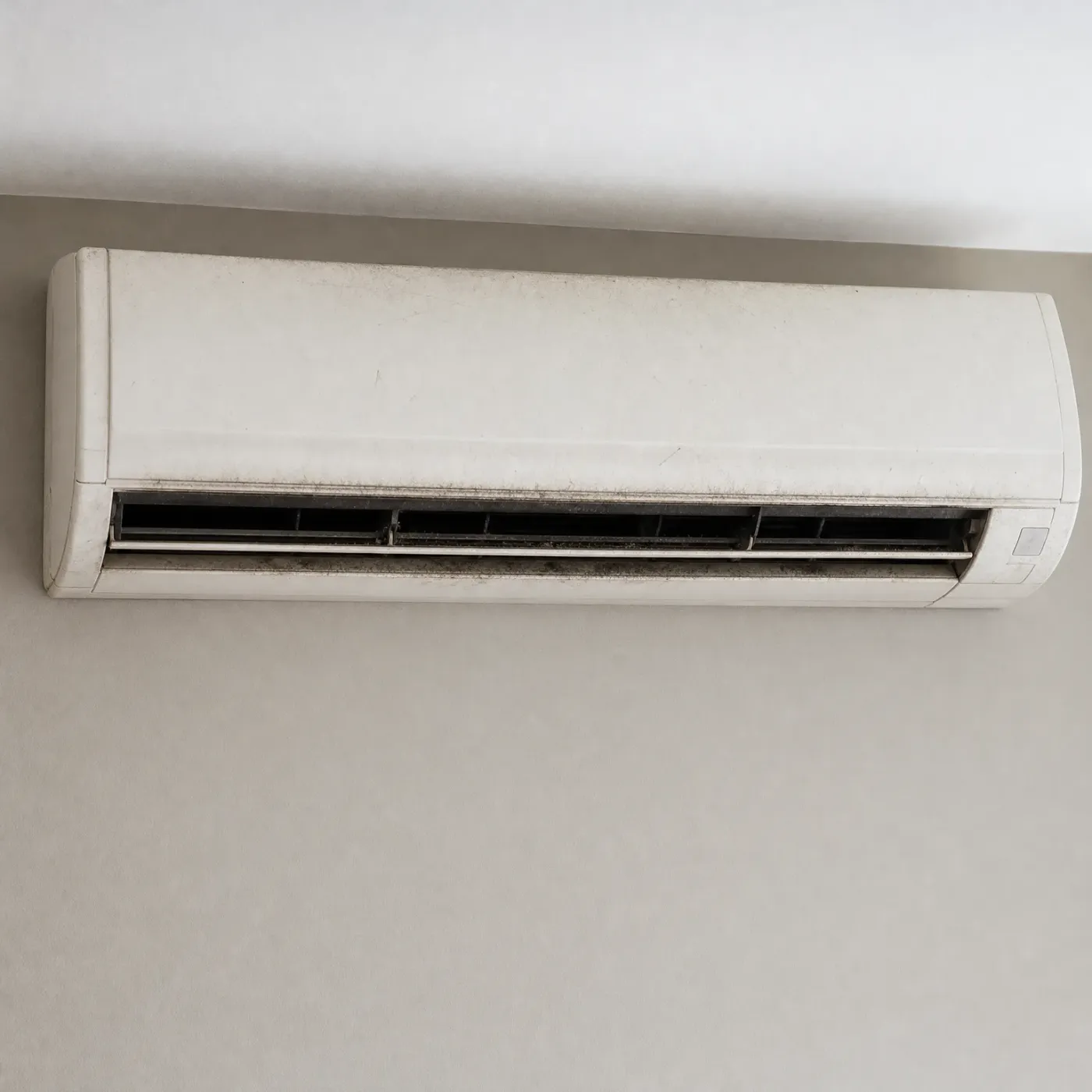
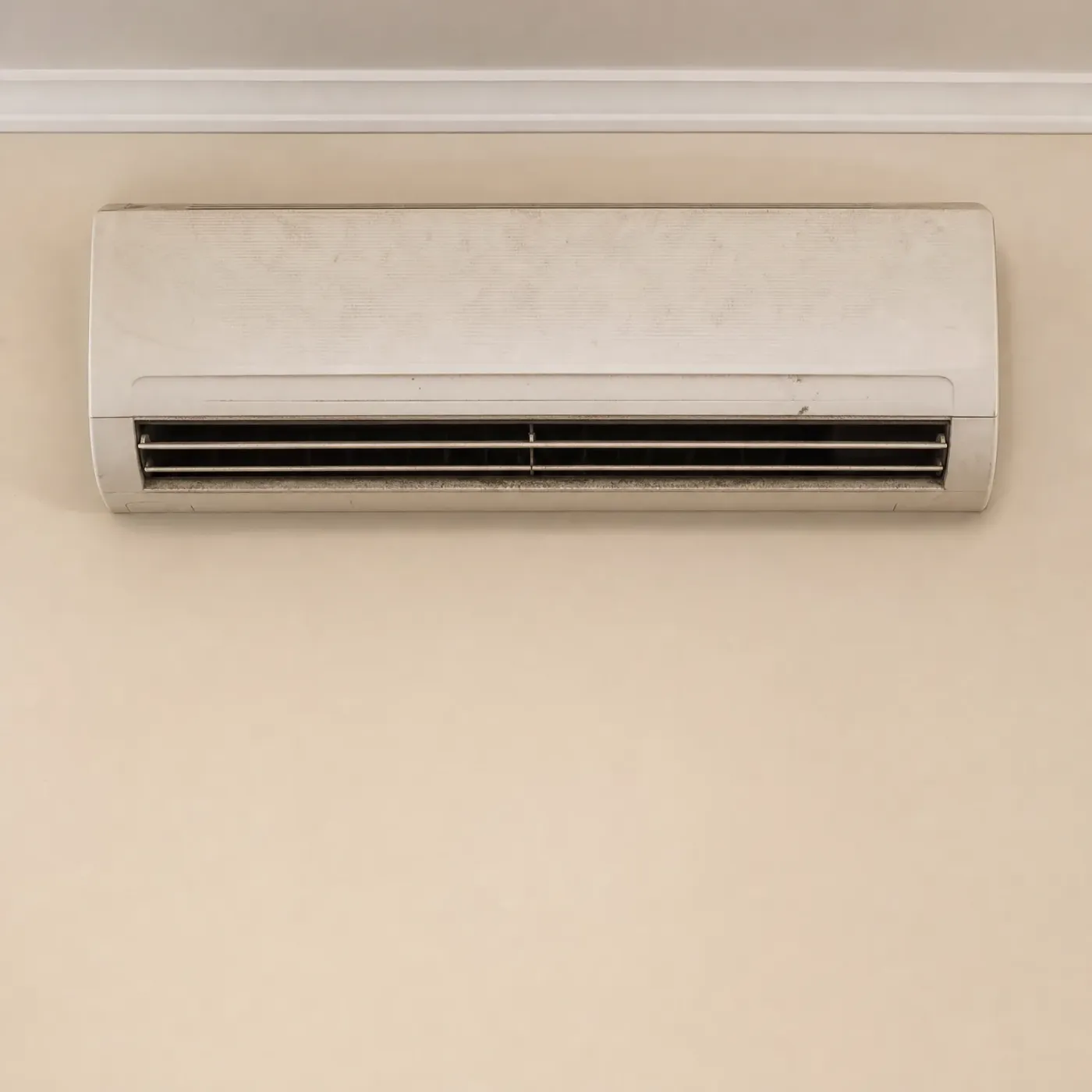
A dusty white wall-mounted mini-split air conditioner unit installed near the ceiling on a plain light-colored interior wall, with a small recessed ceiling fixture at upper left.

Caked with dust

This is a mini split that's been running without anyone wiping down the casing or checking the filter. Dust builds up on the housing and inside it, and the unit has to work harder to move the same air. Left long enough, that grime cuts into how well it heats or cools the room.

A wall-mounted white mini-split air conditioner indoor unit with visible dust and grime around its outlet vent, installed near the ceiling on a plain light-colored wall.
Before you get your mini split installation
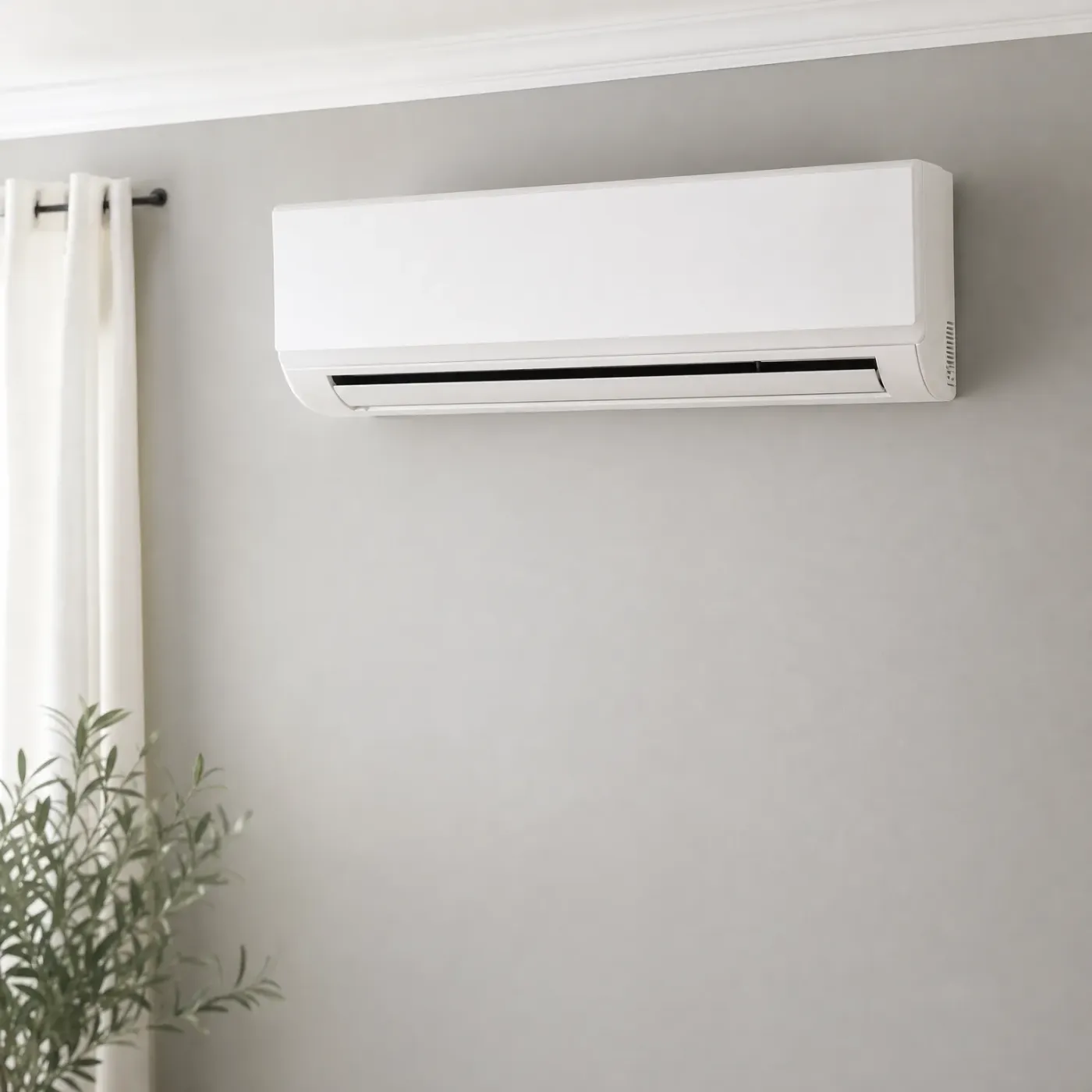
A white wall-mounted mini-split indoor unit on a light gray interior wall, with a white curtain on a black rod at left and a leafy plant in the lower left corner.
After you get your mini split installation

Matched to your mini split job

A mini split and a furnace run on different fuel lines and different wiring, and getting the sizing, the refrigerant charge and the electrical hookup right so the two systems don't fight each other takes someone who installs these in Virginia homes regularly, not just once a year. A contractor local to you has likely already handled this exact pairing nearby, in a house with the same electric heat and the same muggy summers, and knows which rooms in these older layouts tend to run hot in July and what the line set routing usually looks like in a wall like yours. Submitting your request connects you with one contractor matched to this job, not a handful of companies bidding against each other for your attention. That matters most once you've settled on the room and are ready to talk through the specifics of your house. Whatever's making that bonus room or sunroom hard to live in right now is worth getting in front of someone who can look at it directly.

A single-story gray horizontal-siding house with multiple front-facing gables, white-trimmed windows, a dark front door, and a concrete walkway crossing a partly dry lawn under a clear blue sky.

A summer dew point averaging 64°F across June, July and August, per NOAA, is the kind of sticky that makes 85 degrees feel worse than it sounds. A furnace was never built to wring that moisture out of the air. A mini split handles it differently. Its indoor unit pulls air across a cold coil and drains the water off, so the room it serves feels dry even when the rest of the house doesn't. In the bonus room or sunroom where you're adding one, that's the difference between air that feels heavy and air that feels right.

NASA POWER T2MDEW county cells weighted by homes

A white wall-mounted mini-split indoor unit high on a beige interior wall, with a potted olive-like tree at right and an armchair and window visible through a doorway at left.
A mini split installed and running right pulls the stickiness out of the air without the indoor unit ever looking strained.
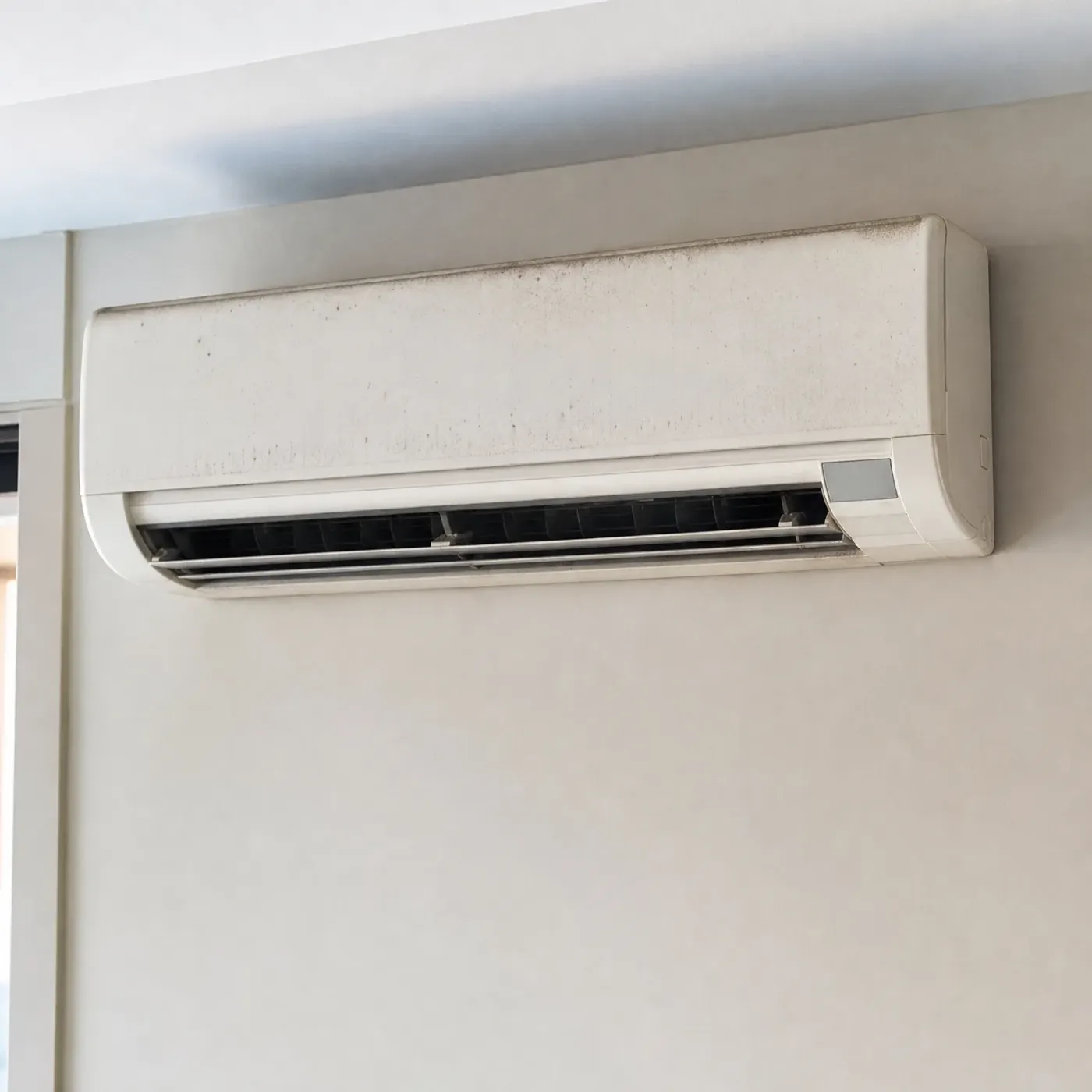
A wall-mounted mini-split air conditioner indoor unit with visible dust and staining, installed on a beige interior wall below white crown molding.
Dust and grime caked around the vents like this cuts airflow and means the room stops feeling the difference.

A furnace burner is either on or off. A mini split's compressor is not built that way. It runs at whatever speed the room calls for, speeding up on a hot afternoon and easing back once the space holds steady. That's why the temperature in that room doesn't swing the way it does with a system that cycles. The indoor unit does the real work. Its coil pulls heat out of the air in summer, and in winter the same coil runs in reverse, pulling heat out of the outdoor air and sending it inside. A refrigerant, either R-410A or R-32, is what actually carries that heat back and forth, moving through the line set between the indoor and outdoor units. None of that touches your ductwork. The furnace keeps pushing air through its own ducts to the rest of the house, same as it always has. Set the mini split from its own thermostat or remote, and it runs independent of whatever the furnace is doing down the hall.

How a mini split actually moves heat

  • A mini split uses an inverter-driven compressor that adjusts its speed instead of switching fully on and off like a furnace burner does.
  • Running at partial speed most of the time lets it hold a room's temperature steadier than a system that cycles on and off.
  • The indoor unit's coil pulls heat out of the air during cooling, and the same coil can reverse to pull heat out of the outdoor air in winter.
  • A refrigerant called R-410A or R-32 carries that heat between the indoor and outdoor units through the line set, not through ductwork.
  • The furnace still moves air through its own ducts to the rest of the house, since the mini split's line set only connects its own two units.
  • A thermostat or remote control lets you set the mini split separately from the furnace, so the two never compete over the same room.
A woman wrapped in a thick beige fleece blanket sits on a sofa with an open book on her lap, beside a lit table lamp, with a frost-covered window behind her.
A smiling older woman with gray hair in a cream knit sweater stands in a dimly lit kitchen beside a window showing snow outside, with a round loaf of bread on the counter in the foreground.
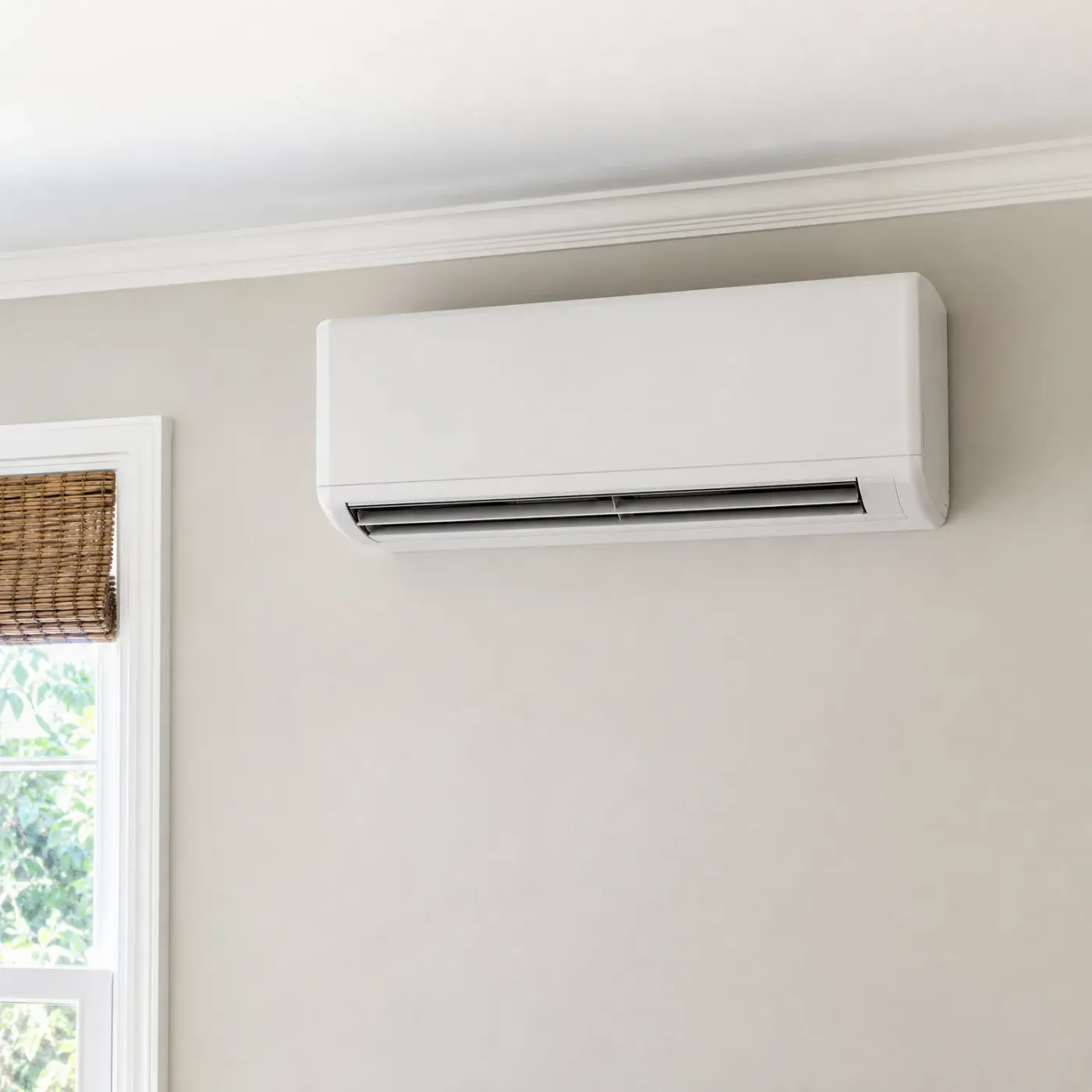
A white wall-mounted mini-split air conditioner unit installed high on a beige interior wall below white crown molding, with a window and woven shade at the left edge showing green foliage outside.

Doing its job

A mini split mounted clean and clear like this one moves air across the whole room without strain. You'd see the louvers open and close as it adjusts, and feel the air land evenly instead of blasting from one spot.

A dusty, stained white wall-mounted mini-split air conditioner indoor unit installed high on a plain off-white interior wall near the ceiling.

Falling behind

Dust built up like this cuts airflow before you'd notice a change in sound. The unit still runs, but it's pushing air through grime instead of a clean coil, and the room takes longer to catch up on a sticky Virginia afternoon.

Power costs 15.28 cents per kilowatt-hour statewide

At 15.28 cents per kilowatt-hour, running a mini split in just the one or two rooms that need it costs a lot less than heating or cooling the whole house through the furnace's ductwork. You're paying for the square footage you actually use, not the whole floor plan.

EIA-861 2025 statewide residential average

A white wall-mounted mini-split air conditioner indoor unit installed near the ceiling on a plain beige wall.

Adding the mini split now

A contractor comes out, mounts the indoor unit, runs the line set through the wall, and sets the outdoor condenser on its pad. The furnace and its ductwork don't move. For a day or two there's drilling, some refrigerant work, and testing to make sure the new unit holds its temperature and drains right. Once it's running, you've got two systems in the house instead of one, each doing its own job in its own space.

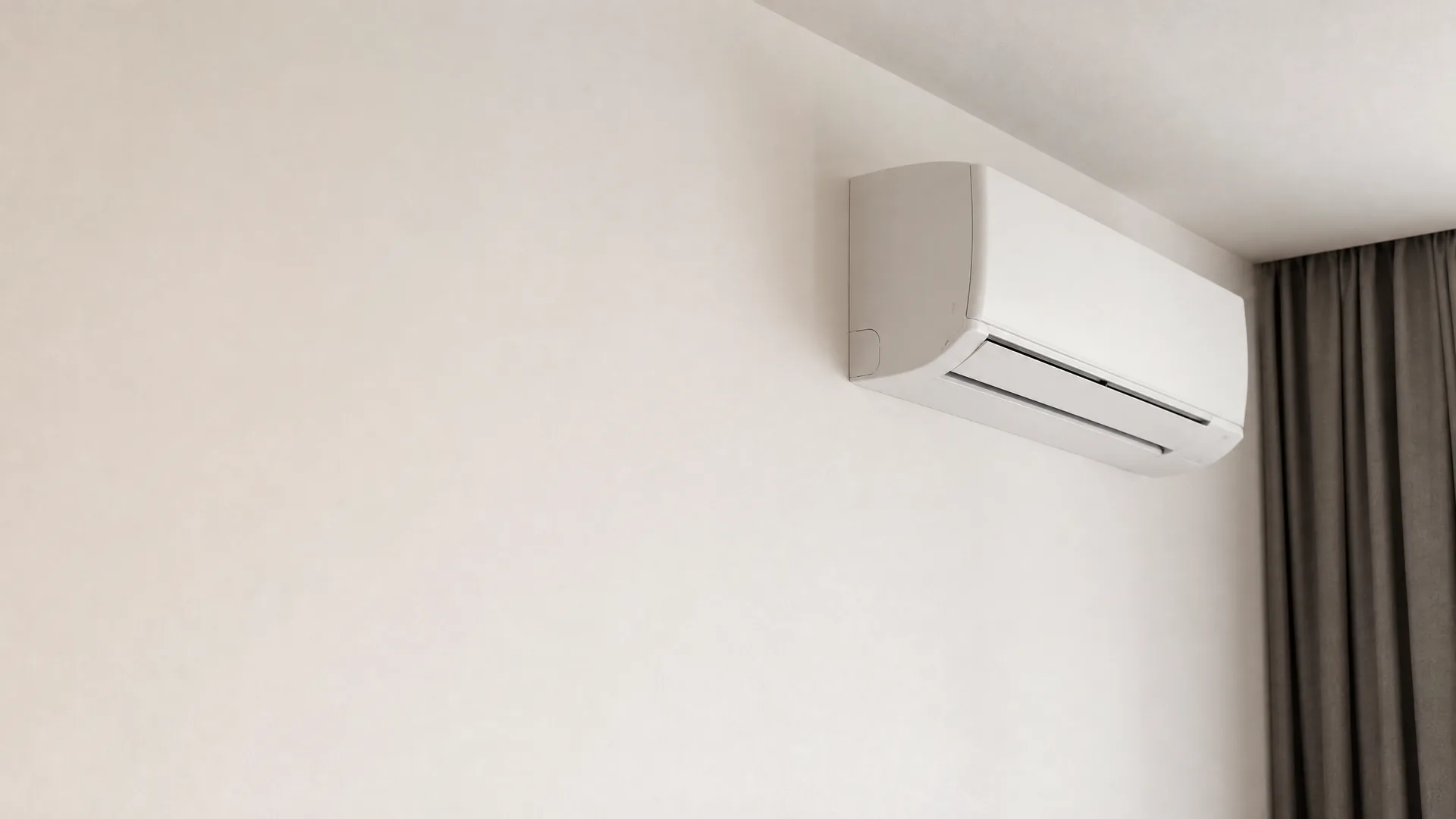
A white wall-mounted mini-split air conditioner on a plain off-white interior wall, with a gray curtain at the right edge.

Living with it after

The room that used to lag behind the rest of the house now holds its temperature on its own. You set the mini split and leave it, and the furnace keeps doing what it's always done everywhere else. Checking the mini split means wiping down the indoor unit and keeping the filter clear so the air keeps moving the way it did the day it went in. The furnace needs its own separate upkeep, same as before.

A mini split and a furnace can share a house, each doing the part it's good at, with no need to touch the ductwork already there. That's the answer, and the facts back it up: the sizing, the refrigerant charge, and the electrical hookup are the parts that have to be done right so the two systems don't work against each other. That's a job for someone who installs these in Virginia homes regularly and knows which rooms give furnaces trouble here and why. When you put in a request, it goes to one licensed contractor local to you, not a handful of companies competing for the callback. That contractor sees mini split and furnace pairings often enough to know what a clean installation looks like and what tends to go wrong when it isn't. You end up with one person to talk to about your house, not a stack of quotes to sort through.

A single-story stucco house at dusk with a lit paver walkway lined by low path lights, desert plants and boulders in front, and distant mountains under an orange and blue sky.

Mini Split Installation

A mini split pro near you

Step 1 of 3: Equipment
  • A corner of a room with an upholstered wood-framed armchair holding a floral pillow, a round side table with a ceramic lamp, books and a vase of greenery, a framed landscape painting on the wall, a patterned rug, and a sunlit multi-pane window.
    • Describe your mini split job, and a local pro who handles it gets in touch.
    • Say what's going on with your mini split, and a pro who works on them reaches out.
  • Interior corner with a wood-framed window showing green foliage outside, a framed landscape print on a beige wall, and a rounded stone vase of leafy branches on a wooden cabinet.
    • One request and the search for a pro is handled.
    • Send it once and finding someone is no longer on you.
  • A pale ceramic vase holding olive branches sits on a dark wooden countertop beside a carved wooden dough bowl, next to a wood-framed window and a light painted plank wall.
    • Skip collecting and comparing quotes for the new mini split.
    • Skip the round of in-home estimates for a new mini split.
  • A dark wood round side table holding a brass lamp with a cream shade, a blue-and-white patterned bowl, and a white textured pot of greenery, beside an upholstered chair with a gray patterned cushion and a white-framed window showing green trees and flowering shrubs.
    • Your request goes to one pro, not a list of companies.
    • The pro who reaches out is licensed in Virginia.